
Signs of Subfloor Damage Homeowners Should Know
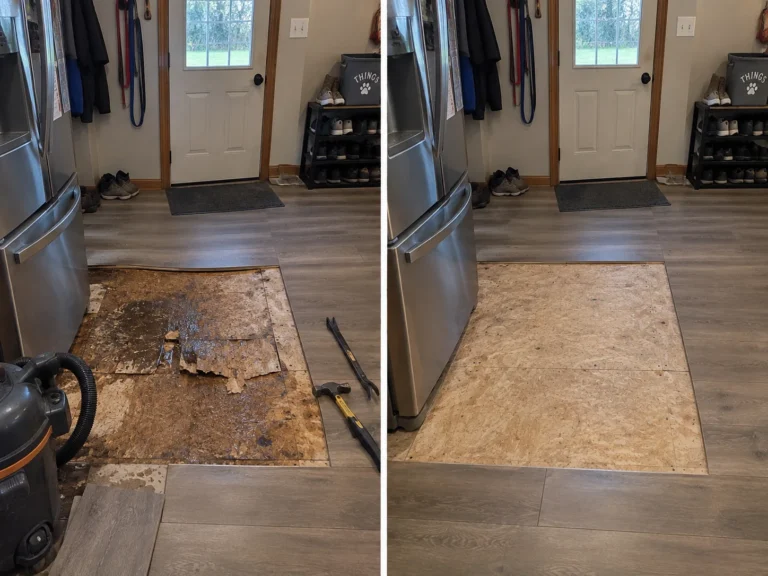
The subfloor sits below the finished flooring and is easy to forget until something changes. Because it is usually hidden, homeowners often notice subfloor trouble indirectly: the floor feels soft, tile moves, a toilet area flexes, a leak leaves persistent swelling, or a section no longer feels solid underfoot.
Most visible, localized floor repairs can be quoted from clear photos — no site visit required in many cases.
Common Warning Signs
- Soft or spongy areas
- Movement around toilets, tubs, showers, sinks or appliances
- Persistent squeaks combined with noticeable flex
- Finished flooring that repeatedly loosens or cracks
- Swelling or raised edges after water exposure
- Musty odor or staining associated with a known leak
- Visible deterioration where the subfloor can be seen from below or during removal
Why Bathrooms and Kitchens Get Attention
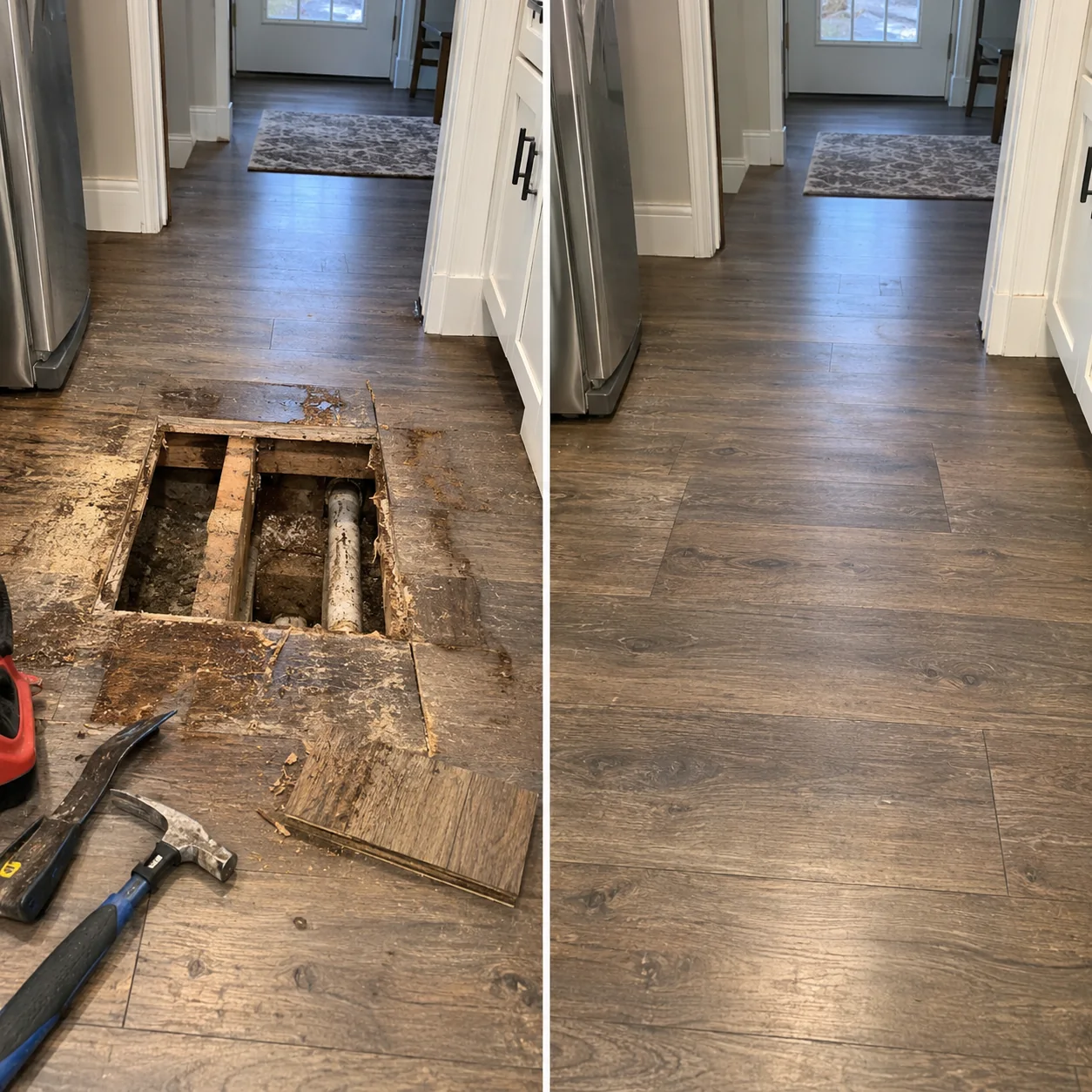
Bathrooms and kitchens place plumbing fixtures and water-using appliances directly over or beside the floor system. A slow toilet leak, failed connection, dishwasher leak, refrigerator line or sink plumbing issue can expose the subfloor without immediately flooding the entire room.
Water-Damaged Subfloor Is Different From Wet Flooring
The finished floor and the subfloor are separate layers with separate repair decisions. For broader water-damage repairs, see Water-Damaged Floor Repair; for damage to the plywood or OSB layer itself, see Subfloor Repair & Replacement.
Can a Section of Subfloor Be Repaired?
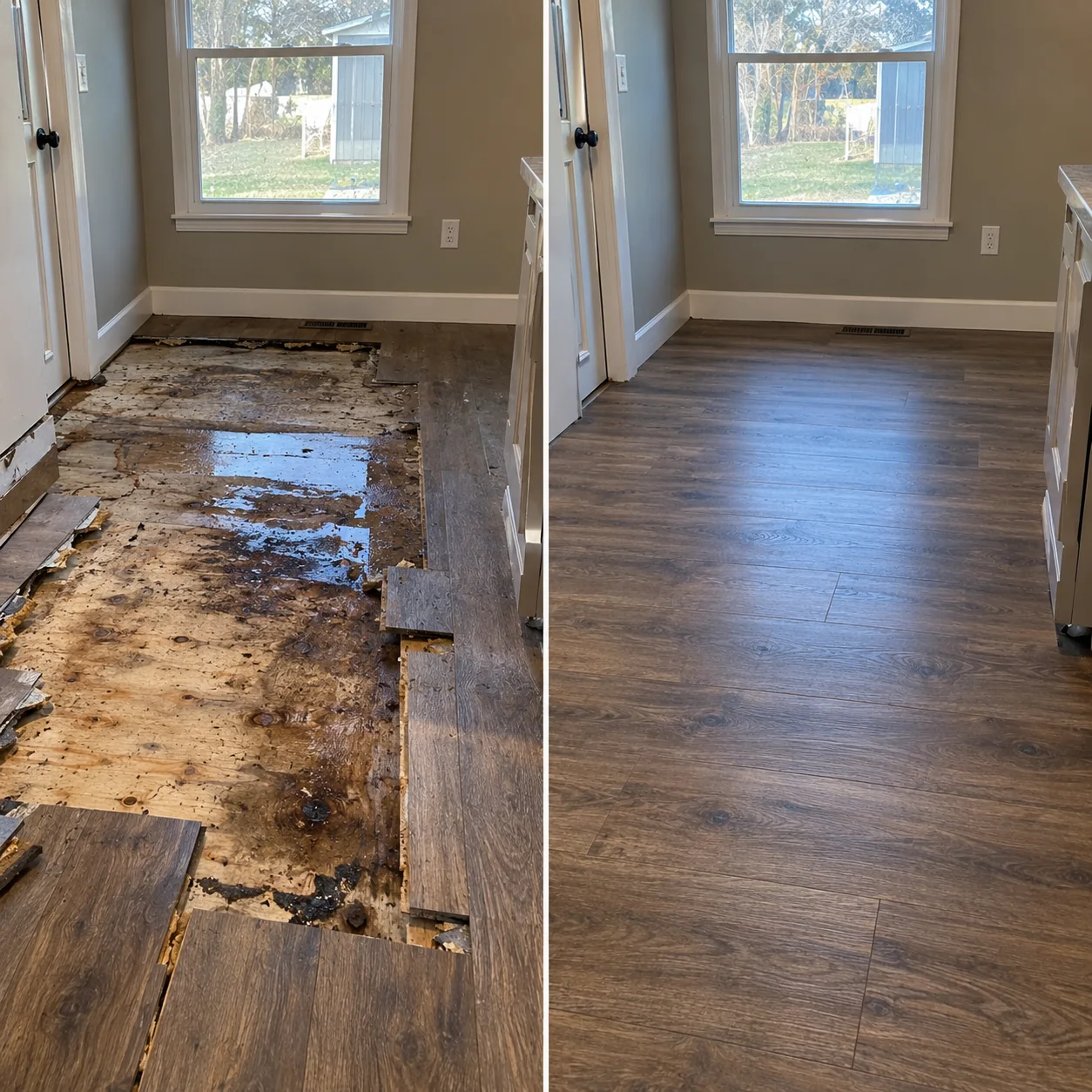
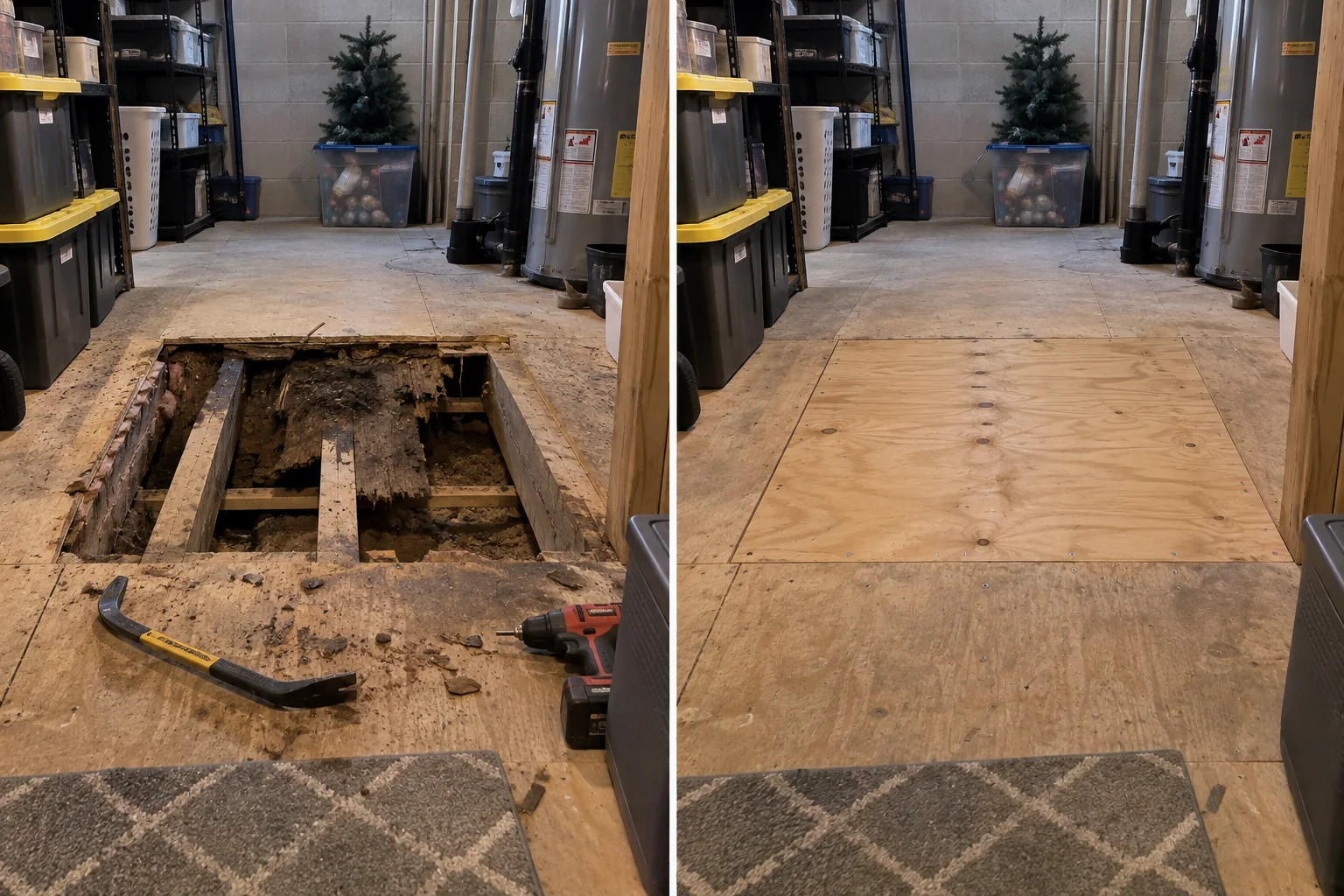
Localized subfloor replacement can be possible when the damaged area can be exposed, cut back to sound material and properly supported. The practical scope depends on framing, walls, cabinets, fixtures, flooring above, penetrations and how far deterioration extends.
Get the Repair Moving From Your Phone
Upload up to six photos with a short description. For many straightforward repairs, that is enough information to prepare a quote without making you wait for an on-site visit.
Send Photos for a Free EstimateWhy Covering a Soft Area Is a Bad Diagnostic Shortcut
Adding a new finished surface over a weak or deteriorated section does not restore the lost support below. If a floor feels soft, the goal is to identify which layer is moving and why before deciding what to install on top.
Information That Helps an Evaluation
Describe the room, exact location, flooring material, whether water was involved, how long the condition has existed, and whether it changes when stepped on. Photos from above and, when safely accessible, from below can provide useful context.
Frequently Asked Questions
What does a bad subfloor feel like?
It may feel soft, spongy, flexed or less solid than surrounding areas, although symptoms vary and can overlap with other floor-system problems.
Does a squeaky floor mean the subfloor needs replacement?
No. Noise alone does not prove the subfloor is deteriorated. Squeaks can have several causes.
Can subfloor damage be repaired without replacing the whole room?
Sometimes. Localized repair depends on the extent of damage, access and the ability to support replacement material correctly.