Repair Cracked, Spalled, Chipped & Deteriorating Concrete Floors
Concrete floors are durable, but cracks, chips, spalling, pitting, surface loss, and localized slab damage can still develop over time. A damaged concrete floor does not automatically require removing and replacing the entire slab.
Floor Repair Pros provides residential concrete floor repair in Cedar Rapids, Iowa City, and surrounding communities. We handle concrete floors and slabs—not broad foundation repair or general floor leveling.
Request a Free Concrete Floor Repair Estimate
Concrete Floor Problems We Repair
- Cracked concrete floors and localized slab cracks
- Chipped concrete and broken slab edges
- Spalled or flaking concrete surfaces
- Pitted or deteriorated concrete
- Crumbling surface areas and exposed aggregate
- Localized concrete patching and surface repair
- Low or damaged areas caused by concrete deterioration
- Localized slab settlement when the concrete floor itself remains the primary repair concern
- Concrete damage in basements, garages, workshops, and lower-level living areas
Concrete Floor Crack Repair
Concrete floor cracks can vary from hairline shrinkage cracks to wider cracks associated with movement. The width, length, pattern, depth, edge alignment, moisture conditions, and whether the crack is changing all help determine what the crack means.
A stable localized crack is different from one associated with continuing settlement or structural movement.
Can a Cracked Concrete Floor Be Repaired?
Sometimes. Localized repair may be practical when the concrete remains serviceable, the damage is limited, movement is minor or stable, and the supporting conditions are adequate. A crack associated with ongoing movement may require a different solution before the visible crack is repaired.
Concrete Floor Patching
Patching can be appropriate for small damaged areas, chipped sections, localized surface loss, shallow voids, and other limited deterioration when the surrounding concrete remains sound.
Preparation matters. Loose or weak material needs to be removed so the repair is bonded to serviceable concrete rather than to a deteriorating surface.
Photos Often Tell Us What We Need
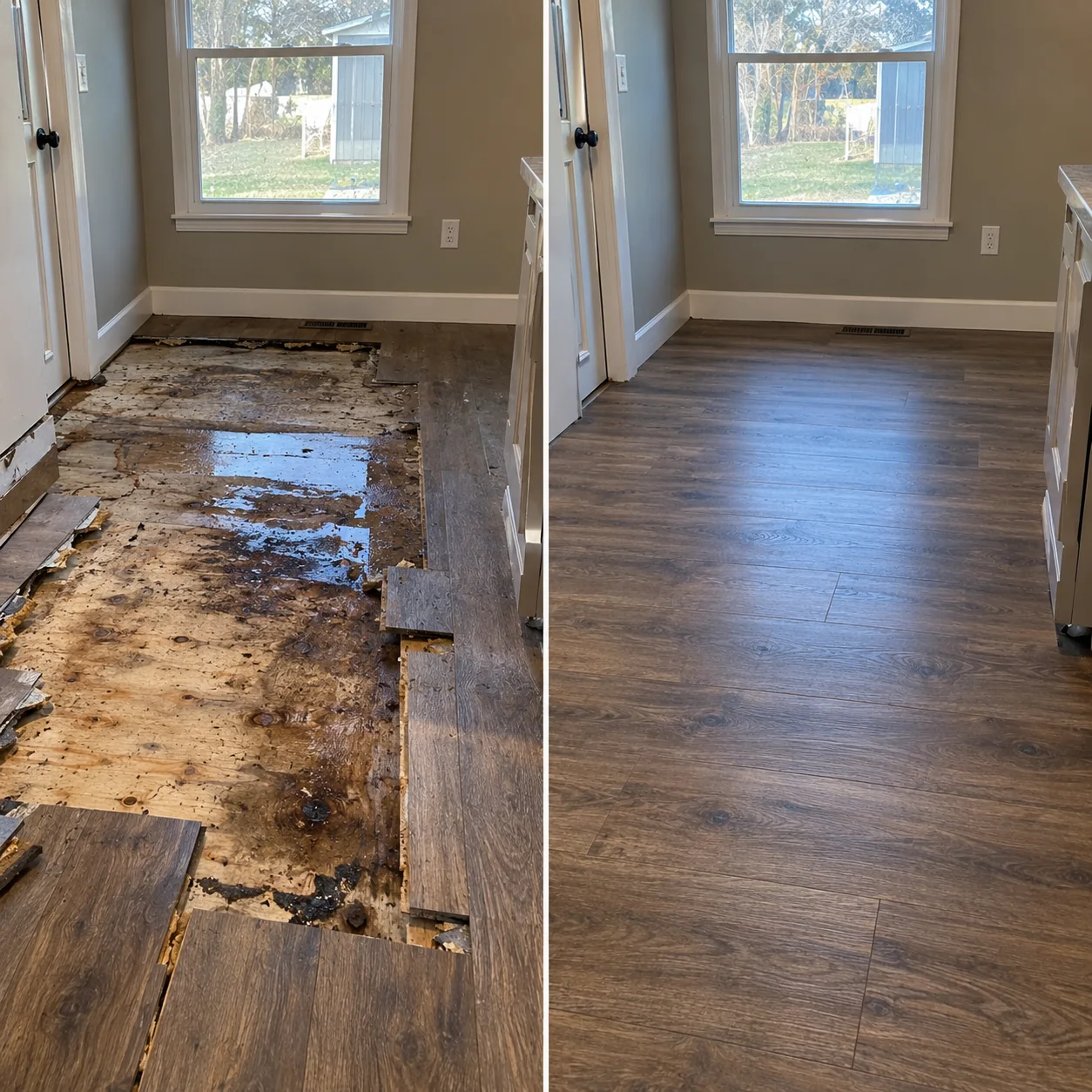
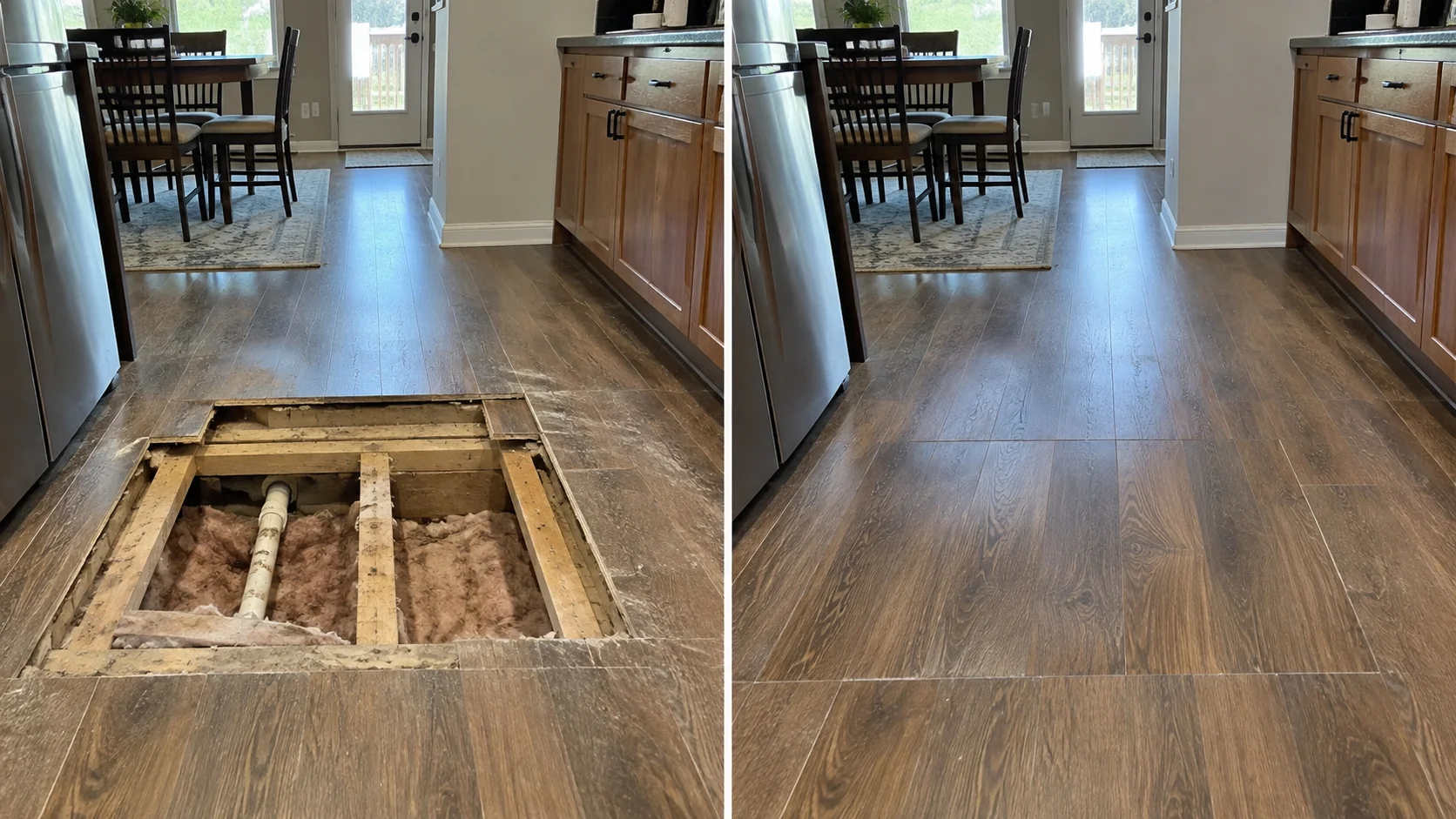
For localized cracks, damaged boards, soft areas, exposed subfloor and other visible problems, photos can often replace the first site visit. If we need to verify something in person, we will tell you.
Spalled Concrete Floor Repair
Spalling occurs when portions of the concrete surface break away, flake, or deteriorate. Possible contributors include moisture, freeze-thaw exposure, wear, surface damage, aging, reinforcement-related deterioration, or poor original concrete conditions.
The depth and extent of material loss determine whether localized repair is practical or whether a larger section needs attention.
Chipped & Broken Concrete Edges
Concrete edges and surface areas can chip from impact, heavy objects, equipment, construction activity, or repeated wear. Localized chips and broken edges may be repairable when the surrounding slab remains stable and serviceable.

Pitted, Crumbling & Deteriorating Concrete
Surface deterioration can appear as pitting, scaling, crumbling, exposed aggregate, or progressive surface loss. The cause can include moisture, freeze-thaw cycles, wear, chemical exposure, poor concrete condition, or previous damage.
A repair should address the depth and cause of the deterioration rather than simply covering loose surface material.
Concrete Floor Resurfacing vs. Repair
Resurfacing is different from repairing structural or movement-related slab problems. A surface treatment may be appropriate when the underlying concrete remains sound and the problem is primarily shallow deterioration or widespread surface wear.
Resurfacing does not correct significant settlement, continuing slab movement, major structural failure, or a compromised base beneath the concrete.
Uneven or Sunken Concrete Floors
Concrete can become uneven because of settlement, slab movement, soil changes, voids, erosion, or localized deterioration. Low areas and uneven transitions can create trip hazards, collect water, and interfere with finished flooring installed above the slab.
For flatness and leveling problems, see Floor Leveling & Uneven Floor Repair. For floor problems associated with foundation movement, see Foundation-Related Floor Problems & Repair.
Photos Often Tell Us What We Need
For localized cracks, damaged boards, soft areas, exposed subfloor and other visible problems, photos can often replace the first site visit. If we need to verify something in person, we will tell you.
Concrete Slab Settlement
A settled slab can develop low areas, cracks, sloping, gaps, and differential elevation. The key question is whether the concrete itself is the primary repair problem or whether the supporting soil, base, or foundation is moving.
Concrete Floor Repair After Moisture Exposure
Concrete does not react to water the same way wood flooring does, but moisture can contribute to surface deterioration, subsurface problems, staining, efflorescence, or damage to finished flooring installed above the slab.
This service addresses concrete-specific floor damage.
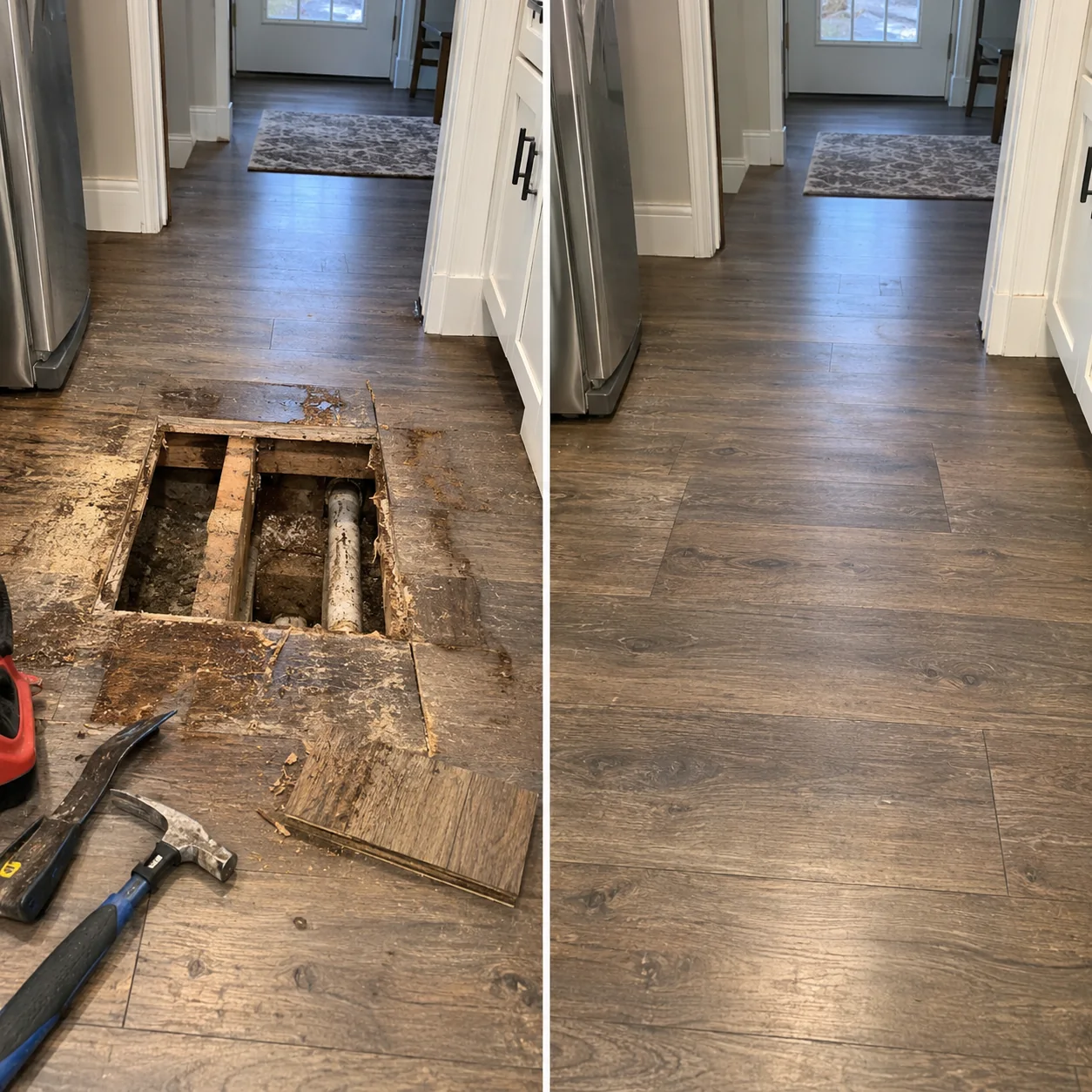
Concrete Floors in Basements & Garages
Basement and garage slabs commonly experience cracks, chips, spalling, pitting, moisture exposure, low spots, and surface wear.
Can Concrete Be Repaired Without Replacing the Whole Slab?
Often, yes. Localized repairs may address certain cracks, chips, spalling, pitting, shallow deterioration, broken edges, and small damaged sections when most of the slab remains serviceable.
Broader replacement becomes a separate consideration when large portions of the slab have failed, severe movement is ongoing, the supporting conditions cannot be corrected practically, or the existing concrete can no longer remain serviceable.
Concrete Floor Repair FAQs
What causes concrete floor cracks?
Possible causes include shrinkage, settlement, movement, temperature changes, moisture conditions, installation factors, and supporting-material changes. The crack pattern and whether it is moving matter more than the mere presence of a crack.
Can spalled concrete be patched?
Sometimes. Repairability depends on how deep the deterioration extends and whether the remaining concrete is sound enough to support the repair material.
Can a sunken concrete floor be repaired?
Sometimes. The cause of the settlement matters. If voids, erosion, poor compaction, or broader structural movement are responsible, the supporting condition may need correction before or as part of the slab repair.
Does every concrete floor crack mean a foundation problem?
No. A localized slab crack can have a very different cause from broader foundation movement. Location, pattern, width, differential elevation, associated symptoms, and change over time help separate the two.
Can deteriorated concrete be resurfaced instead of replaced?
Sometimes, when deterioration is shallow and the underlying slab remains sound. Resurfacing is not a substitute for correcting deep deterioration, significant settlement, or structural movement.
Concrete Floor Repair in Cedar Rapids & Iowa City
Floor Repair Pros provides residential concrete floor repair in Cedar Rapids, Iowa City, Marion, Hiawatha, Robins, Ely, Swisher, Coralville, North Liberty, Tiffin, Solon, and nearby communities. See our Floor Repair Service Areas for all communities we serve.
What to Include With Your Estimate Request
Tell us where the concrete damage is located, approximately how large the area is, whether cracks are changing, whether crack edges remain level, whether the floor has settled or become uneven, whether the surface is spalling or crumbling, whether moisture is present, and whether finished flooring is installed above the slab.
Helpful photos include a wider view of the room or slab, the full crack pattern, close-ups of cracks and damaged edges, uneven or sunken areas, pitting or spalling, floor drains or sump areas when relevant, and any accessible slab edge.