
Why Is My Floor Uneven? Sagging, Dips, Humps and High Spots Explained
“Uneven floor” can describe several different conditions that should not be treated as interchangeable. A floor may sag because support has changed, or it may simply have high and low areas that affect flatness. A transition may be abrupt even when both rooms are individually sound. Separating those conditions is important because the repair goals are different.
Most visible, localized floor repairs can be quoted from clear photos — no site visit required in many cases.
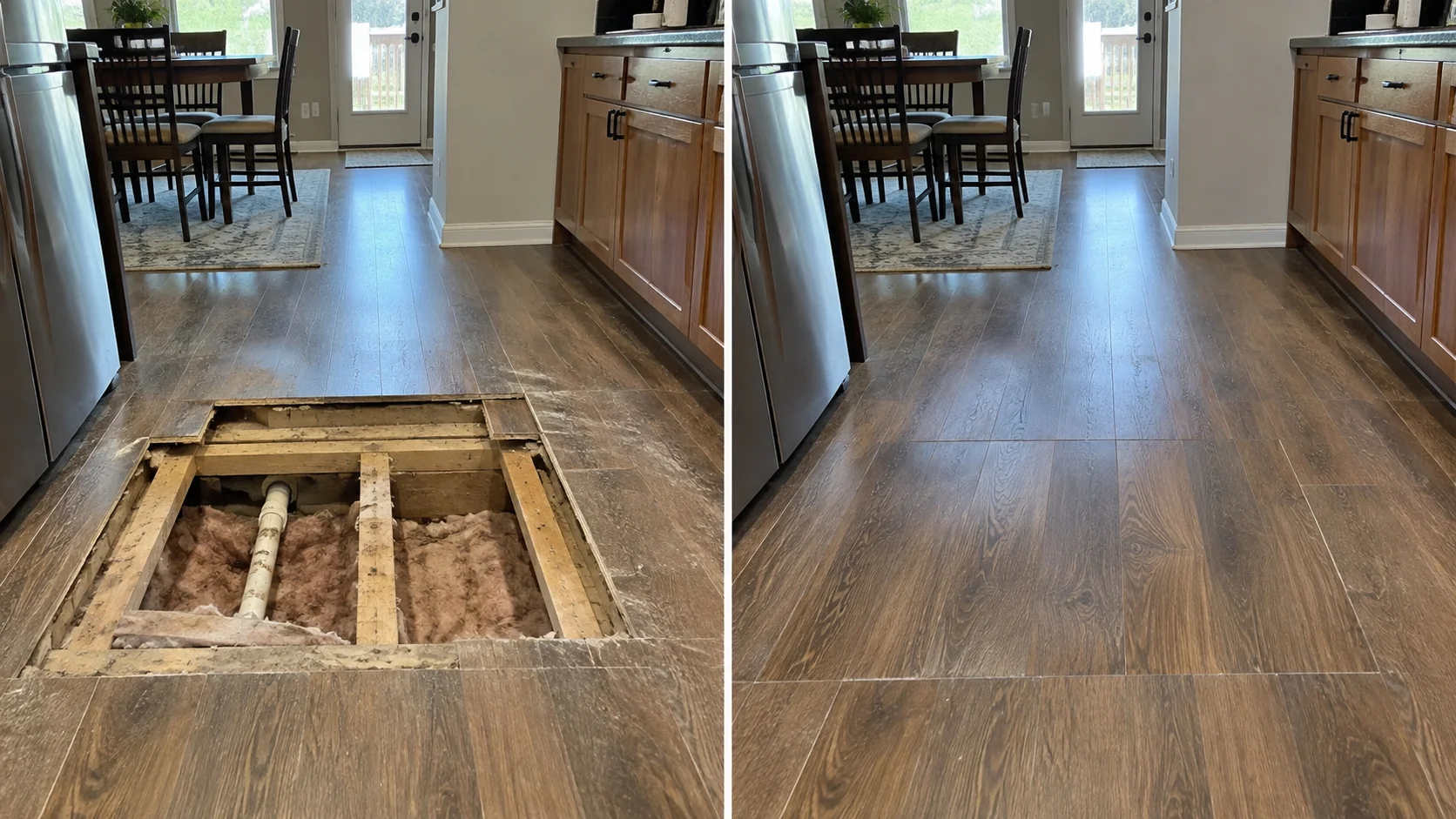
Sagging and Loss of Support
A sagging floor generally describes downward movement or loss of support across an area. It may be accompanied by bounce, movement or a noticeable low area. For sagging, sinking, or loss-of-support symptoms, see Sagging & Uneven Floor Repair.
Flatness Problems: Dips, Humps and Waves
A floor can be structurally supported yet still be out of plane. Localized dips, humps, ridges, waves and high spots can create installation or transition problems. For flatness correction, see Floor Leveling & Uneven Floor Repair.
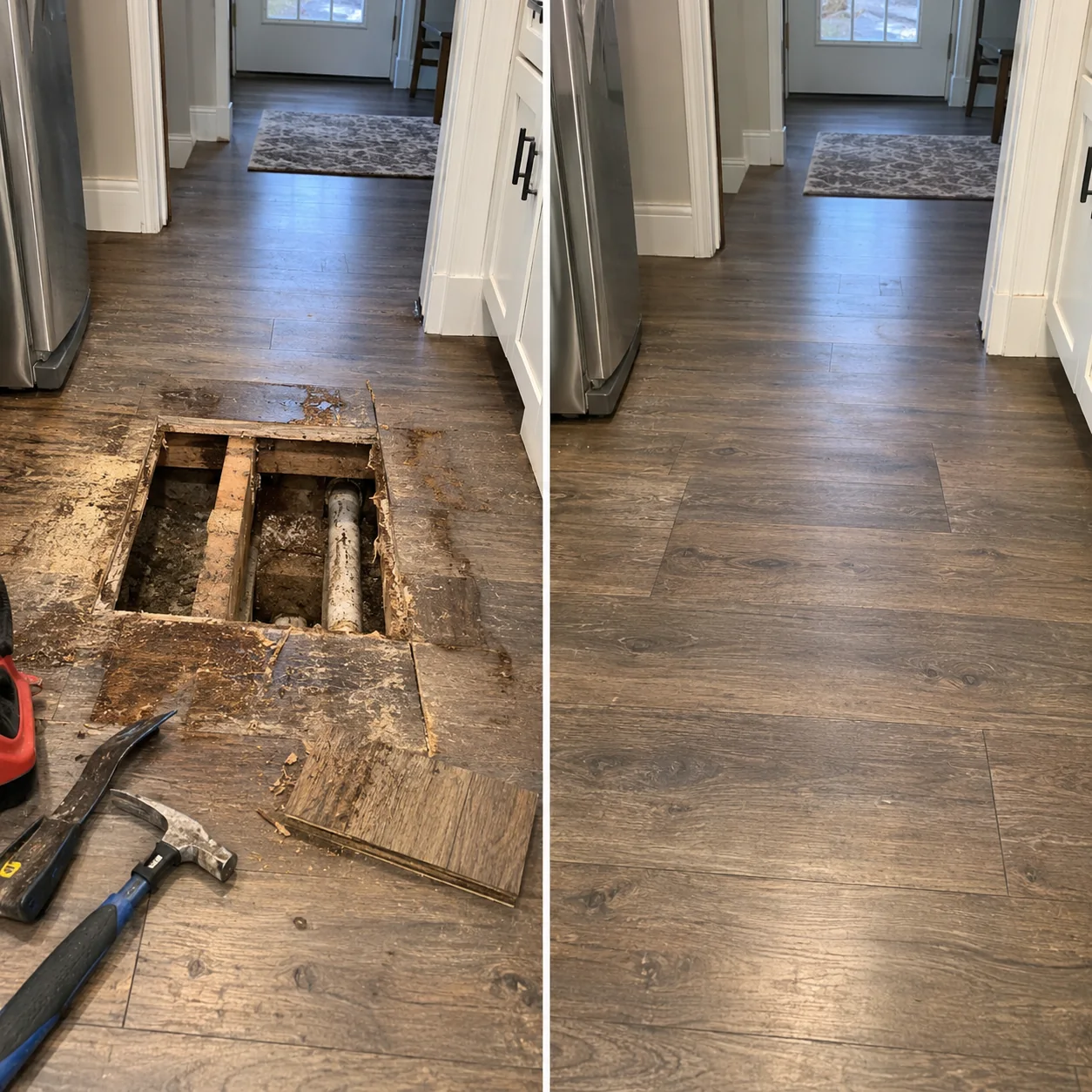
Room-to-Room Height Differences
Transitions between different flooring systems can create height changes because materials, underlayments and assemblies have different thicknesses. A transition problem is not automatically the same as a sagging floor.
Foundation Movement Can Affect Floors
Settlement or foundation movement can contribute to changes in floor elevation, but Floor Repair Pros does not use a floor symptom alone to diagnose a foundation. For floor damage associated with known or evaluated foundation movement, see Foundation-Related Floor Problems & Repair. Floor Repair Pros repairs floor damage; foundation repair itself requires the appropriate foundation specialist.
Most Repairs Start With Photos
Take one wide shot, a few close-ups and an angle that shows any lift, dip, crack or exposed subfloor. Many repairs can be priced directly from those images.
Send Photos for a Free EstimateWhy Measuring Matters
Visual impressions can be misleading. Straightedges, levels, elevation measurements and observations of movement help distinguish a localized flatness problem from a broader support issue. The appropriate method depends on what the repair needs to accomplish.
What to Tell Us
Describe whether the floor feels low, high, wavy, bouncy or simply different at a transition. Note whether the condition is changing, whether cracks or gaps accompany it, and whether there has been water damage, remodeling or known structural work.
Frequently Asked Questions
Is an uneven floor always a foundation problem?
No. Unevenness can come from floor framing, subfloor conditions, flatness, transitions, material movement and other causes.
What is the difference between floor leveling and sagging-floor repair?
Leveling focuses on flatness and elevation irregularities such as high or low spots. Sagging-floor repair focuses more on support and downward movement.
Can new flooring fix an uneven floor?
New flooring can cover a surface but does not automatically correct the underlying elevation or support condition. Preparation should match the cause.