
Repair Damaged Luxury Vinyl Plank, Vinyl Plank & Sheet Vinyl
A damaged vinyl or luxury vinyl plank floor does not automatically require replacing the entire room. Depending on the flooring system, installation method, location of the damage, condition of surrounding material, and availability of matching product, one plank or a localized section may be repairable or replaceable.
Floor Repair Pros provides residential vinyl and LVP floor repair in Cedar Rapids, Iowa City, and surrounding communities. We handle luxury vinyl plank, vinyl plank, and sheet vinyl.
Request a Free Vinyl or LVP Floor Repair Estimate
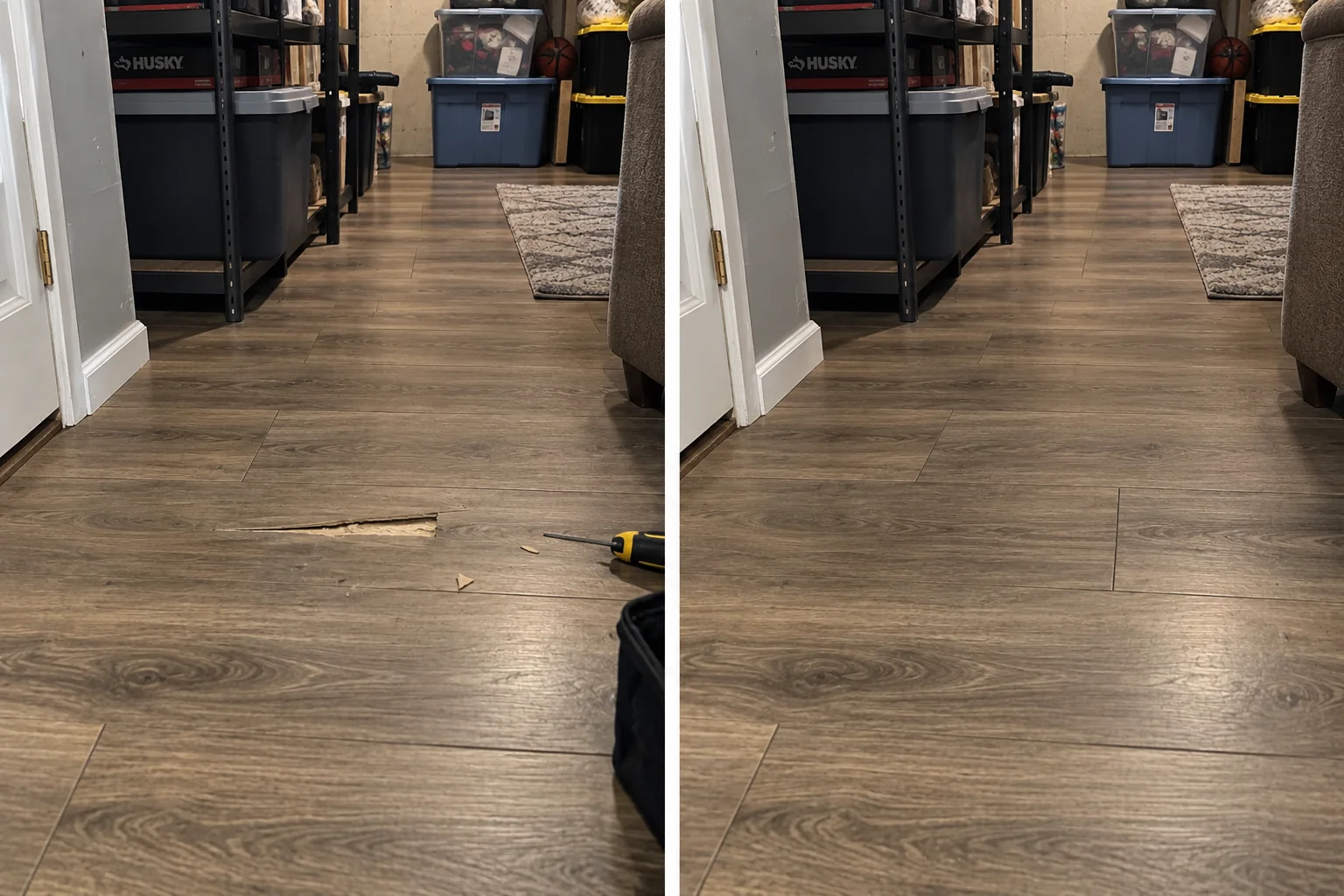
Vinyl & LVP Problems We Repair
- Damaged individual LVP or vinyl planks
- Cracked, chipped, scratched, or deeply gouged planks
- Loose planks and damaged locking joints
- Gaps or separated planks
- Raised edges and planks that will not stay flat
- Torn or damaged sheet vinyl
- Loose or peeling sheet vinyl
- Damaged seams and transitions
- Localized buckling or warping when the vinyl itself is affected
- Damage associated with a problem underneath the floor
The repair depends on the flooring type and the cause. Buckling, water damage, soft spots, or sagging may indicate that the problem extends beyond the vinyl or LVP itself.

LVP Floor Repair
Luxury vinyl plank flooring can be installed as a floating click-lock system, glue-down flooring, or another manufacturer-specific system. The installation method matters because it controls how damaged material can be accessed, removed, and replaced.
A plank near a wall can present a different repair situation from a plank in the middle of a connected floor. Surrounding plank condition, joint design, room layout, and matching material all influence what is practical.
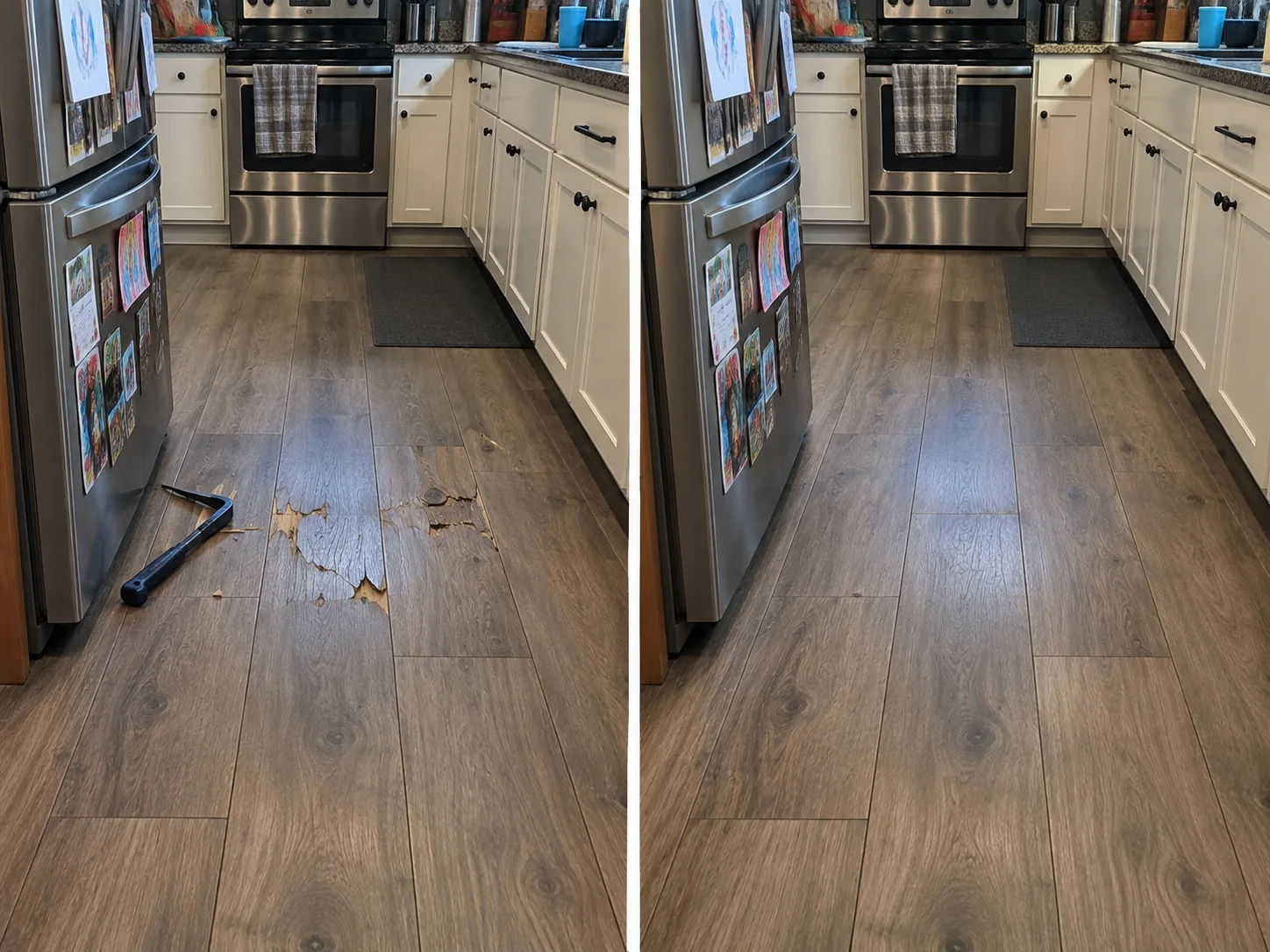
Can One LVP Plank Be Replaced?
Sometimes. Individual plank replacement may be practical when damage is localized, surrounding flooring remains serviceable, the installation allows access, and compatible replacement material is available.
For floating click-lock floors, reaching one damaged plank may require disassembling connected rows from an accessible edge. Glue-down flooring may allow a more direct localized replacement, but adhesive, subfloor condition, and nearby planks still matter.
Can Several Vinyl Planks Be Replaced?
Yes, in some situations. A defined section may be repaired when several adjacent planks are damaged but the remaining floor is still serviceable. This can apply to localized impact damage, broken joints, damage near a doorway, or flooring removed to access a small repair underneath.
Send the Damage, Not a Guess
You do not need to diagnose the floor. Send pictures of what you can see and tell us what you feel underfoot. In many cases that is enough for us to quote the repair without an initial visit.
Cracked, Chipped, Scratched & Gouged LVP
Surface and edge damage should be evaluated by severity. Light marks differ from deep gouges, broken locking edges, cracks, or chipped corners that affect the plank structure.
A physically damaged plank may be a better candidate for replacement than cosmetic concealment, especially when the locking profile or edge connection is affected.
Loose LVP, Gaps & Damaged Locking Joints
LVP planks can move, separate, or develop gaps when locking joints are damaged, connected planks shift, support underneath is irregular, or installation conditions change. Persistent movement can create additional edge and joint damage.
The repair should identify why the planks are moving rather than simply pushing them back together.
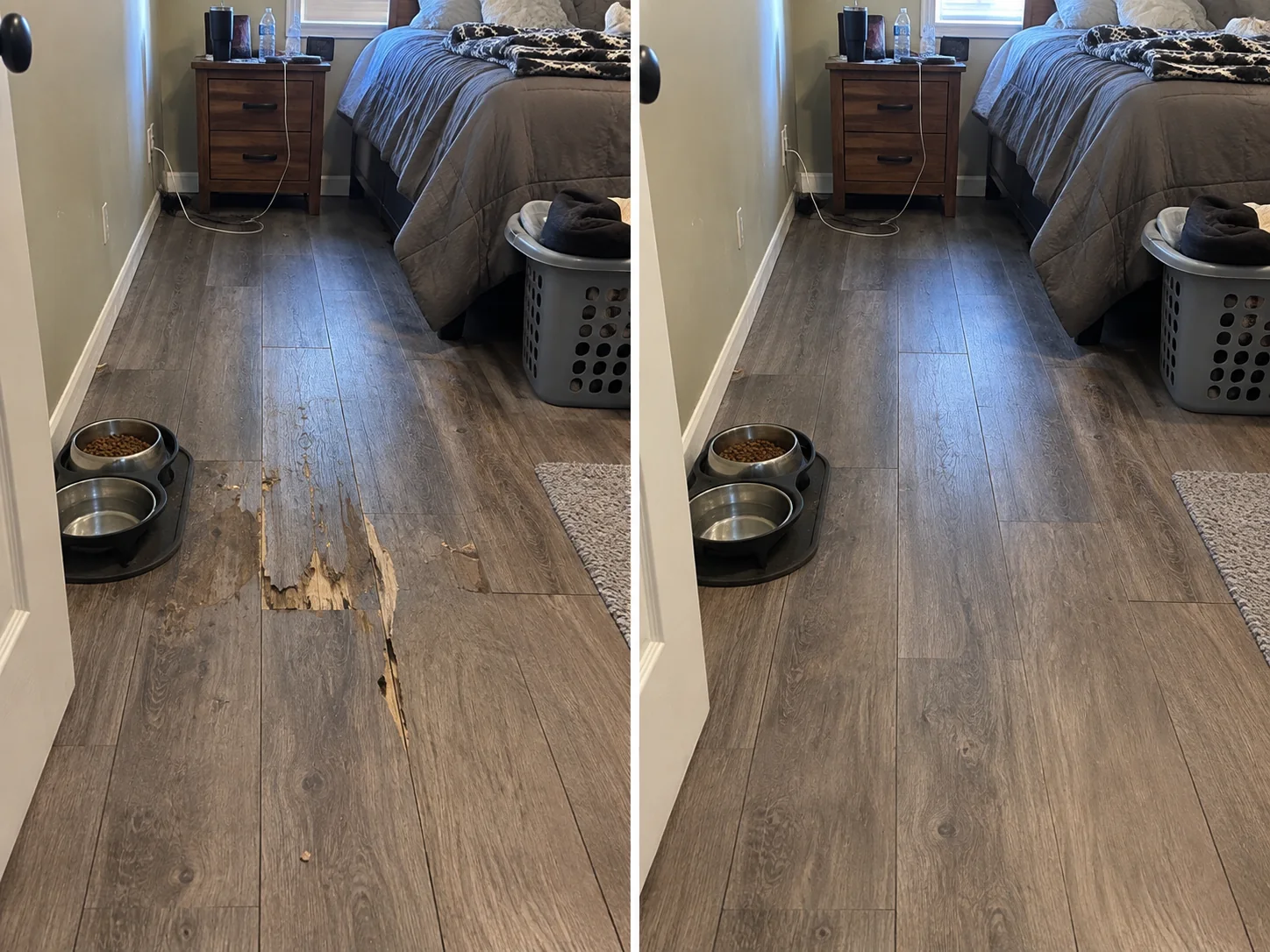
Raised Edges, Lifting & Localized Buckling
Vinyl and LVP can lift, peak, or buckle because of expansion pressure, damaged joints, moisture underneath, subfloor irregularities, restricted movement, or damaged material. The visible high spot is a symptom, so the cause needs to be identified before damaged pieces are replaced.
Sheet Vinyl Repair
Sheet vinyl can develop tears, lifting edges, seam separation, adhesive failure, and localized physical damage. Repairability depends on the size and location of the damage, pattern, surrounding adhesion, and whether compatible material is available.
A small isolated tear or seam problem is very different from widespread loose or deteriorated sheet vinyl.
Vinyl Flooring Seam & Edge Repair
Damaged seams or exposed edges may lift, curl, separate, collect debris, or allow moisture underneath. A localized repair is most practical when the surrounding vinyl remains sound and the underlying surface is still serviceable.
Send the Damage, Not a Guess
You do not need to diagnose the floor. Send pictures of what you can see and tell us what you feel underfoot. In many cases that is enough for us to quote the repair without an initial visit.
Vinyl or LVP Over a Damaged Subfloor
Sometimes the visible vinyl problem is caused by the floor underneath. Subfloor movement, deterioration, or irregularities can contribute to flexing, gaps, cracked planks, raised edges, soft areas, and repeated joint stress.
If the subfloor is the main problem, see Subfloor Repair & Replacement. For broader sagging or elevation loss, see Sagging & Uneven Floor Repair. For softness or rot as the main symptom, see Rotten & Soft Floor Repair.
Water Under Vinyl or LVP
Vinyl itself can tolerate some moisture exposure better than certain other flooring materials, but water can still reach underlayment, subflooring, joists, and adjacent materials. A surface that looks intact does not guarantee the floor system underneath is undamaged.
For damage caused by a plumbing leak or appliance, see the related water-source repair guidance.
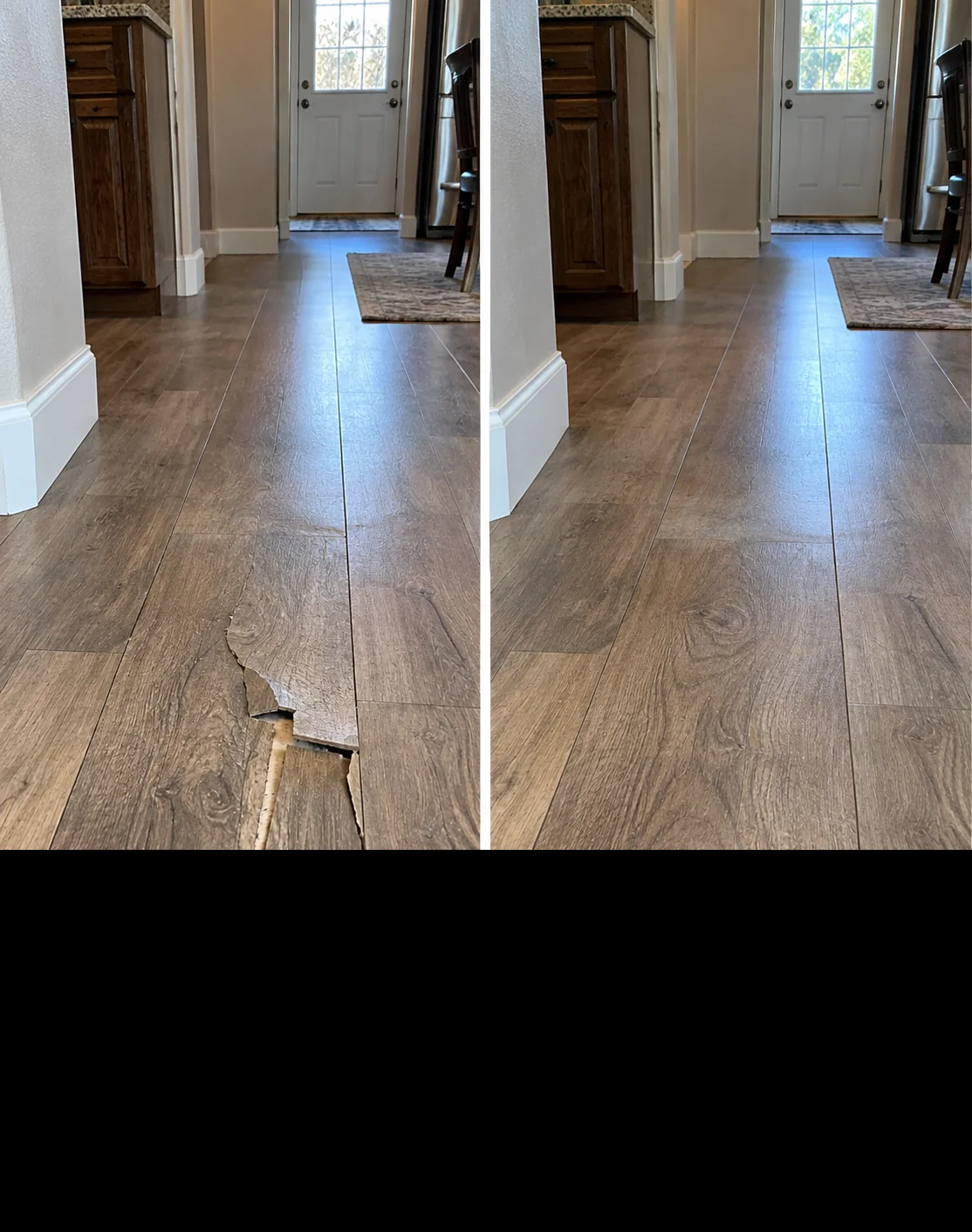
Matching Existing Vinyl or LVP
Matching material is one of the biggest limitations in localized flooring repair. Important characteristics include color, pattern, texture, plank dimensions, thickness, locking profile, and production-lot variation.
Even flooring sold under the same product name can look different after years of wear, sun exposure, or manufacturer changes. Leftover material from the original installation can be especially useful for a localized repair.
Should I Keep Leftover LVP Planks?
Yes, when practical. Extra original planks may provide the closest match in color, pattern, dimensions, and locking profile. If you still have leftover flooring or product packaging, include that information with the estimate request.
Vinyl & LVP Repair FAQs
Can damaged LVP be repaired without replacing the whole floor?
Often, yes. Localized repair may be practical when damage is limited, surrounding planks remain serviceable, the installation allows access, replacement material is available, and the supporting floor is sound.
Can click-lock LVP be repaired?
Often. The locking system and floor layout determine how the damaged plank can be reached. Some floors may need connected rows disassembled from an accessible edge.
Can glue-down vinyl plank be repaired?
Localized repair may be possible when the damaged plank can be removed without unnecessary damage to adjacent flooring and the subfloor and adhesive conditions support replacement.
Can sheet vinyl be patched?
Sometimes. Damage size, location, pattern, adhesion, surrounding condition, and availability of matching material all affect whether a localized patch is practical.
Can removed LVP be reused?
Sometimes. Reuse depends on flooring construction, removal method, age, condition, and whether the locking edges remain intact. A plank can look good on top but still have a damaged connection.
What if matching LVP is discontinued?
The repair options become more limited. Leftover original material, manufacturer information, product labels, and compatible salvaged material can all help determine whether a localized repair remains practical.
Vinyl & LVP Floor Repair in Cedar Rapids & Iowa City
Floor Repair Pros provides vinyl and LVP floor repair in Cedar Rapids, Iowa City, Marion, Hiawatha, Robins, Ely, Swisher, Coralville, North Liberty, Tiffin, Solon, and nearby communities. See our Floor Repair Service Areas for all communities we serve.
What to Include With Your Estimate Request
Tell us what type of flooring you have if known, whether it appears to be floating or glue-down, how many planks are affected, where the damage is located, whether planks move or gap, whether the floor is raised or buckled, and whether leftover flooring or original packaging is available.
Helpful photos include a wider view of the affected floor, close-ups of damaged planks or seams, transitions, gaps, raised areas, leftover flooring, product labels, and any exposed subfloor already visible.
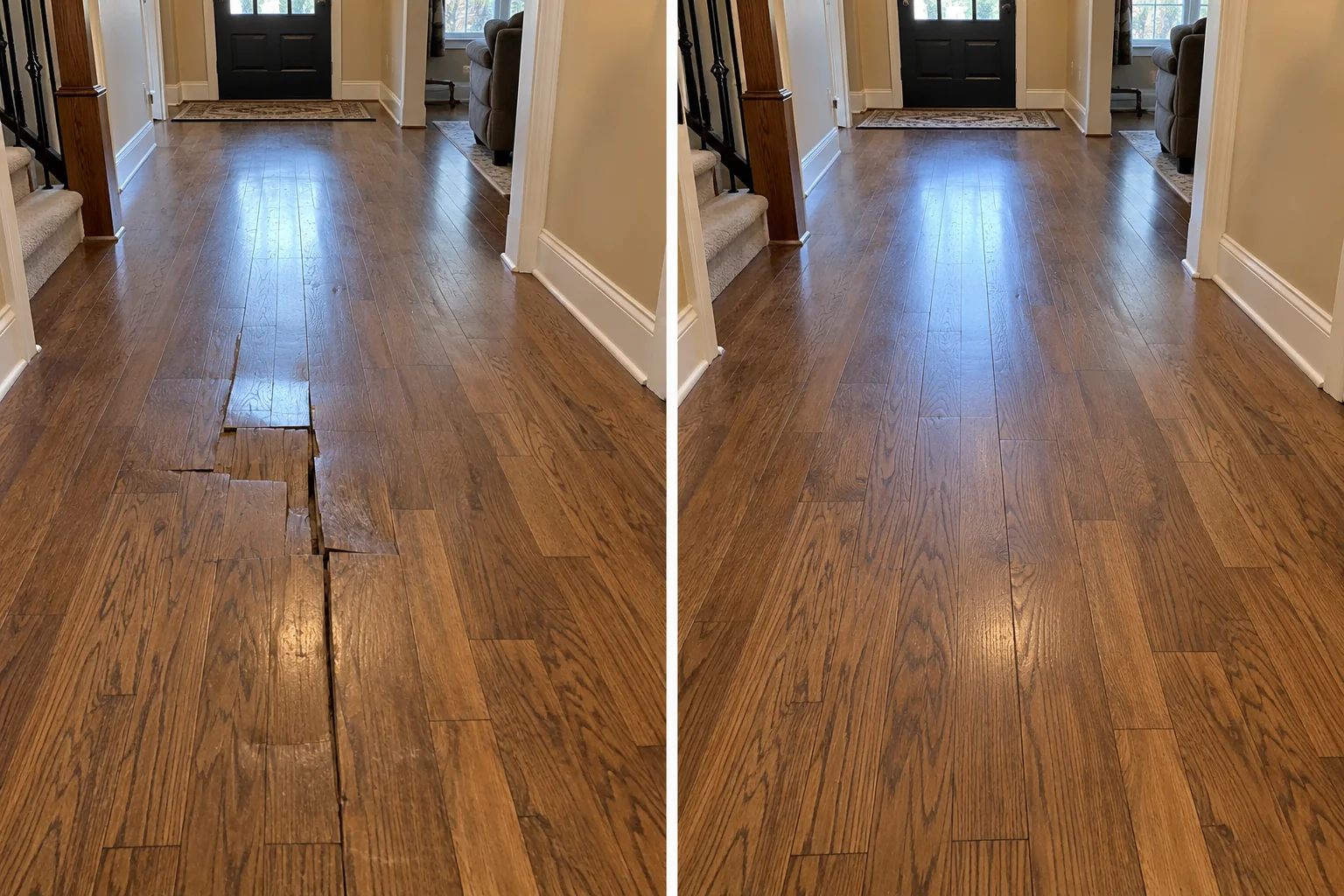
Repair the Vinyl You Have When It Makes Sense
A damaged vinyl or LVP floor can be a localized flooring problem or the visible sign of something underneath. The best repair identifies both what happened to the vinyl and whether the supporting floor remains sound, then limits the work to the area that actually needs attention.