
Repair Cracked, Broken, Loose & Damaged Floor Tile
Tile floors are durable, but a cracked, chipped, loose, hollow, or moving tile can be a localized surface problem or a sign that the supporting floor underneath is moving. A damaged tile does not automatically mean the entire floor needs replacement.
Floor Repair Pros provides residential tile floor repair in Cedar Rapids, Iowa City, and surrounding communities. We handle ceramic and porcelain floor tile, localized grout problems, and individual tile replacement.
Request a Free Tile Floor Repair Estimate
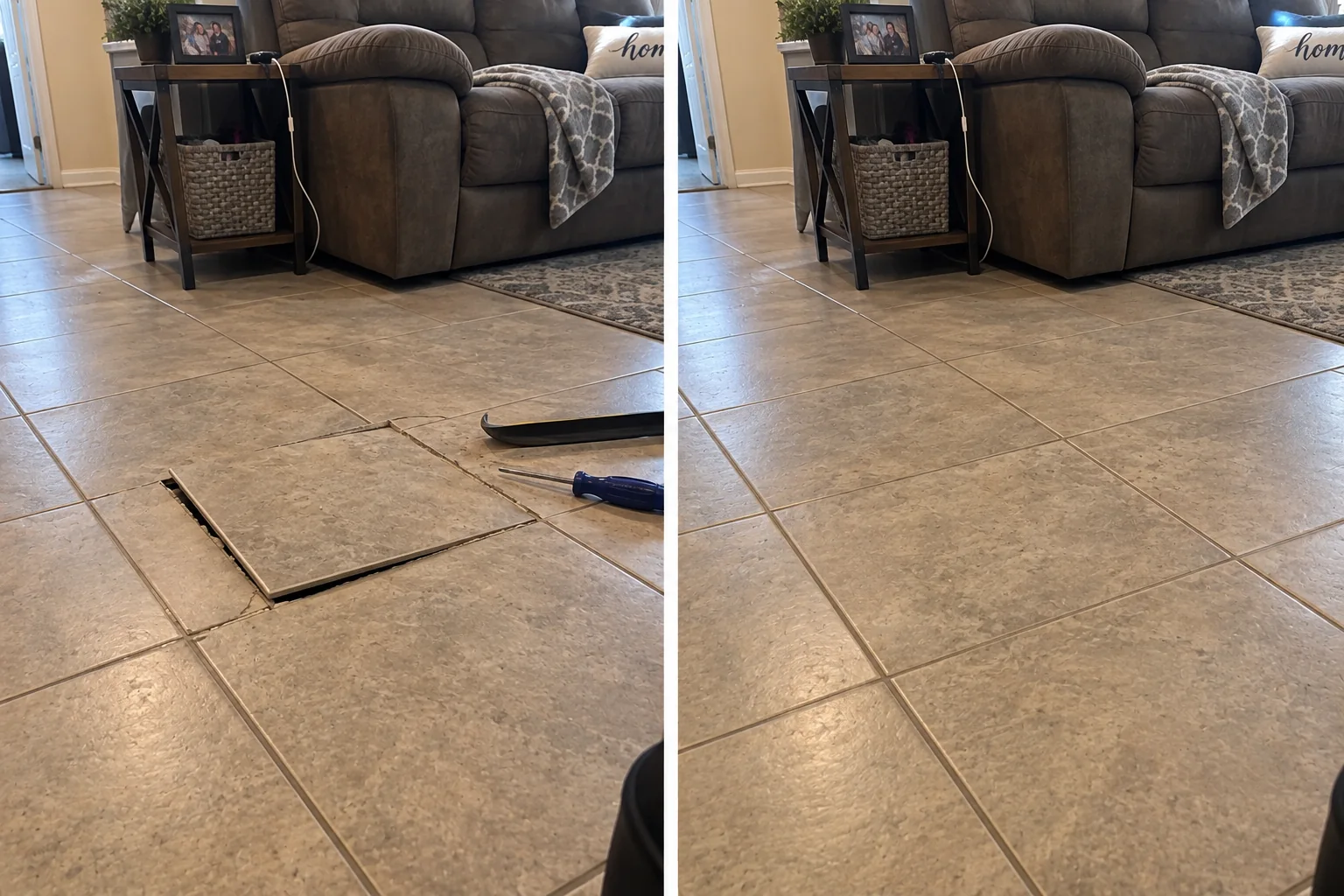
Tile Floor Problems We Repair
- Cracked or broken floor tile
- Chipped tile edges and corners
- Loose or moving floor tile
- Hollow-sounding tile when other failure signs are present
- Cracked, missing, or crumbling grout
- Separated grout joints
- Localized tile movement
- Individual tile or small-section replacement
- Damage related to movement or failure underneath the tile
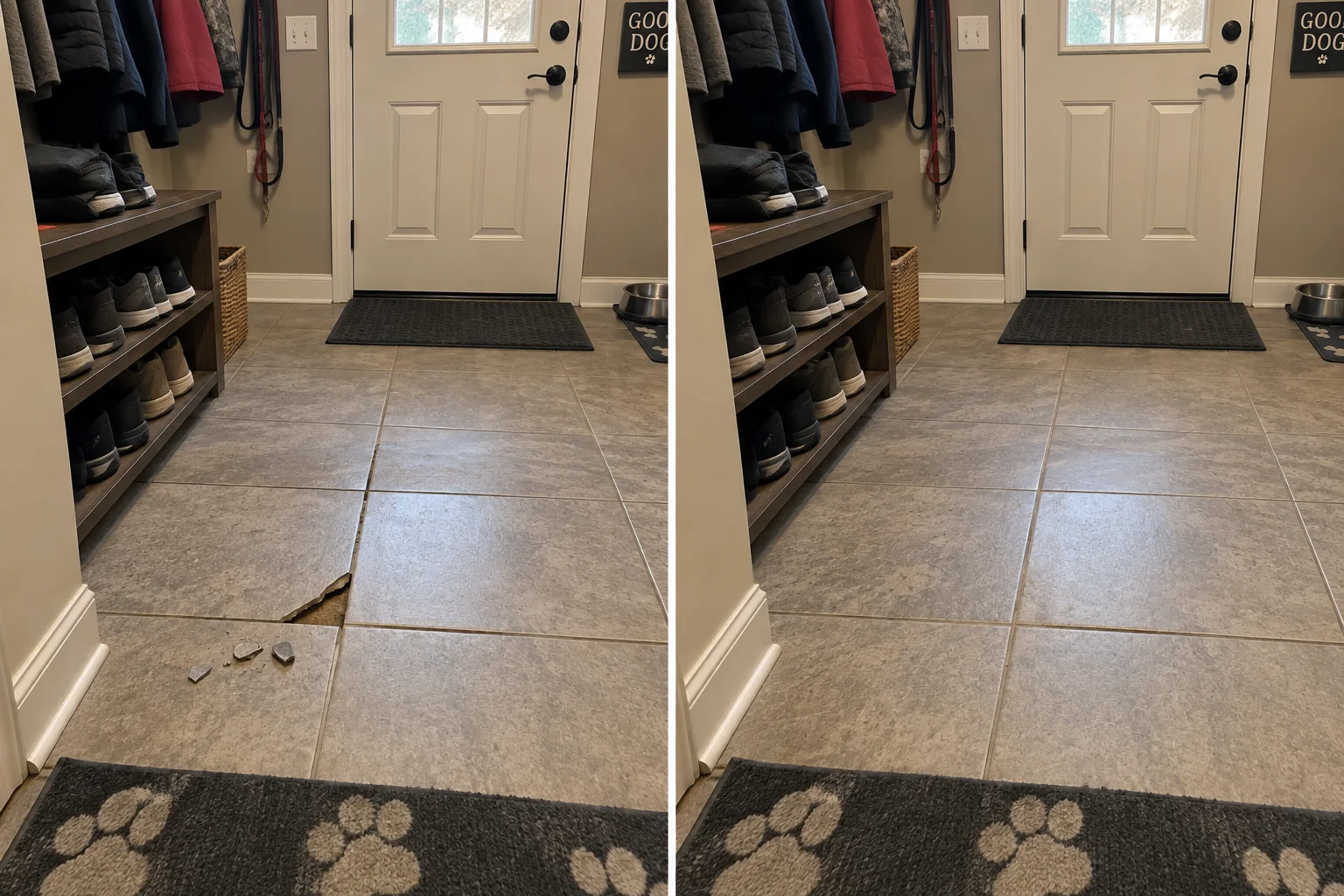
Cracked Floor Tile Repair
A tile can crack from impact, heavy loads, inadequate support, substrate movement, installation conditions, or movement between the tile and the supporting surface. A single isolated crack may be a localized problem, while repeated cracks across an area can point to a larger issue underneath.
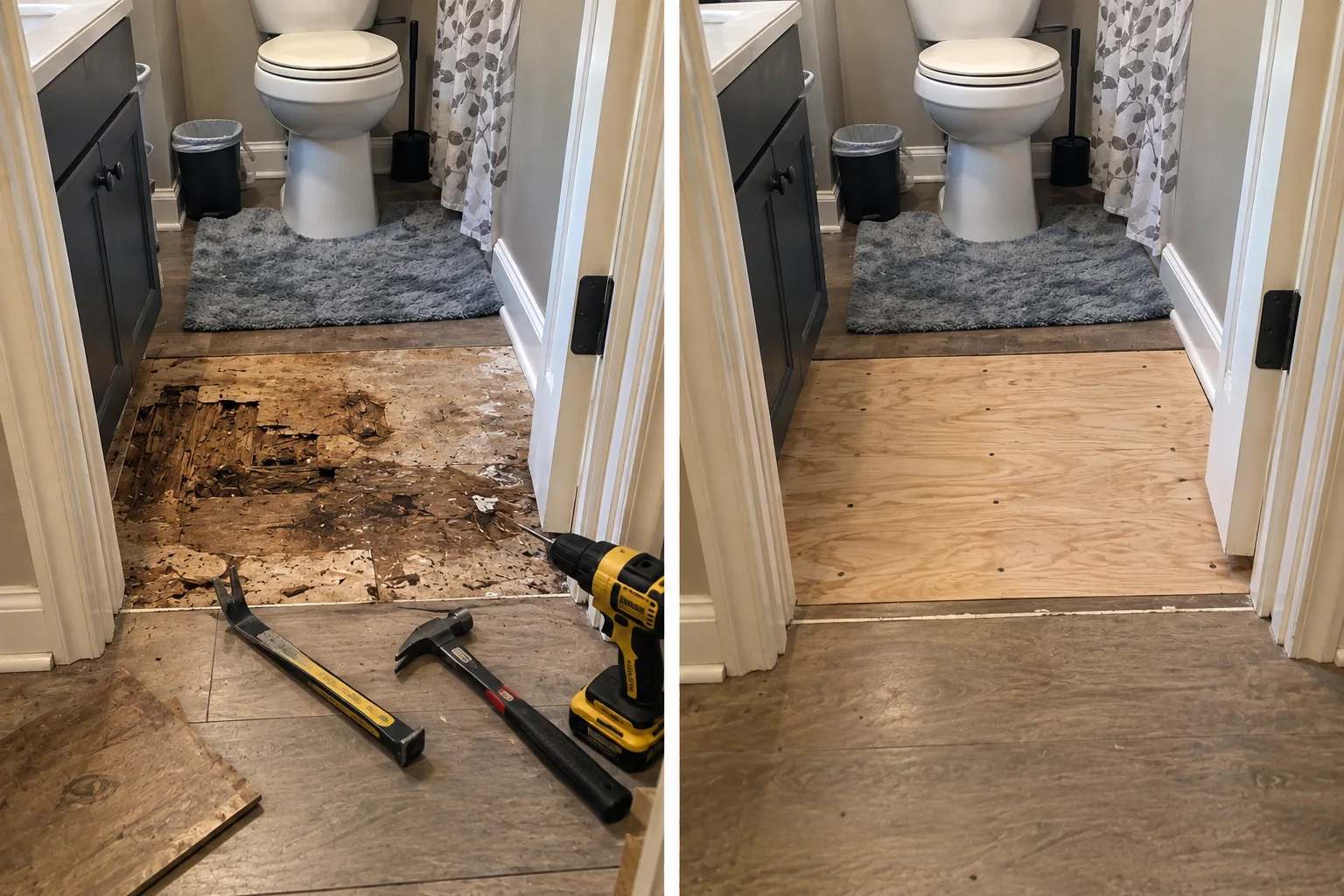
Broken & Chipped Tile Replacement
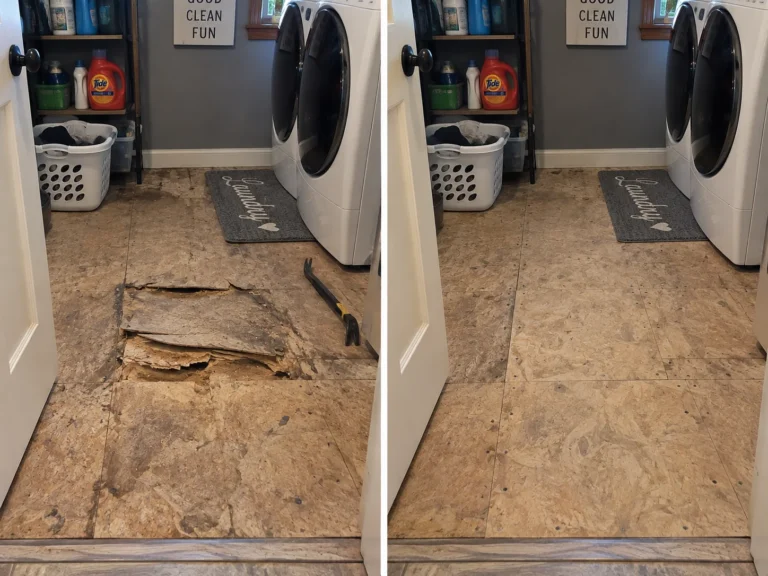
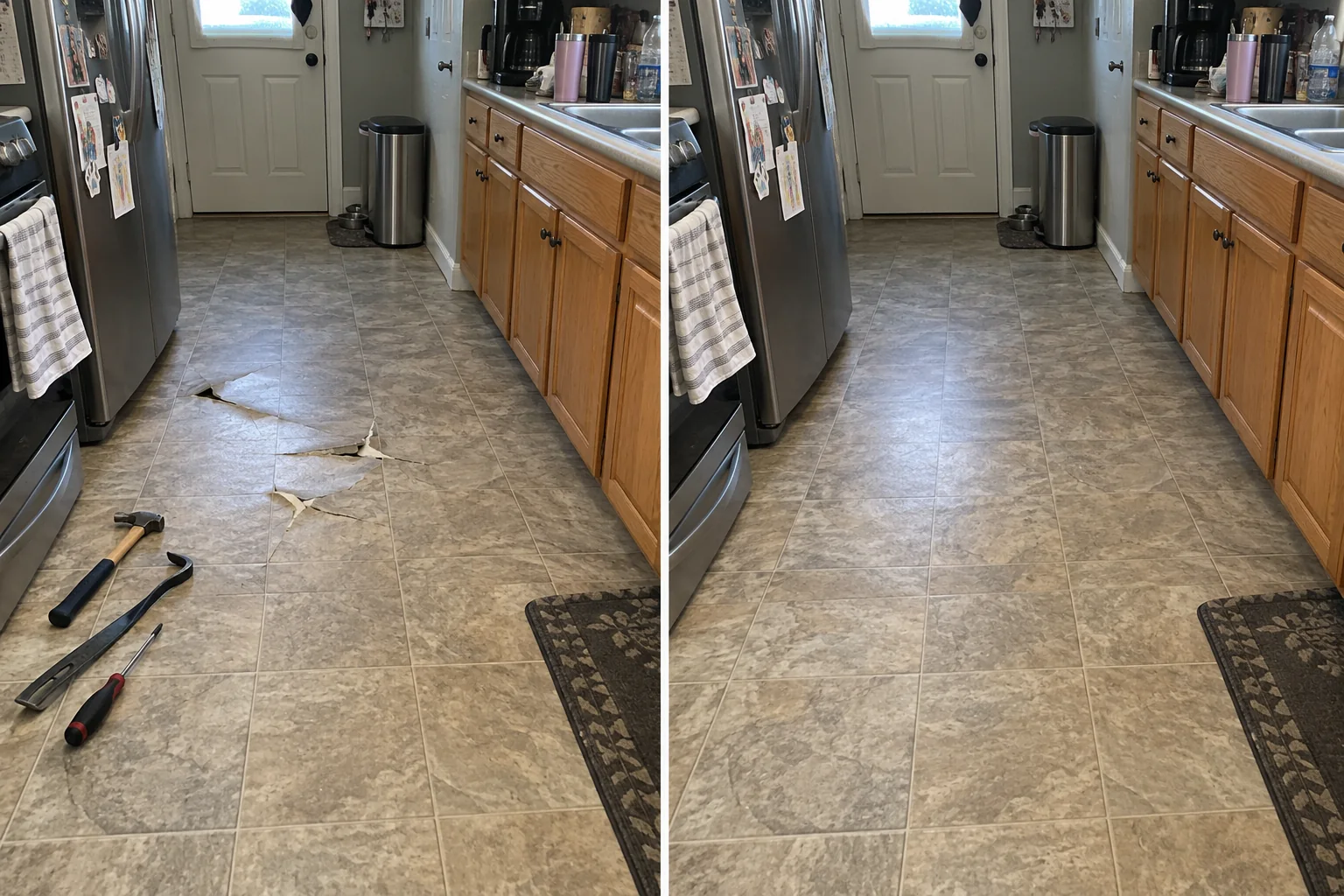
A severely broken tile usually cannot be restored to its original condition by treating only the visible break. Individual replacement may be practical when surrounding tiles remain sound, the supporting surface is serviceable, and compatible replacement tile is available.
Replacement tile should match as closely as practical in size, thickness, material, color, pattern, texture, and finish.
Can One Floor Tile Be Replaced?
Often, yes. One of the major advantages of tile flooring is that a damaged tile can sometimes be removed and replaced without disturbing the entire floor.
The condition underneath the tile matters. If the substrate is cracked, soft, moving, or otherwise compromised, replacing the visible tile alone may not solve the problem.
A Faster Way to Get a Repair Price
Show us the damaged area first. Good photos often give us enough information to prepare a repair quote remotely, saving you from an unnecessary appointment.
Can Several Floor Tiles Be Replaced?
Yes, in some situations. Several tiles may be replaced when damage is localized to a defined area and the surrounding installation remains serviceable. If many tiles throughout a room are cracking, loosening, or moving, the cause should be identified before replacing them one at a time.
Loose Floor Tile Repair
A loose tile may click, shift, or move slightly when stepped on. Possible causes include bond failure, substrate movement, moisture, installation problems, or damage beneath the tile.
Continued movement can crack grout and place stress on neighboring tiles, so the repair should address why the tile lost support or bond rather than simply resetting the visible piece.
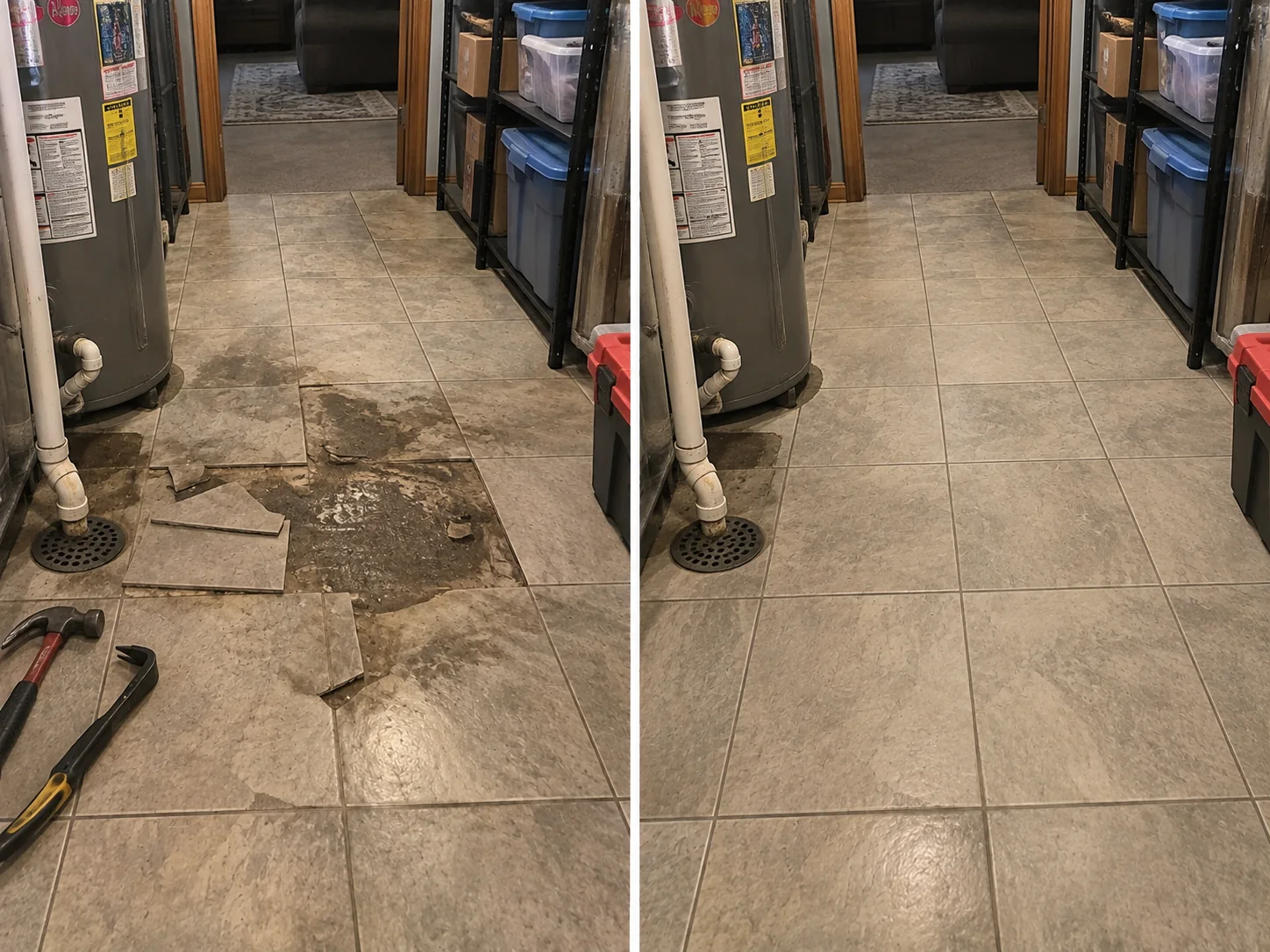
Hollow-Sounding Floor Tile
A hollow sound by itself does not automatically mean a tile has failed. It becomes more important when it appears together with movement, cracked grout, loose tiles, visible separation, or recurring cracks.
The condition of the tile and surrounding installation matters more than sound alone.
Tile Grout Repair
Floor grout can crack, crumble, separate, or disappear from joints because of wear, movement, moisture, deterioration, or installation conditions. Localized grout repair may be practical when the surrounding tile is stable and the underlying floor is not moving.
Recurring grout cracks in the same location can indicate movement underneath. In that situation, replacing grout alone may provide only a temporary cosmetic fix.
Tile Movement & Substrate Problems
Tile performs best over a stable, well-supported surface. Movement underneath can contribute to cracked tile, cracked grout, loose tiles, uneven transitions, and repeated failures.
If the subfloor is the main problem, see Subfloor Repair & Replacement. For larger elevation or support problems, see Sagging & Uneven Floor Repair. For softness or deterioration, see Rotten & Soft Floor Repair.
A Faster Way to Get a Repair Price
Show us the damaged area first. Good photos often give us enough information to prepare a repair quote remotely, saving you from an unnecessary appointment.
Water Damage Under Tile Floors
Tile itself may remain intact after water exposure while grout, underlayment, subflooring, or framing underneath becomes damaged. Loose tile, cracked grout, movement, or a soft area after a leak can indicate that the problem extends below the finished surface.
For damage caused by a plumbing leak or appliance, see the related water-source repair guidance.
Ceramic vs. Porcelain Tile Repair
Ceramic and porcelain tiles differ in density, hardness, thickness, cutting characteristics, and available matching products. Those differences affect how replacement tile is removed, cut, set, and matched.
The exact tile type is helpful but not required before requesting an estimate.
What About Natural Stone Tile?
Natural stone has different repair and matching considerations from ceramic and porcelain.
Matching Existing or Discontinued Tile
Matching is often the biggest limitation in localized tile repair. Differences can occur in size, thickness, color, pattern, finish, texture, edge profile, and production lot.
Check garages, basements, closets, attics, and storage areas for leftover tile or original boxes. A few original pieces can make a major difference when only one or several tiles need replacement.
Should I Keep Leftover Floor Tile?
Absolutely. Keep full tiles, original boxes, manufacturer information, product labels, and lot information when available. Leftover material can be extremely valuable for future localized repairs.
Tile Floor Repair FAQs
Can a cracked tile be repaired instead of replaced?
Sometimes minor surface damage can be improved, but a significant structural crack or break is often better suited for replacement. The supporting surface should also be checked when the cause is not obvious.
Can tile be replaced without removing the whole floor?
Often, yes. Selective repair is practical when the damage is localized, surrounding tile remains sound, compatible material is available, and the substrate is serviceable.
Why does my tile keep cracking in the same area?
Repeated cracking can point to movement, inadequate support, a damaged substrate, installation conditions, or structural movement underneath. Replacing the tile without correcting the cause may lead to another crack.
Does hollow-sounding tile need replacement?
Not necessarily. Hollow sound becomes more concerning when the tile also moves, grout cracks, neighboring tiles loosen, or separation is visible.
Can old tile floors be repaired?
Yes, depending on condition. Older installations can often be repaired selectively, although discontinued tile and previous repairs may make matching more difficult.
Tile Floor Repair in Cedar Rapids & Iowa City
Floor Repair Pros provides tile floor repair in Cedar Rapids, Iowa City, Marion, Hiawatha, Robins, Ely, Swisher, Coralville, North Liberty, Tiffin, Solon, and nearby communities. See our Floor Repair Service Areas for all communities we serve.
What to Include With Your Estimate Request
Tell us how many tiles are affected, where the damage is located, whether tiles are loose or moving, whether grout is cracked or missing, whether water exposure occurred, whether the floor feels soft underneath, and whether leftover tile or original packaging is available.
Helpful photos include a wider view of the floor, close-ups of cracks or chips, loose or moving tiles, damaged grout, transitions, leftover tile, product labels, and any exposed subfloor already visible.
Repair the Tile Floor You Have When It Makes Sense
A cracked or broken tile does not automatically require replacing an entire room. The best repair identifies why the tile failed, confirms whether the supporting floor is sound, and limits replacement to the area that actually needs attention.