
Repair Flooring Affected by Foundation Settlement or Structural Movement
Foundation movement can change the elevation, support, and alignment of the floor system above it. The result may be cracked flooring, new gaps, sloping areas, damaged transitions, separation, or finished flooring that no longer sits correctly.
Floor Repair Pros provides residential floor repair after foundation movement or settlement in Cedar Rapids, Iowa City, and surrounding communities.
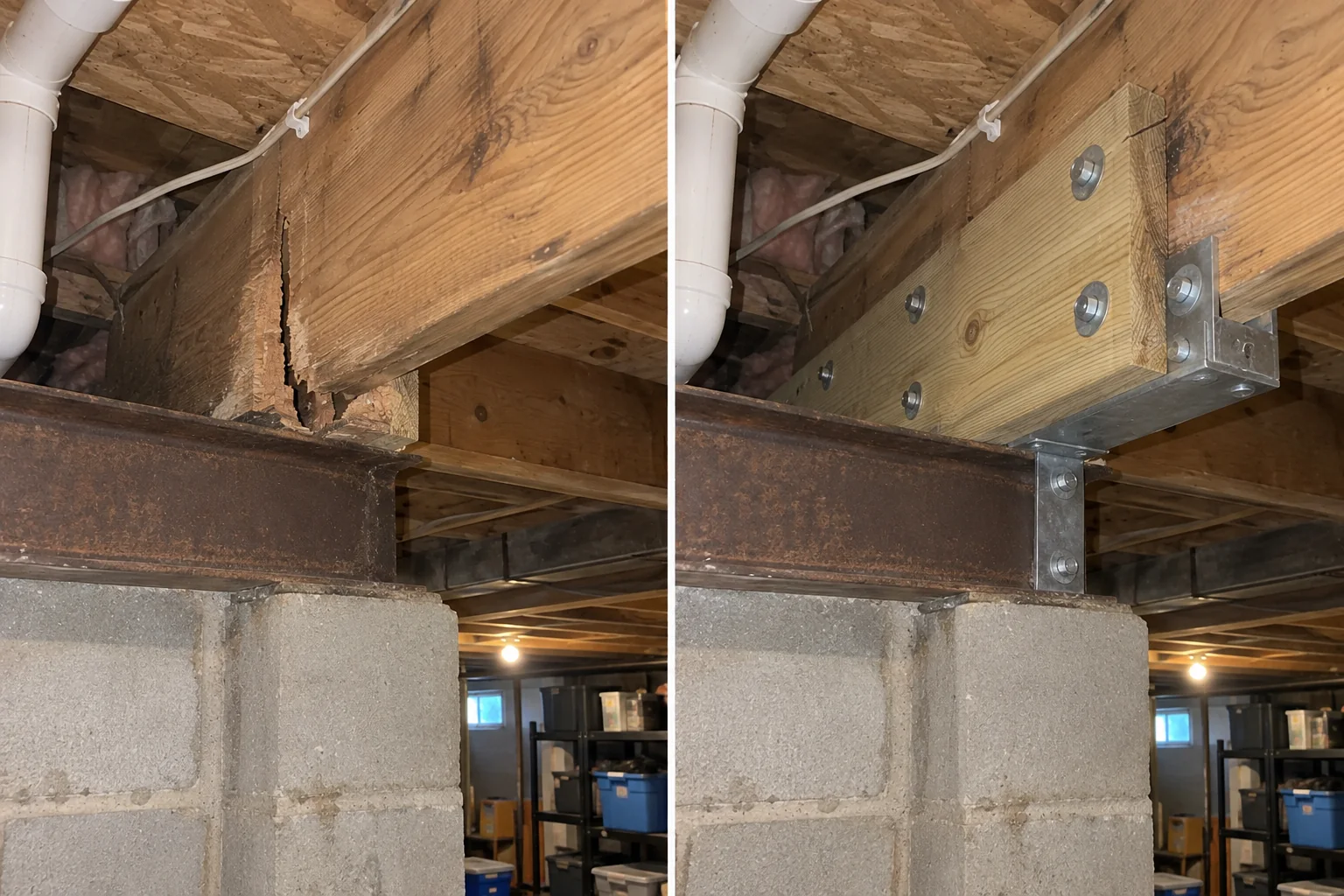
Floor Problems That Can Be Related to Foundation Movement
- New or increasing floor slope
- Flooring cracks that developed with structural movement
- Gaps or separation near walls and transitions
- Damaged or misaligned flooring after settlement
- Localized low areas associated with structural movement
- Floor movement following foundation settlement
- Subfloor stress or damage related to movement below
- Flooring that still needs repair after foundation work is complete
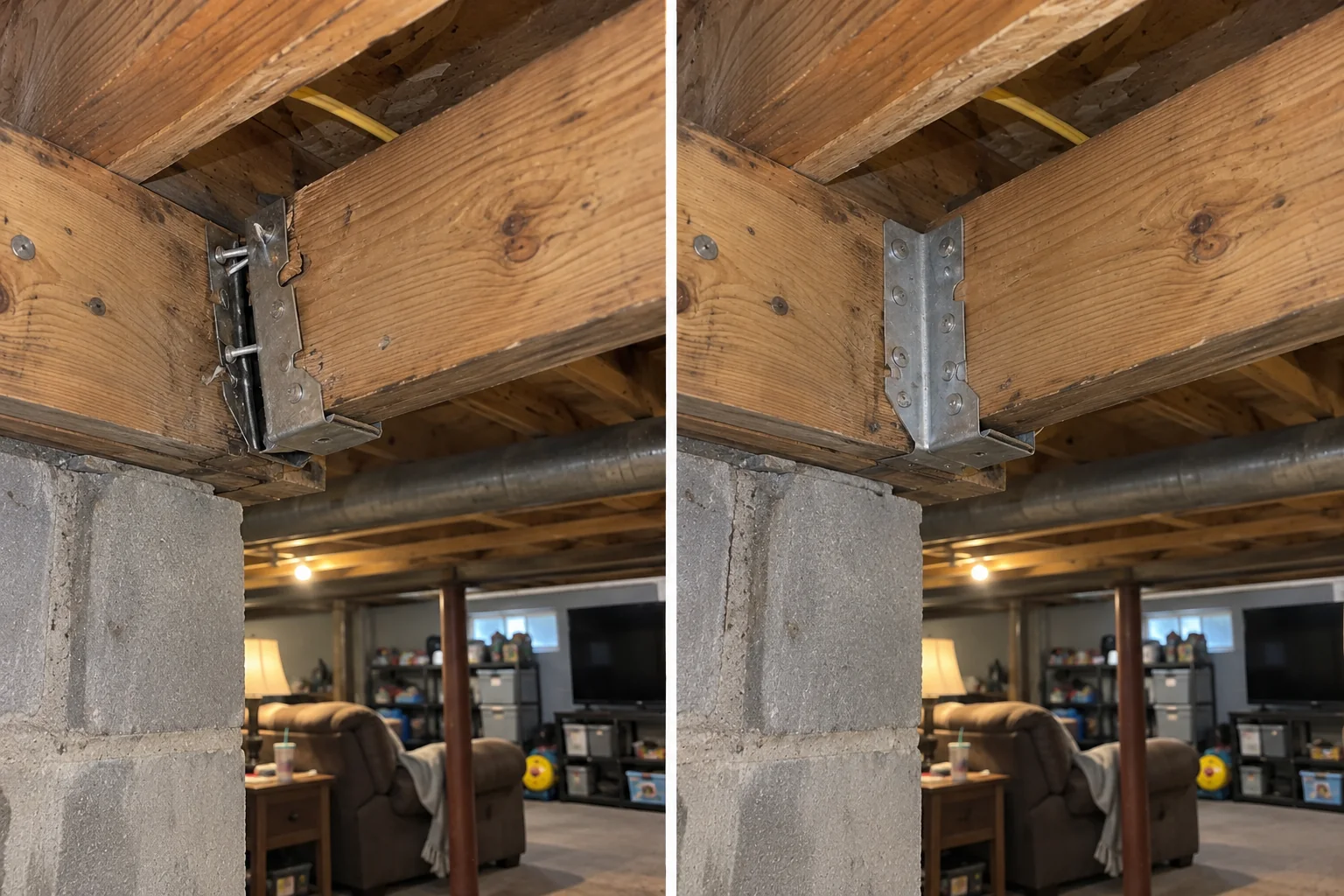
Foundation Movement Does Not Explain Every Uneven Floor
Sloping, cracking, sagging, or unevenness can also come from flooring, subflooring, floor framing, moisture, remodeling, installation conditions, or normal construction variation.
Foundation-related floor repair is most relevant when foundation movement is known, strongly suspected, or already documented. If the main problem is sagging, unevenness, cracking, subfloor damage, or joist damage, start with the repair service that best matches that condition.
Floor Repair After Foundation Settlement
Settlement can change the position or support of part of the floor system. After the underlying condition is addressed, the remaining flooring may still contain cracks, gaps, damaged boards or planks, uneven transitions, or localized elevation changes.
The floor repair should focus on the damage that remains rather than recreating the foundation repair scope.
Flooring Repair After Foundation Repair
Foundation stabilization does not automatically restore the finished flooring. Some floors remain serviceable after the structural work, while others need selective replacement, transition repair, subfloor correction, or localized rebuilding.
Permanent flooring repair is generally best coordinated after the underlying structural movement has been evaluated and, when necessary, stabilized.
Show Us the Floor Problem
A room view, a close-up and an angle showing the damaged edge or movement can answer many of the questions we would ask on site. Most simple, visible repairs can start with a photo-based quote.
Cracked Flooring From Foundation Movement
Foundation movement can place stress on flooring and supporting materials, which may produce cracks, separation, or broken transitions.
Sloping or Uneven Floors From Foundation Movement
A foundation-related elevation change may create a gradual slope, localized low area, or mismatch between adjoining sections of floor.
Sagging & Uneven Floor Repair covers loss-of-support and downward-movement symptoms. Floor Leveling & Uneven Floor Repair covers flatness, high/low spots, humps, dips, and preparation for new flooring.
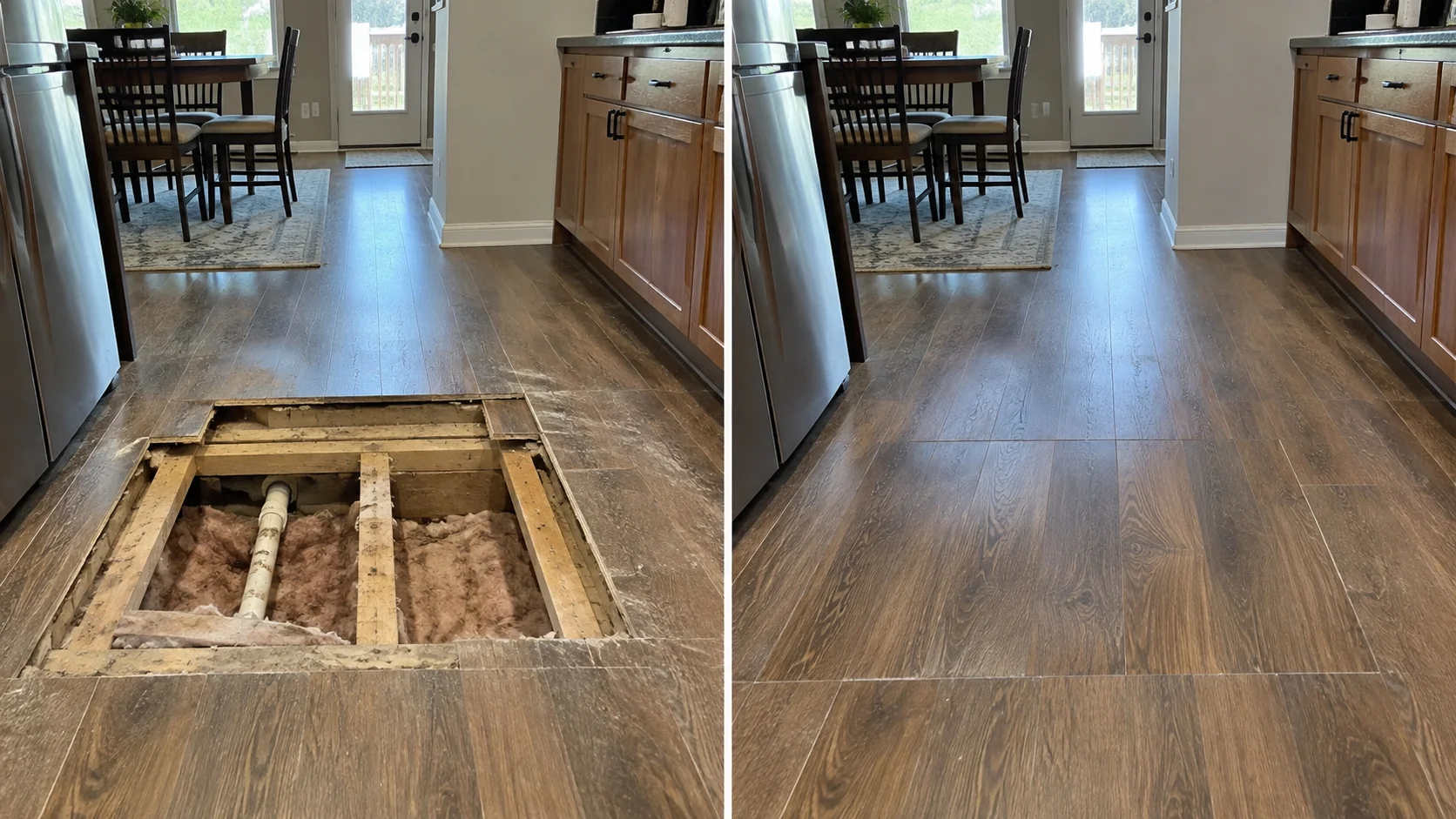
Gaps & Separation After Settlement
Movement can create gaps between flooring and walls, separation at transitions, or changes between connected rooms. These symptoms should be considered with the surrounding floor rather than treated as isolated cosmetic defects.
The repair depends on whether the movement has stopped and whether the flooring, subfloor, or supporting structure was permanently affected.
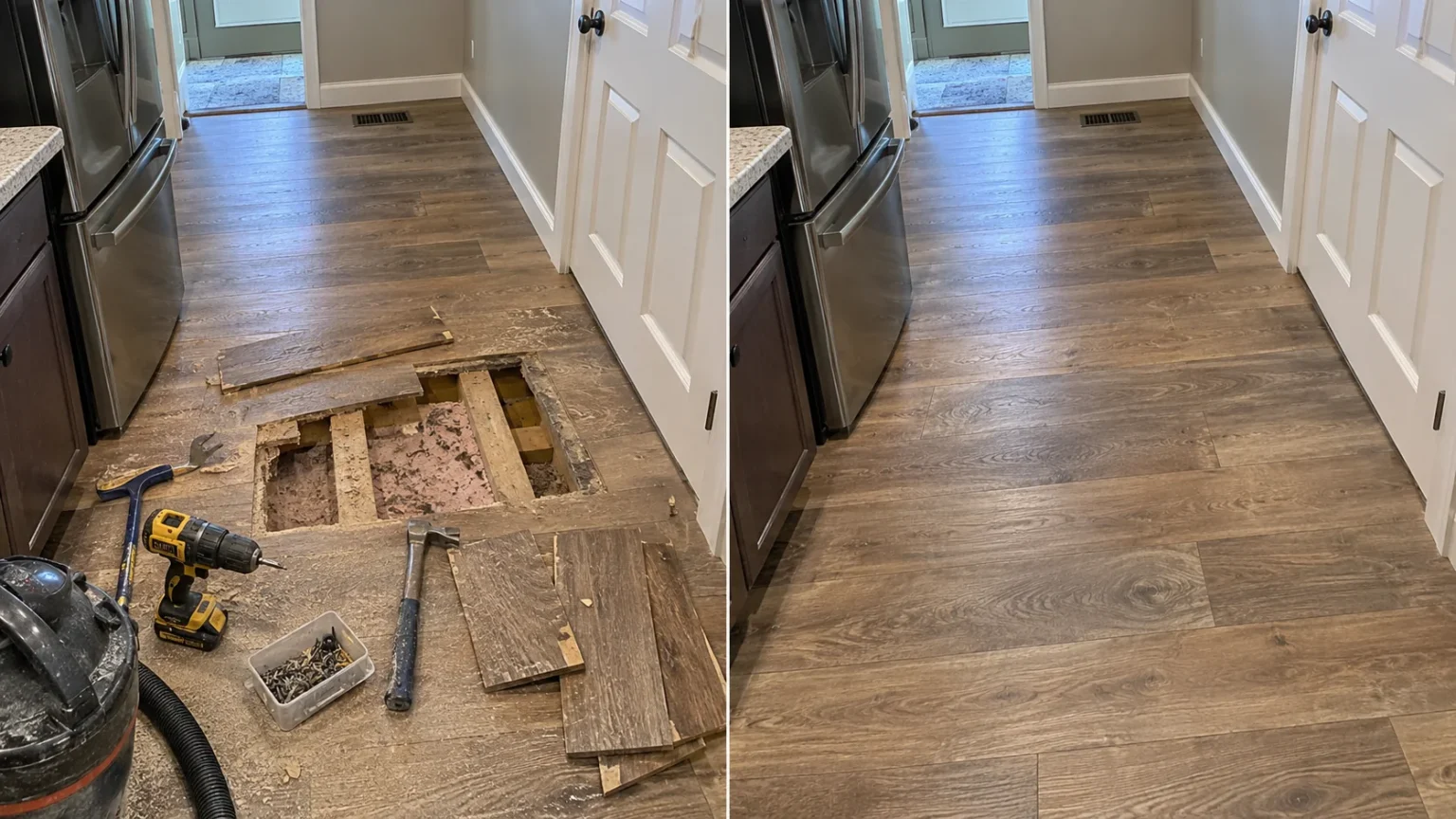
Foundation-Related Subfloor Damage
Structural movement can place stress on the subfloor and create cracking, separation, uneven support, or damage around adjoining floor sections.
Foundation Movement vs. Floor Joist Problems
Both foundation movement and floor-framing problems can create slope, movement, or unevenness. They are not the same repair.
Floor Joist Repair covers joist-specific deterioration, cracking, alteration, reinforcement, and replacement. This service focuses on floor damage caused by foundation or structural settlement.
Show Us the Floor Problem
A room view, a close-up and an angle showing the damaged edge or movement can answer many of the questions we would ask on site. Most simple, visible repairs can start with a photo-based quote.
Material-Specific Foundation Damage
Hardwood, engineered wood, laminate, LVP, tile, stone, and other flooring materials respond differently to structural movement.
Should Flooring Be Repaired Before Foundation Work?
Usually, permanent flooring repair should not be completed while significant structural movement is still active. Repairing the finished floor first can lead to additional cracking, separation, or misalignment if the underlying condition continues.
When foundation or structural work is required, that work should be handled by the appropriate qualified provider before or in coordination with permanent flooring repairs.
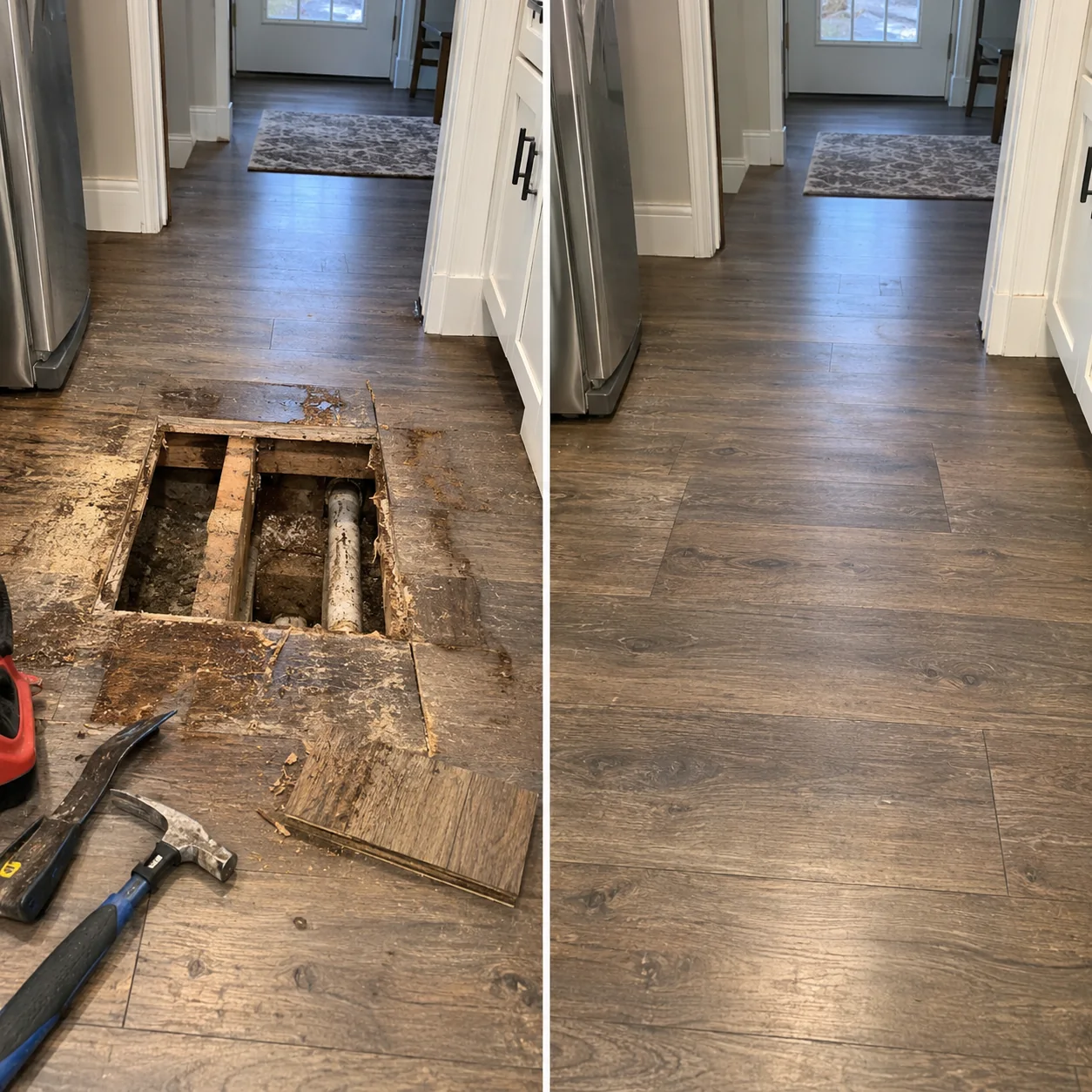
Can Only the Damaged Floor Area Be Repaired?
Often, yes. Localized repair may be practical when the movement has been stabilized, damage is limited, surrounding flooring remains serviceable, and compatible replacement material is available.
Broader replacement may be more practical when damage crosses several connected areas or the flooring can no longer be matched.
Foundation-Related Floor Repair FAQs
Does an uneven floor always mean a foundation problem?
No. Uneven flooring can also result from subfloor conditions, framing, moisture, remodeling, installation, or normal construction variation.
Can foundation settlement crack flooring?
Yes. Structural movement can place stress on finished flooring and supporting layers, which may cause cracks, separation, gaps, or damaged transitions.
Can flooring be repaired after foundation stabilization?
Yes. Once the underlying condition has been addressed, damaged boards, planks, transitions, subfloor areas, or other affected sections can be evaluated for repair.
Should I replace flooring while the foundation is still moving?
Permanent flooring repair is generally better coordinated after the underlying movement has been evaluated and, when necessary, stabilized.
Does foundation repair automatically fix the floor?
No. Structural stabilization and flooring repair are separate scopes. The finished floor may still require localized repair or replacement afterward.
Foundation-Related Floor Repair in Cedar Rapids & Iowa City
Floor Repair Pros provides foundation-related floor repair in Cedar Rapids, Iowa City, Marion, Hiawatha, Robins, Ely, Swisher, Coralville, North Liberty, Tiffin, Solon, and nearby communities. See our Floor Repair Service Areas for all communities we serve.
What to Include With Your Estimate Request
Tell us what foundation or structural issue was identified, whether the condition has been repaired or stabilized, what flooring material is installed, where the floor damage is located, whether the condition is still changing, and whether any subfloor or framing is exposed.
Helpful photos include the affected room, slopes or low areas, cracks, gaps, damaged transitions, wall-to-floor relationships, and any exposed supporting floor components.