
What to Do When Water Damages Your Floor
Water damage can begin with a small leak and spread beneath flooring before the full extent is visible. The finished surface may show swelling, staining, buckling, softness, or odor, while underlayment and subflooring can be affected out of sight.
This homeowner guide explains what to do first, what warning signs to watch for, what may be repairable, and when professional floor repair may be appropriate. If your floor already needs repair after water exposure, see Water-Damaged Floor Repair.
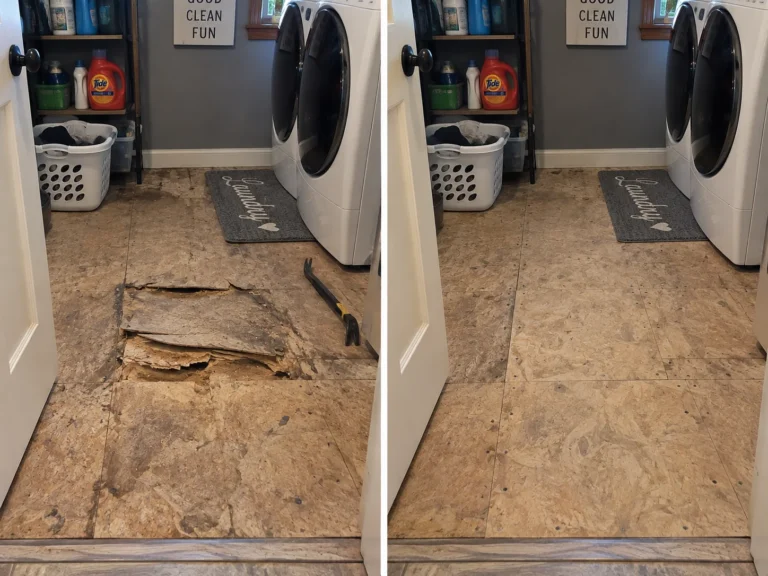
First: Stop or Control the Water Source
When it is safe to do so, stop additional water from reaching the floor before thinking about permanent flooring repair.
- Shut off the appropriate water supply when applicable.
- Stop or disconnect a leaking appliance when it can be done safely.
- Have active plumbing leaks corrected.
- Prevent additional water from entering the affected area.
- Use appropriate water-mitigation or restoration help when the event is larger than a localized flooring problem.
Permanent floor repair should not begin while the source is still active or the affected area is still being dried or stabilized.
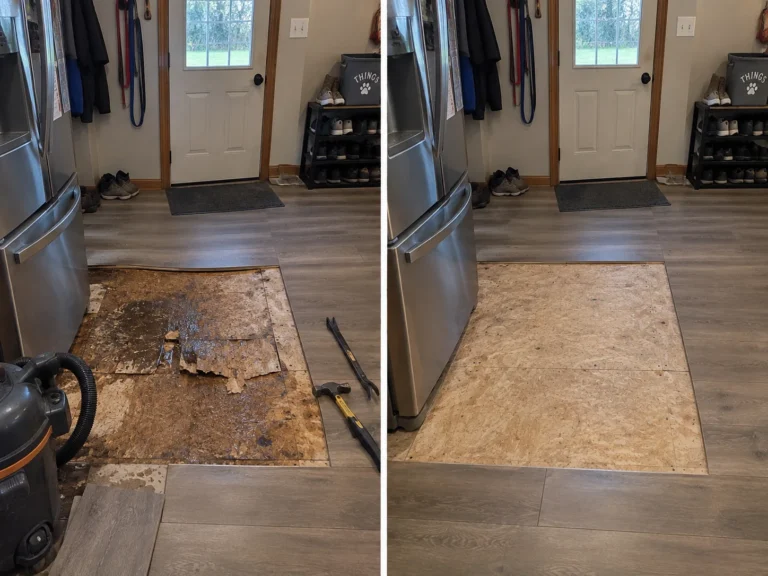
How Water Can Damage More Than the Finished Floor
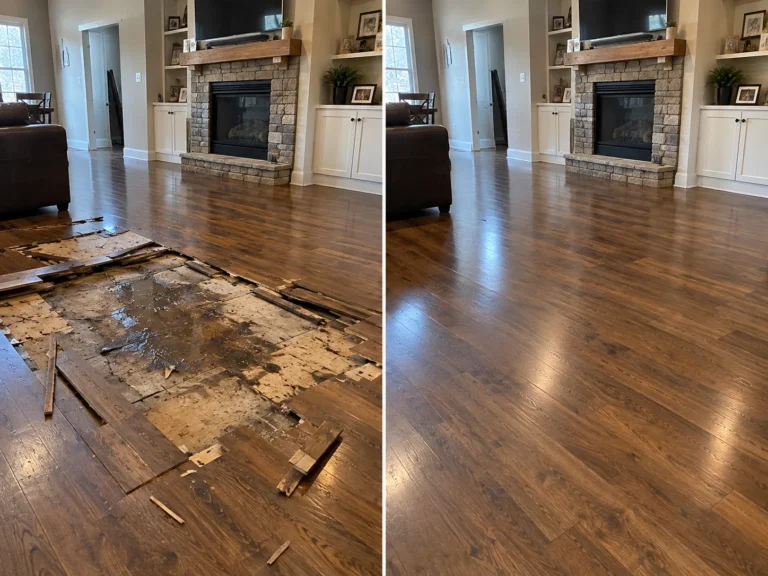
Water can move through seams, joints, edges, transitions, penetrations, and porous materials. Depending on the event, affected layers can include finished flooring, underlayment, subflooring, and—in more severe cases—floor framing.
A floor that looks acceptable from above can still have hidden damage beneath it.
Signs of Water-Damaged Flooring
- Swollen boards or planks
- Buckling, lifting, or raised edges
- Warping, cupping, or distortion
- Dark staining or discoloration
- Loose or separating flooring
- Soft or spongy areas
- New squeaks or movement
- Damaged seams or transitions
- Persistent musty or unusual odor
One symptom does not identify the full repair. The material, source, duration, and condition of the supporting floor all matter.
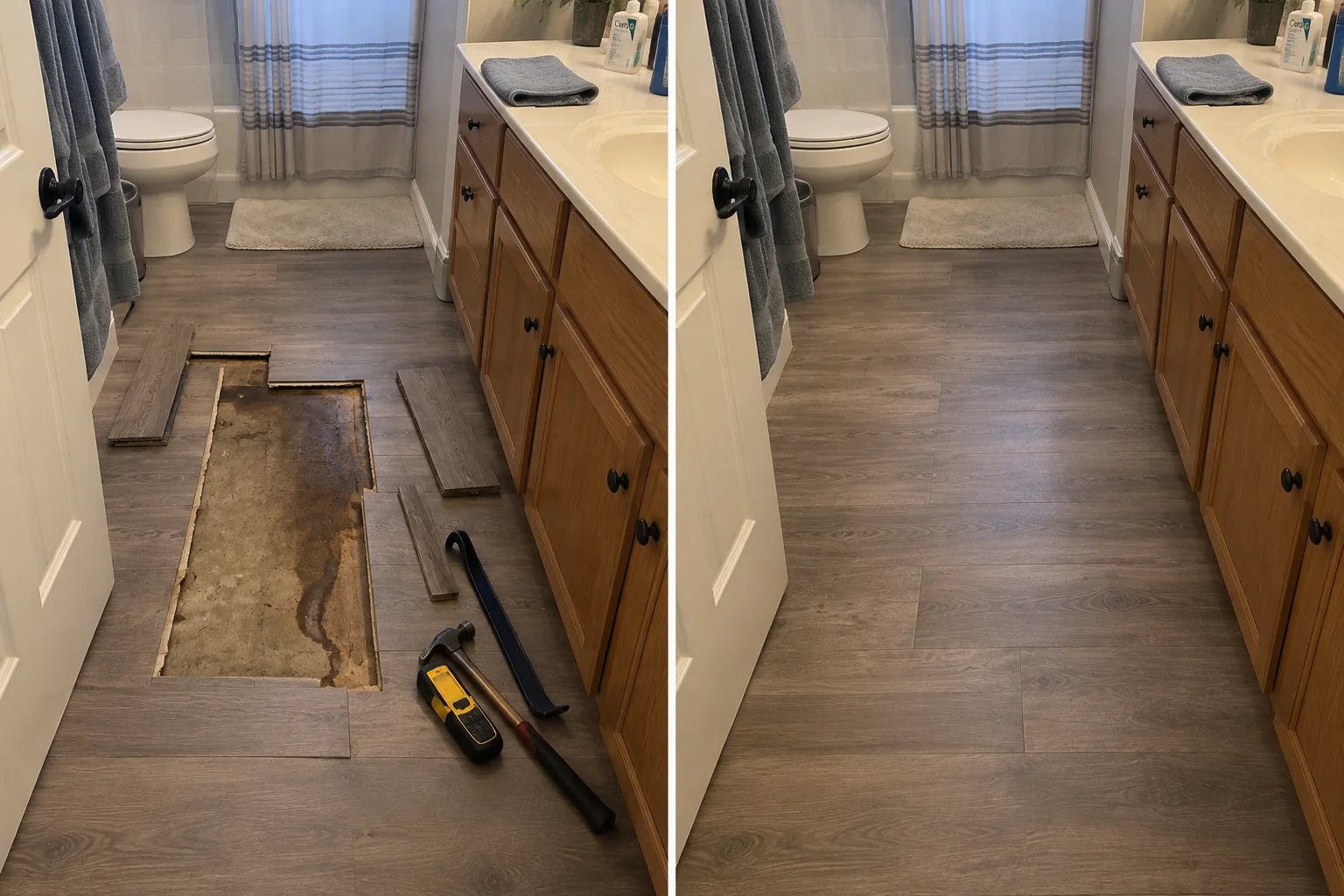
How Do I Know Whether Water Reached the Subfloor?
Possible clues include softness, swelling, staining at exposed edges, persistent odor, movement underfoot, deteriorated material visible after flooring removal, or damage that extends beyond the finished surface.
This guide helps homeowners understand when the layer below the flooring may need to be evaluated.
Send the Damage, Not a Guess
You do not need to diagnose the floor. Send pictures of what you can see and tell us what you feel underfoot. In many cases that is enough for us to quote the repair without an initial visit.
Does Wet Subfloor Always Need to Be Replaced?
No. Wet does not automatically mean permanently damaged. The decision depends on the material, how much water was present, how long it remained wet, whether the material dried appropriately, and whether swelling, delamination, softness, rot, or loss of strength occurred.
Unsound material should not simply be covered with new flooring.
Can Water-Damaged Flooring Be Saved?
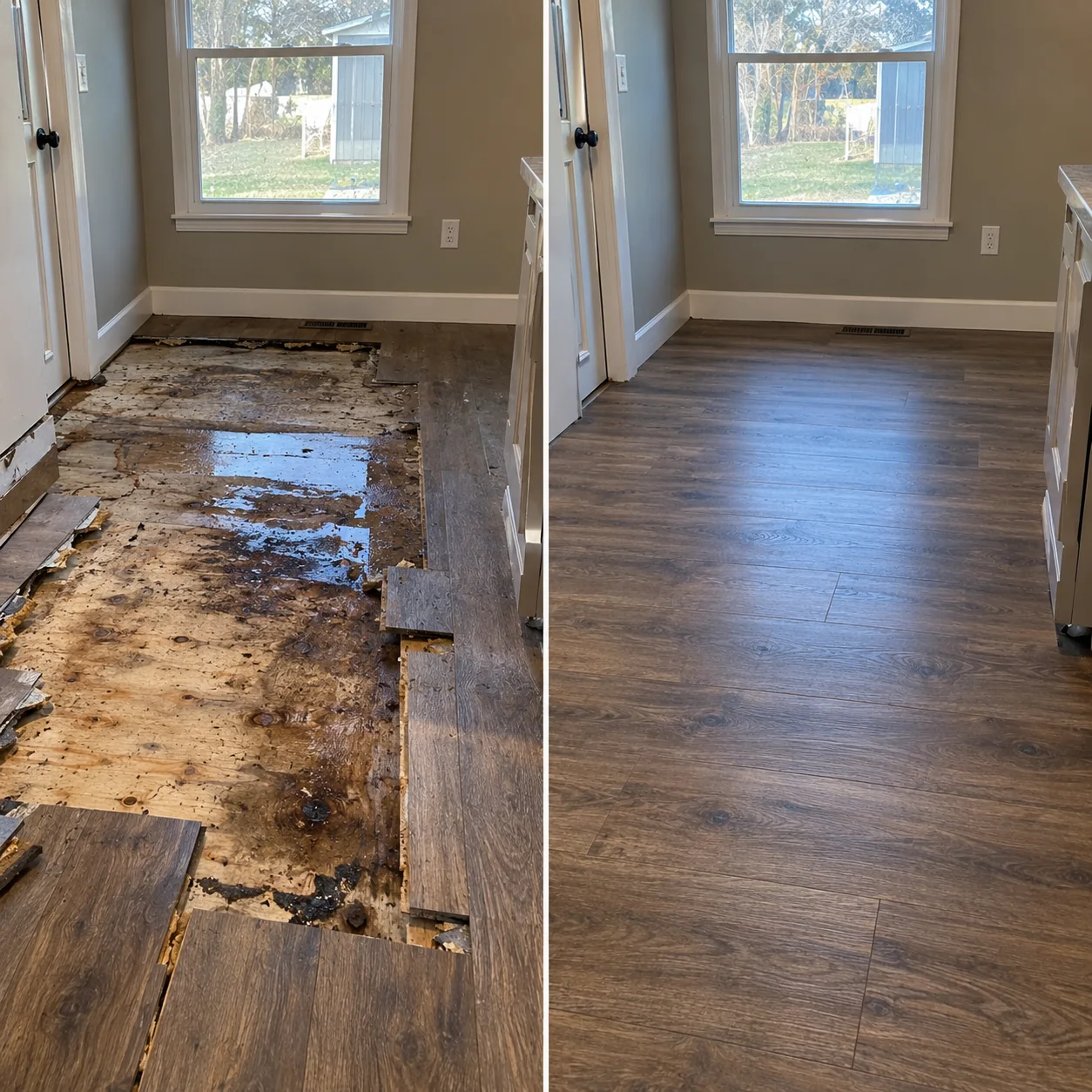
Sometimes. Localized damage may allow selective repair when the water source has been corrected, the affected area is limited, surrounding material remains sound, and compatible replacement flooring is available.
Severe swelling, widespread deterioration, permanent distortion, deep contamination, or extensive supporting-floor damage can make broader replacement more practical.
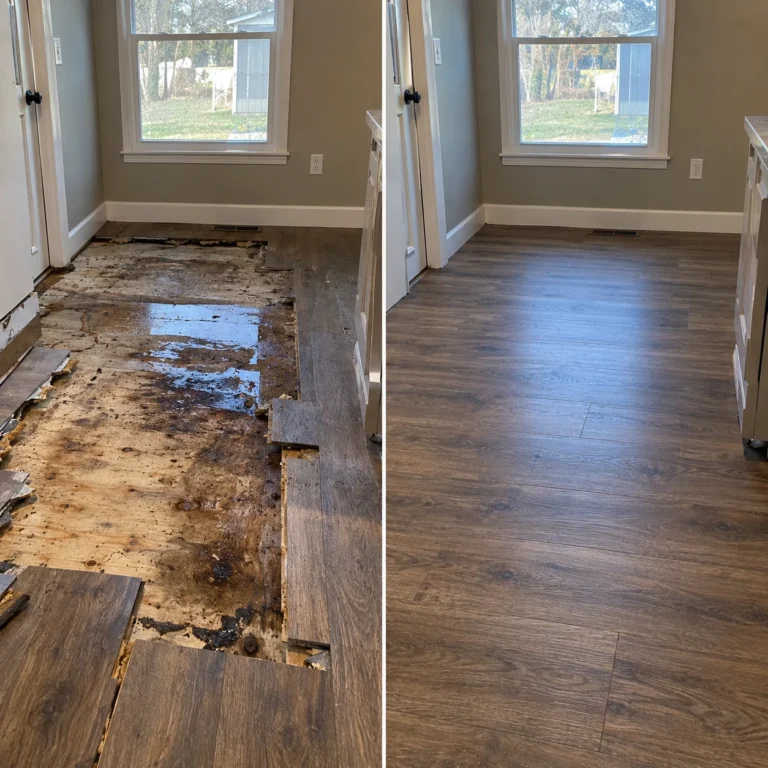
Does Water Damage Mean the Whole Floor Must Be Replaced?
Not necessarily. A leak beneath one appliance, fixture, doorway, or small section of flooring can produce localized damage.
The repair boundary should follow the actual damaged material rather than automatically expanding to the entire room.
How Long Can a Wet Floor Stay Wet?
There is no single safe timeframe for every flooring system. The amount and type of water, flooring material, ventilation, temperature, trapped moisture, and construction below the surface all affect the outcome.
The practical rule is simple: unnecessary moisture exposure should be reduced as promptly and safely as possible, because prolonged exposure can increase swelling, deterioration, odor, and damage below the surface.
Can You Install New Flooring Over Water Damage?
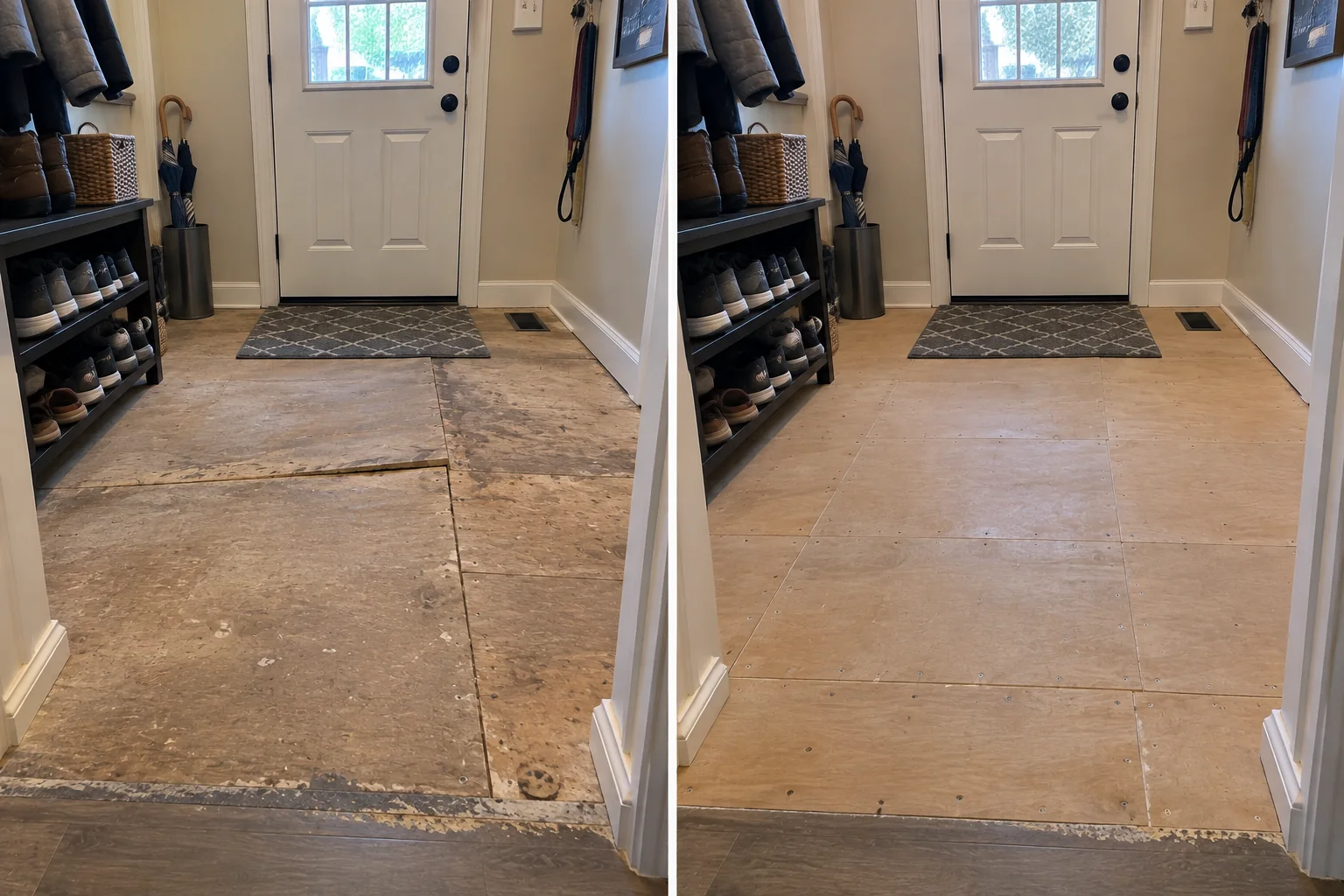
New flooring should not be used to hide an unresolved water-damage problem. The source should be corrected, damaged materials should be evaluated, and the supporting surface should be sound and appropriate for the new flooring.
Covering swollen, soft, rotten, or unstable materials can conceal the problem rather than solve it.
Send the Damage, Not a Guess
You do not need to diagnose the floor. Send pictures of what you can see and tell us what you feel underfoot. In many cases that is enough for us to quote the repair without an initial visit.
Does Water Damage Always Mean Mold?
No. Water exposure does not automatically mean every affected material has mold. However, prolonged damp conditions can support microbial growth.
Mold assessment, environmental testing, water extraction, and remediation are separate specialties. When those concerns exist, they should be handled by the appropriate qualified provider before permanent flooring repair.
What Does a Musty Odor Mean After Water Damage?
A persistent odor can indicate that moisture remains or that porous materials were affected. Flooring, underlayment, subflooring, wood components, and nearby building materials can all retain odor.
The source should be identified rather than simply covered with fragrance or new flooring.
Water Damage From Plumbing vs. Appliances
For damage caused by pipes, supply lines, drains, toilets, sinks, or tubs, see Floor Repair After Plumbing & Pipe Leaks. For dishwasher, refrigerator, ice-maker, washing-machine, or other appliance leaks, see Floor Repair After Appliance Water Damage.
What About Flood or Large-Volume Water Events?
Flooding and large water events can affect a much larger area than a localized leak and may involve safety, sanitation, drying, and building-material concerns beyond flooring repair.
Those situations may require water-restoration or mitigation professionals before floor repair is considered.
Water-Damaged Hardwood, Laminate, LVP, Tile & Other Floors
Different flooring materials respond differently to water. Hardwood may cup or crown, laminate may swell at seams, LVP can trap water beneath it, tile may remain intact while the supporting layers are affected, and engineered flooring can swell or delaminate.
This guide stays focused on homeowner education and decision-making after a water event.
When Is Floor Repair the Next Step?
Floor repair becomes the next step after the active water source has been corrected and any necessary drying, mitigation, or environmental work is complete, but the floor still has physical damage.
- Swelling or permanent distortion remains.
- Boards or planks are loose, damaged, or separated.
- Soft or deteriorated subfloor is present.
- Staining or damaged sections require removal.
- Transitions or adjoining floor areas were affected.
- The floor no longer provides a stable, serviceable surface.
Questions to Ask Before Repairing a Water-Damaged Floor
- Where did the water come from?
- Has the source been fully corrected?
- How far did the water travel?
- What flooring material is installed?
- How long might the area have been wet?
- Does the floor feel soft, swollen, loose, or uneven?
- Is there persistent odor or staining?
- Is the subfloor visible or known to be damaged?
- Is matching replacement flooring available?
Water-Damaged Floor FAQs
Can one water-damaged section of flooring be replaced?
Often, yes, when damage is localized, the surrounding floor remains sound, the source has been corrected, and compatible replacement material is available.
Why is my floor still swollen after it dried?
Some flooring materials remain permanently distorted after moisture exposure. Drying removes moisture but does not always reverse physical swelling, delamination, cupping, or warping.
Can water travel farther than the visible stain?
Yes. Water can move beneath flooring, through seams, along underlayment, and into adjacent areas before becoming visible.
Should flooring be removed immediately after every leak?
Not necessarily. The correct response depends on the water event, flooring system, safety conditions, and whether professional drying or inspection is needed.
Who repairs the leak and who repairs the floor?
Plumbing, appliance repair, water mitigation, environmental remediation, and flooring repair can be separate scopes. Floor Repair Pros focuses on repairing the damaged floor system after the source and any required mitigation work are addressed.
Water-Damaged Floors in Cedar Rapids & Iowa City
This guide applies to homeowners throughout Cedar Rapids, Iowa City, Marion, Hiawatha, Robins, Ely, Swisher, Coralville, North Liberty, Tiffin, Solon, and nearby communities. If your floor has already been damaged by water and needs repair, see Water-Damaged Floor Repair. See our Floor Repair Service Areas for all communities we serve.
What to Document Before Requesting a Floor Repair Estimate
Record the water source, when it was discovered, how long the area may have been wet, whether the source has been corrected, the flooring material, visible swelling or staining, soft areas, odor, and whether any flooring has already been removed.
Helpful photos include the entire affected room, the original water-source area, close-ups of damaged flooring, transitions, swollen or warped areas, and any exposed underlayment or subfloor.
The Key Takeaway
Water damage does not automatically mean the entire floor is lost. The right decision depends on the source, flooring material, exposure, extent of damage, and condition of the layers underneath.