
Frequently Asked Questions About Floor Repair
Floor damage can involve the finished flooring, underlayment, subfloor, framing, moisture, movement, or a combination of conditions. These FAQs answer common questions homeowners ask before they know what type of floor repair their problem may require.
For detailed information, choose the floor-repair service that best matches the problem. Floor Repair Pros serves Cedar Rapids, Iowa City, and surrounding communities.
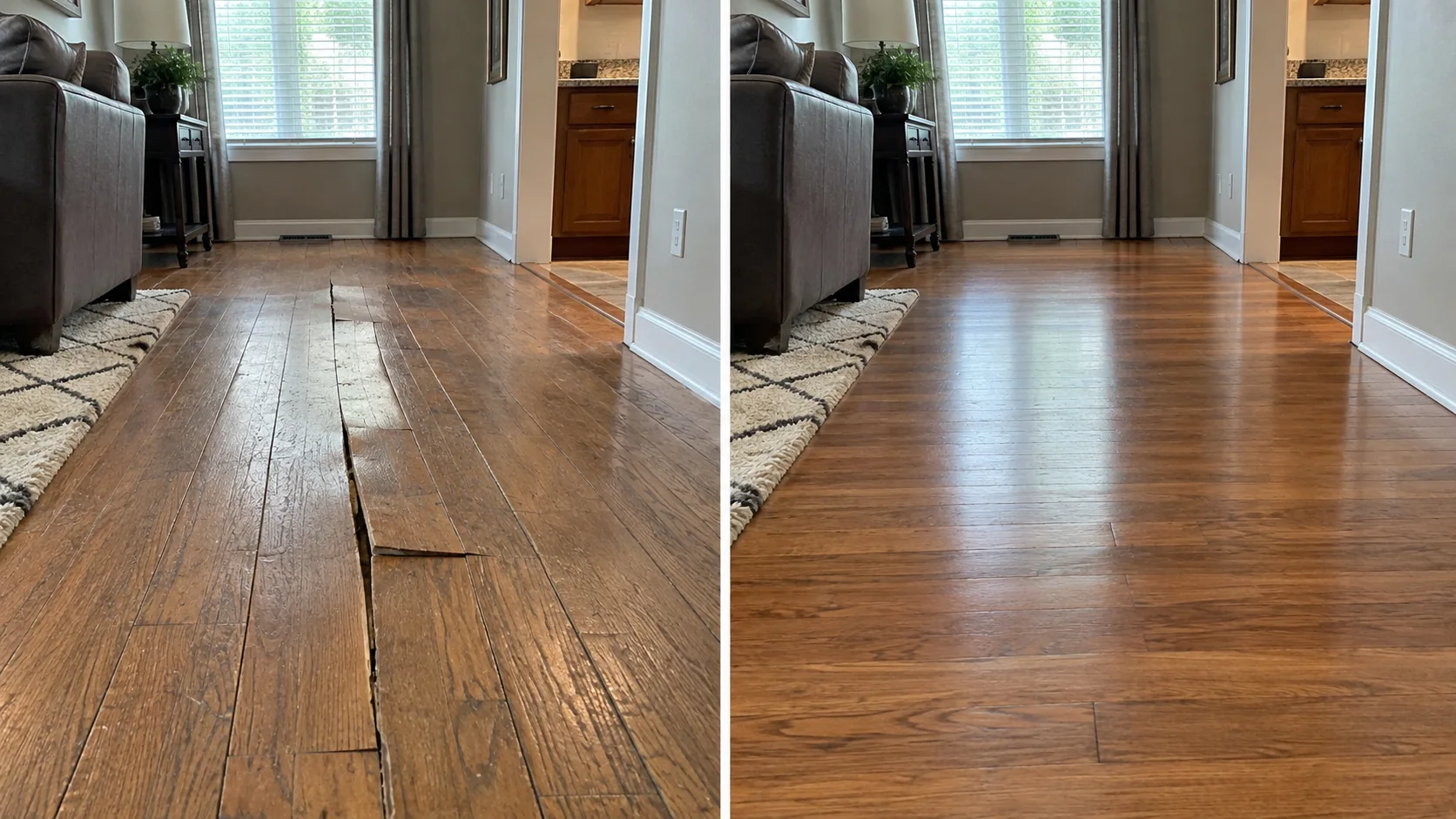
Can damaged flooring be repaired instead of replaced?
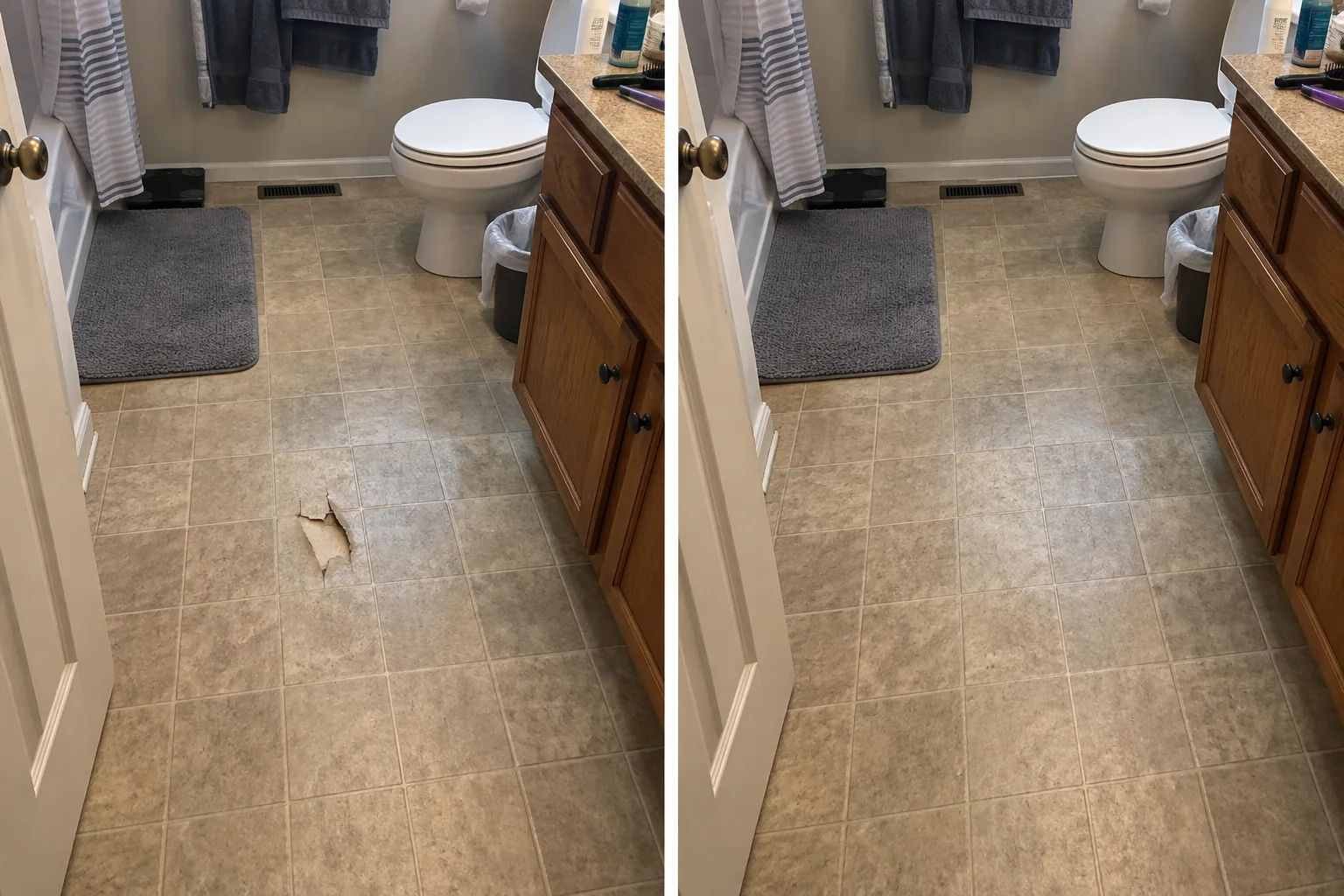
Often, yes. Localized repair may be practical when damage is limited, surrounding flooring remains serviceable, the supporting floor is sound, and compatible replacement material is available. Widespread deterioration or unavailable matching material can make broader replacement more practical.
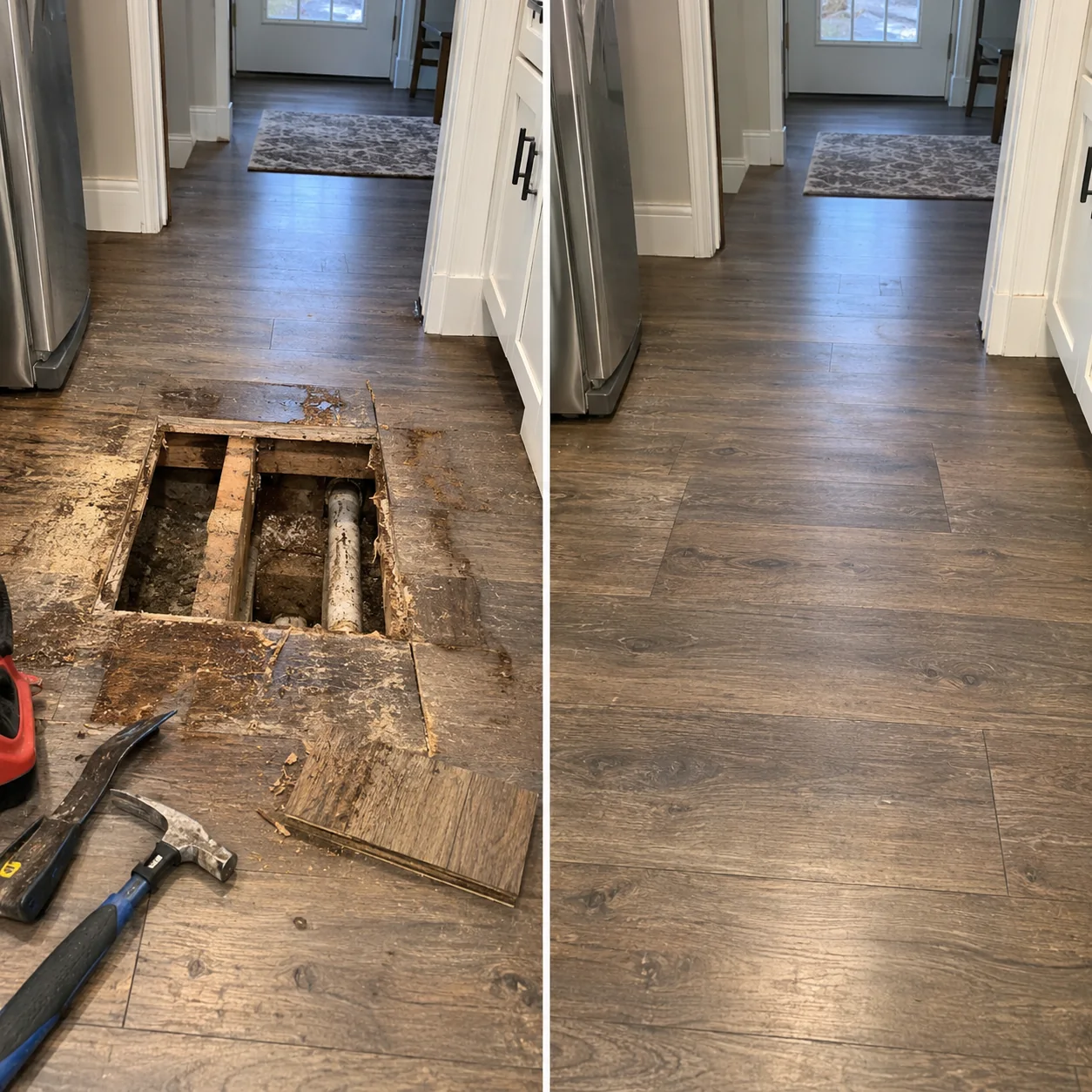
How do I know whether to repair or replace my floor?
Consider the size and depth of damage, flooring material, condition of the surrounding floor, supporting-floor condition, cause of damage, and availability of matching material. The goal is to replace only what actually needs replacement.
Can only one section of flooring be repaired?
Yes in many situations. Individual boards, planks, tiles, or localized sections can sometimes be repaired or replaced without removing the entire room.
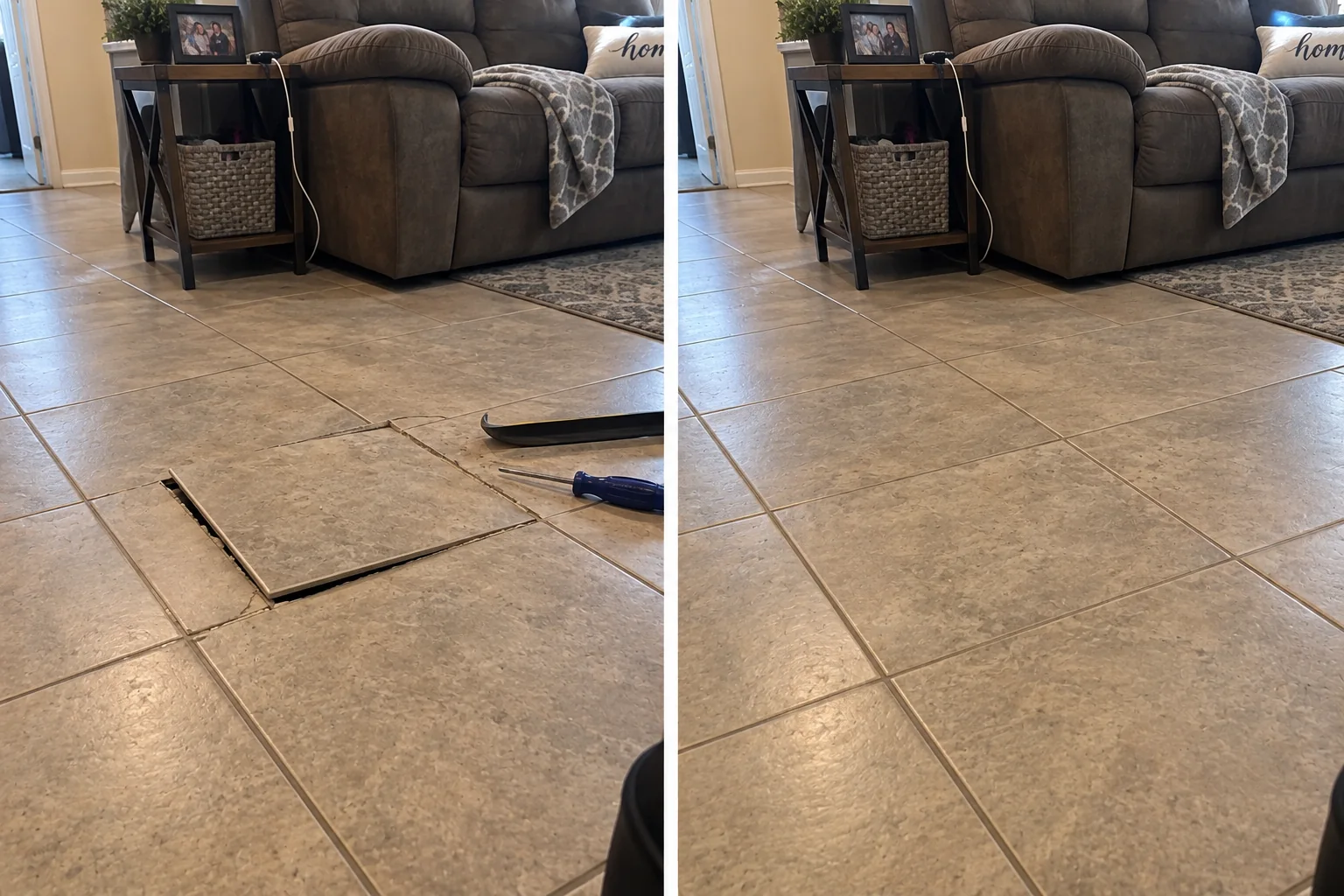
Can one damaged plank or board be replaced?
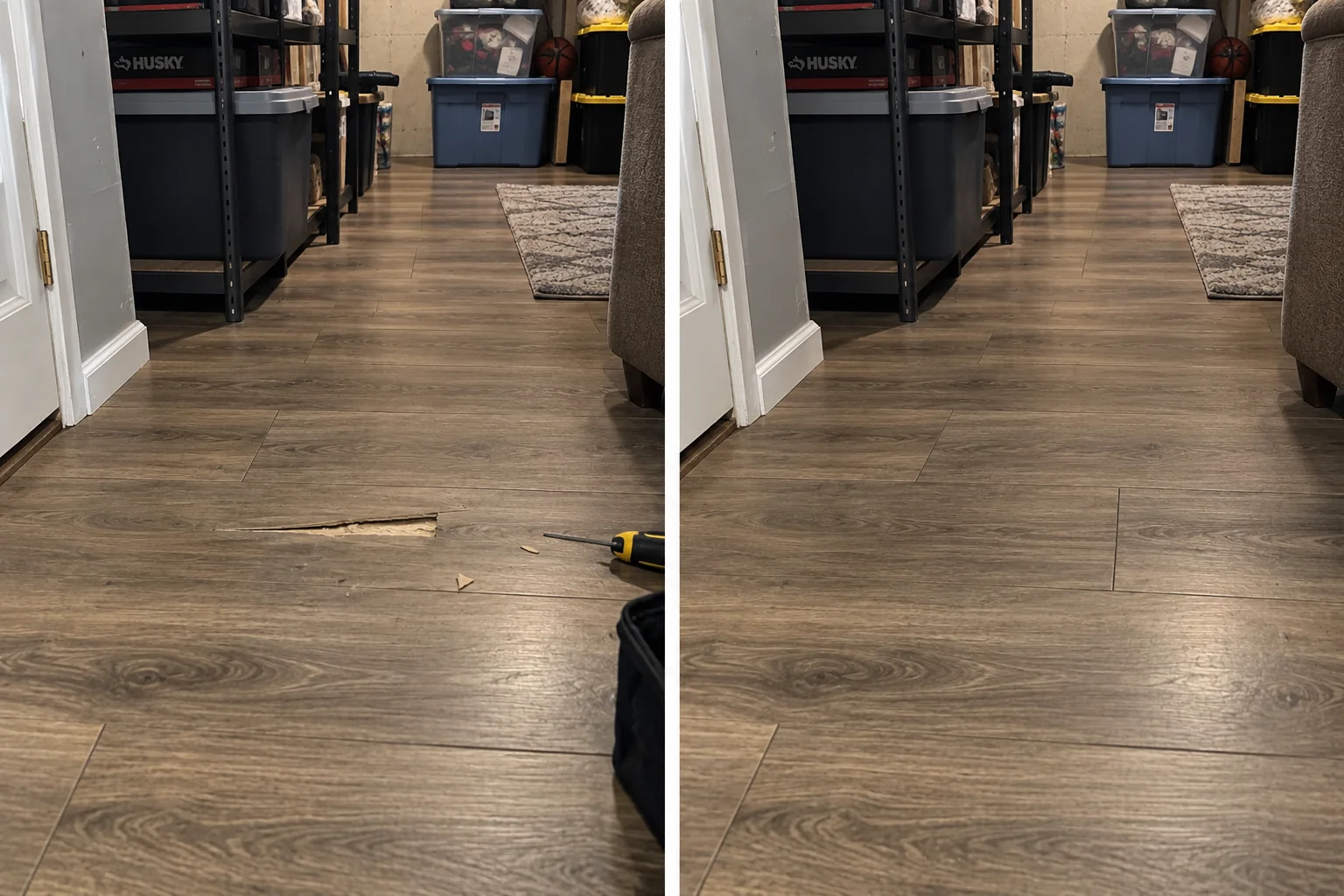
Often. Feasibility depends on the flooring type, installation method, location of the damaged piece, locking or fastening system, and availability of matching material.
Photo-First Estimates
We built the estimate process around photos because many repairs do not require a measuring appointment. Upload up to six images; we will let you know if the condition actually needs an on-site look.
What if my flooring is discontinued?
A discontinued product does not automatically prevent repair. Remaining inventory, saved material, donor material from another area, or a compatible replacement may sometimes make localized repair possible.
Can old flooring still be repaired?
Yes. Older flooring can be a good repair candidate when most of it remains sound and the damage is localized. Matching color, dimensions, finish, and material can be the main challenge.
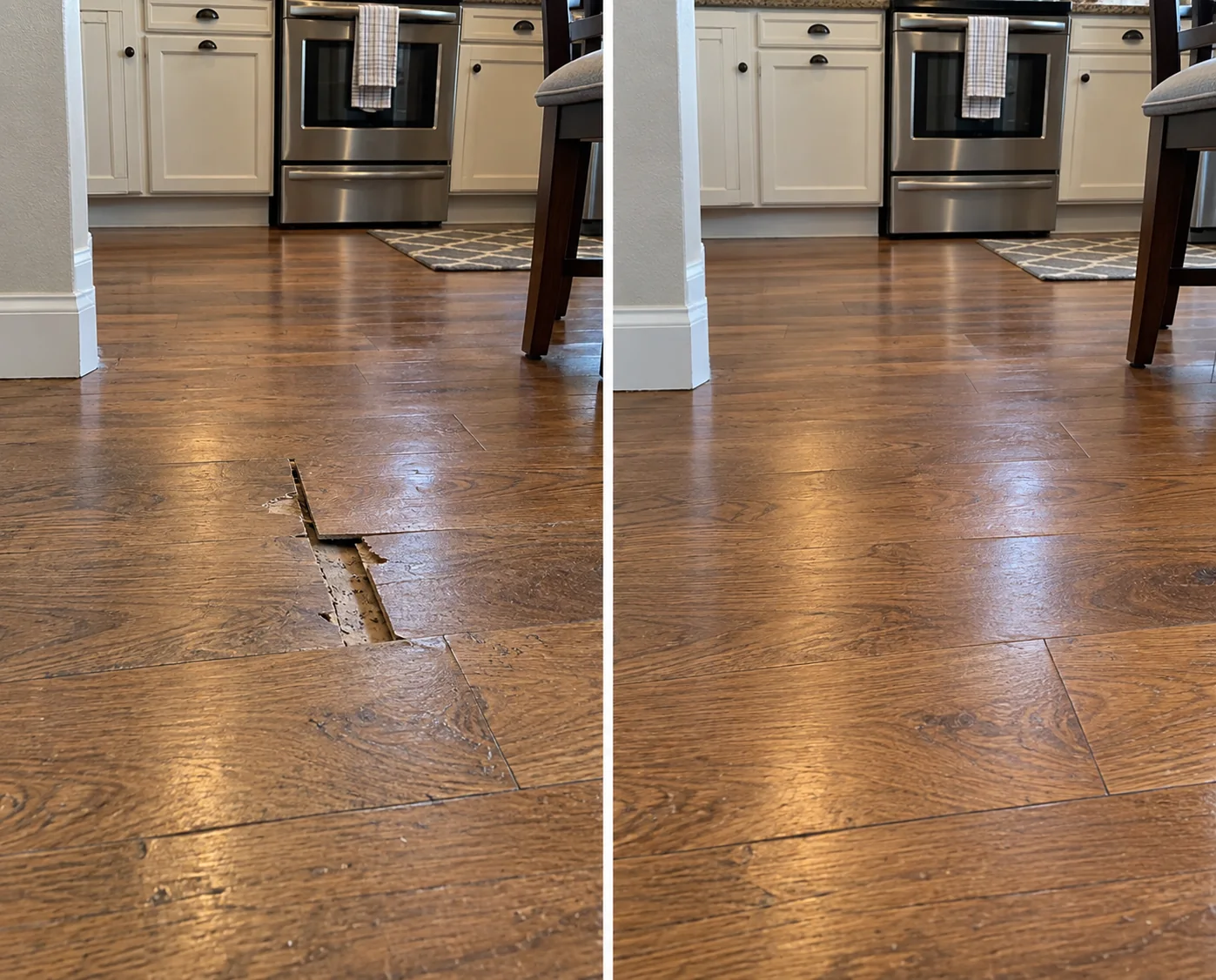
Does floor repair always require removing the subfloor?
No. If the subfloor remains sound, many finished-floor repairs can be completed without replacing it. Soft, rotten, swollen, delaminated, or structurally deteriorated subfloor may require repair first.
Can new flooring be installed over a damaged floor?
Not when the supporting surface is unsuitable. Softness, rot, significant movement, damaged subfloor, or major unevenness should be addressed before new finished flooring is installed.
What causes floor damage?
Common causes include water, plumbing and appliance leaks, moisture, pet damage, impact, material movement, cracks, fire or heat, subfloor deterioration, framing problems, remodeling, and foundation movement.
Photo-First Estimates
We built the estimate process around photos because many repairs do not require a measuring appointment. Upload up to six images; we will let you know if the condition actually needs an on-site look.
What should I do if my floor gets wet?
Stop the water source when it is safe to do so, document the affected area, and address standing water or needed mitigation. Then determine whether the finished flooring, underlayment, subfloor, or framing was permanently damaged. See Water-Damaged Floor Repair and the Homeowner’s Guide to Water-Damaged Floors for repair information and next steps.
Does wet subfloor always need replacement?
No. Wet and permanently damaged are not the same thing. Replacement is more likely when subflooring becomes soft, swollen, delaminated, rotten, crumbling, or unable to provide reliable support.

What if my floor feels soft or spongy?
Softness can involve finished flooring, underlayment, subfloor, or framing. Water damage and deterioration are common causes.
What if my floor is sagging or sinking?
Sagging or sinking can indicate a loss of support or movement below the finished surface. For sagging, sinking, or loss-of-support symptoms, see Sagging & Uneven Floor Repair.
What if my floor has a high spot, low spot, hump, or dip?
Those conditions belong to Floor Leveling & Uneven Floor Repair when the primary concern is flatness, localized elevation differences, transitions, or preparation for new flooring.
Does an uneven floor mean I have a foundation problem?
No. Unevenness can also come from subfloor conditions, framing, remodeling, construction variation, moisture, or previous repairs. Foundation-Related Floor Problems & Repair applies when foundation movement or settlement is the defining cause.
What should I do about a cracked or split floor?
The flooring material, crack pattern, size, location, whether the crack is growing, and supporting-floor condition all matter.
What should I do about buckled, warped, or swollen flooring?
Determine what caused the change in shape or position before forcing the flooring back into place. Moisture, expansion pressure, installation conditions, or material movement may be involved. See Buckled, Warped & Swollen Floor Repair.
Can squeaky floors be repaired?
Often. Squeaks and creaks commonly involve movement or friction between floor components. For noise caused by movement or friction in the floor system, see Squeaky & Creaking Floor Repair.
Can pet-damaged flooring be repaired?
Often. Pet urine, scratches, gouges, chewing, odor, staining, and repeated moisture can create localized or deeper damage. See Floor Repair After Pet & Animal Damage.
Can fire- or heat-damaged flooring be repaired?
Sometimes. Localized scorch, burn, smoke, soot, or heat damage may allow selective repair, while severe charring, melting, distortion, or structural damage can require replacement. See Floor Repair After Fire, Smoke & Heat Damage.
Can hardwood floors be repaired?
Yes, depending on the damage. Individual boards and localized areas can often be addressed when the surrounding hardwood remains sound. For damage to solid-wood flooring, see Hardwood Floor Repair.
Can engineered wood floors be repaired?
Sometimes. Repairability depends on the wear layer, core condition, installation method, damage, and matching material. See Engineered Wood Floor Repair.
Can laminate floors be repaired?
Often, especially when damage is limited to replaceable planks and compatible material is available. Swelling or widespread water damage may require a larger repair. See Laminate Floor Repair.
Can vinyl or LVP flooring be repaired?
Often. Individual planks or localized sections may be replaceable depending on whether the flooring is floating, click-lock, glue-down, or sheet vinyl. See Vinyl & LVP Floor Repair.
Can tile or natural stone floors be repaired?
Yes. Individual damaged pieces can often be replaced when the surrounding floor and supporting surface remain sound. For ceramic or porcelain tile, see Tile Floor Repair; for natural stone, see Stone & Natural Stone Floor Repair.
Can concrete floors be repaired?
Often. Cracks, spalling, pitting, damaged edges, and localized deterioration may be repairable depending on the cause and slab condition. See Concrete Floor Repair.
Should I repair an uneven floor before installing new flooring?
The supporting surface should meet the new flooring manufacturer’s installation and flatness requirements. Significant high spots, low spots, movement, or damaged supporting materials should be addressed first.
How long does floor repair take?
It depends on the flooring material, size and depth of damage, accessibility, material availability, subfloor involvement, finish requirements, and whether another problem must be corrected first.
How much does floor repair cost?
There is no single price that applies to every repair. Material, affected area, damage depth, accessibility, subfloor condition, matching requirements, removal, and finish work all affect cost. An estimate should be based on the actual repair scope.
What photos should I send with an estimate request?
Send a wide view of the room, a full view of the damaged area, close-ups of the damage, transitions and adjacent flooring, and any visible subfloor or framing. For water damage, include staining, swelling, softness, or the known source when visible.
Do I need to diagnose the floor before requesting an estimate?
No. Describe what you see, where it is, when you noticed it, what happened beforehand, and what flooring material is installed if you know. Photos can provide useful initial context.
Can photos show exactly what is wrong with a floor?
Not always. Photos can show surface damage, swelling, cracks, staining, buckling, and exposed components, but they may not reveal hidden moisture, deterioration, movement, or damage below the finished flooring.
What areas does Floor Repair Pros serve?
Floor Repair Pros serves Cedar Rapids, Iowa City, Marion, Hiawatha, Robins, Ely, Swisher, Coralville, North Liberty, Tiffin, Solon, and nearby communities. See our Floor Repair Service Areas for all communities we serve.
Still Not Sure Which Floor Repair Service Fits?
Start with the symptom or cause you can identify most clearly—water, softness, sagging, squeaking, cracking, buckling, a material type, a room, a plumbing or appliance leak, fire, pets, or foundation movement.
Send a few clear photos and a short description of the problem.