
Repair Water-Damaged Flooring, Subfloors & Supporting Floor Components
Water can damage much more than the surface you can see. Depending on the source, duration, flooring material, and floor construction, moisture may affect finished flooring, underlayment, subflooring, floor joists, or more than one layer at the same time.
Floor Repair Pros provides residential water-damaged floor repair throughout Cedar Rapids, Iowa City, and surrounding communities. The repair should follow the actual damage left behind after the water source is controlled—not simply the first wet spot that appeared.
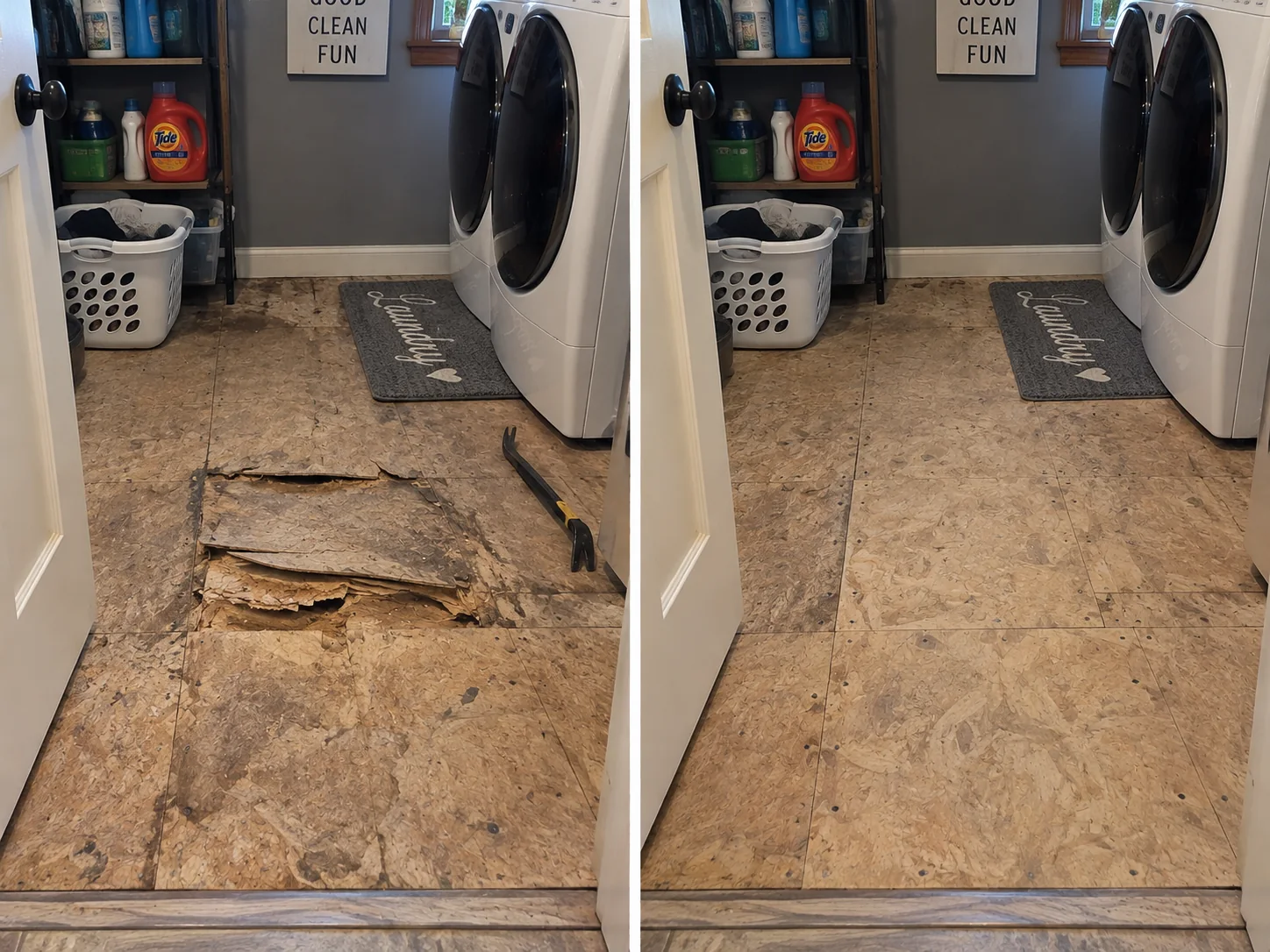
Signs a Floor May Have Water Damage
Water damage can appear immediately or become more noticeable after materials have had time to swell, dry, move, or deteriorate. Common signs include:
- Swollen, warped, cupped, or buckled flooring
- Soft or spongy areas
- Staining or discoloration
- Loose boards, planks, or tile
- New squeaking, popping, or movement
- Uneven or sagging areas
- Visible subfloor deterioration
- Rot or loss of material strength
- A floor that simply feels different after a water event
None of these symptoms alone identifies which floor layer is damaged. The important question is what condition remains after the moisture event and drying or mitigation work.
How Far Can Water Travel Under Flooring?
Potentially farther than the visible wet area. Water can move through seams, underlayment, subfloor joints, plumbing penetrations, cabinet bases, wall edges, low areas, and adjacent rooms. That is why the repair boundary should be based on the affected materials rather than the outline of the original puddle or stain.
Water Damage Can Affect Several Floor Layers
A water-damage repair may involve one layer or a chain of materials:
- Finished flooring — hardwood, engineered wood, vinyl/LVP, laminate, tile, or another surface
- Underlayment — when present beneath the finished floor
- Subfloor — including plywood or OSB that may swell, soften, delaminate, or deteriorate
- Floor joists or localized framing — when prolonged or severe moisture reaches supporting wood
Repairing only the visible surface can leave a deeper problem unresolved. Likewise, a material that became wet does not automatically need replacement if it remains serviceable after the event.
Wet Does Not Automatically Mean Damaged
A floor becoming wet is not the same thing as a floor being permanently damaged. Whether material can remain depends on factors such as the material type, amount of water, duration of exposure, drying conditions, swelling, delamination, warping, rot, attachment, and remaining strength.
Replacement becomes more likely when a material is permanently swollen, delaminated, rotten, structurally weakened, broken, severely warped, or no longer able to perform as intended.
Water-Damaged Finished Flooring
Different flooring materials react differently to moisture.
Hardwood may cup, crown, stain, warp, buckle, separate, or move at joints. Vinyl and LVP may lift, separate, curl, or hide trapped moisture below. Laminate can swell at seams and edges or permanently distort. Tile may remain visually intact while movement or damage develops in the supporting layers beneath it.
Water-Damaged Subfloors & Joists
Subflooring is often one of the most important hidden layers to evaluate after water exposure. Plywood or OSB may swell, soften, delaminate, lose strength, or develop rot after prolonged moisture. If water continues deeper, floor joists or localized framing may also be affected.
A joist that became wet is not automatically rotten, and a wet subfloor does not automatically require replacement. The repair belongs to the material that actually deteriorated or can no longer perform correctly.
Should the Water Source Be Fixed Before Floor Repair?
Yes. Active plumbing leaks, appliance leaks, exterior water entry, drain problems, or other ongoing moisture sources should be corrected before permanent floor rebuilding is completed. Otherwise, repaired materials can be exposed to the same condition again.
Send Photos After the Water Source Is Controlled
Upload wide views and close-ups of the affected floor, plus any exposed subfloor or framing. Once the active water source is corrected, photos often help us define the visible repair area before an on-site visit is considered.
Water Damage From Plumbing, Appliances & Other Sources
Water-damaged floors can result from many different events, including plumbing leaks, toilets, tubs and showers, sinks, dishwashers, refrigerators and ice-maker lines, washing machines, water heaters, drain problems, exterior water entry, or larger water events.
Can Only the Water-Damaged Area Be Repaired?
Often, yes. Localized repair may be practical when the damage boundaries can be identified, surrounding materials remain sound, the area can be accessed, and compatible replacement flooring is available when needed. The repair should extend to sound material, but water damage does not automatically mean an entire room or floor must be replaced.
Can a Floor Dry Without Needing Repair?
Sometimes. Materials that became wet but remain physically sound may not need repair solely because they were exposed to water. Drying, however, does not reverse rot, delamination, permanent swelling, severe warping, structural weakening, broken joints, or other material failure. The post-drying condition is what matters.
What If the Floor Is Still Wet?
Permanent floor repair should follow control of the active water source and appropriate drying or mitigation. The immediate priorities are to stop additional water exposure, determine the affected area, allow the necessary drying or water-mitigation work, and then evaluate what permanent damage remains. Floor Repair Pros focuses on the floor repair and rebuilding portion of the project.
What About Mold or Environmental Concerns?
Long-term moisture can create conditions where microbial growth may occur. Floor Repair Pros focuses on floor repair. When separate environmental testing, mold remediation, or specialized treatment is needed, that work should be handled by the appropriate provider before or alongside rebuilding the affected floor system.
How Water-Damaged Floor Repair Is Defined
The exact work varies by project, but the repair scope generally follows a simple logic:
- Confirm that the water source is controlled.
- Identify the visibly affected area and consider where water may have traveled.
- Determine which floor layers are involved.
- Separate material that remains serviceable from material that is permanently damaged.
- Address deeper subfloor or framing damage before restoring the finished floor.
- Repair or replace the affected finished-floor area according to the defined scope.
For more about how we evaluate floor problems and plan repairs, see Our Floor Repair Process.
What Affects Water-Damaged Floor Repair Cost?
Cost depends on the actual repair scope. Important factors can include the size of the affected area, flooring material, number of floor layers involved, amount of removal required, subfloor or joist damage, rot, accessibility, cabinets or fixtures, and the availability of compatible replacement flooring. A few damaged planks are a very different project from a long-term leak that affects flooring, subflooring, and framing.
Water-Damaged Floor Repair in Cedar Rapids, Iowa City & Nearby Communities
Floor Repair Pros provides residential water-damaged floor repair in Cedar Rapids, Iowa City, Marion, Hiawatha, Robins, Ely, Swisher, Coralville, North Liberty, Tiffin, Solon, and nearby qualifying communities. See our Floor Repair Service Areas for all communities we serve.
Water-Damaged Floor Repair FAQs
Does a wet floor always need to be replaced?
No. The decision depends on the condition that remains after the water event. Material that is sound may be able to remain; permanently swollen, rotten, delaminated, structurally weakened, or severely warped material may need replacement.
Can water damage be hidden under flooring?
Yes. Moisture can move beneath finished flooring, underlayment, cabinets, wall edges, and through subfloor joints, so the visible surface may not show the entire affected area.
Can just part of a water-damaged floor be repaired?
Often. Localized repair may be practical when the damaged area can be defined and the surrounding floor remains serviceable.
Does water damage mean the subfloor or joists are rotten?
No. Water exposure alone does not prove rot. The actual post-event condition of the subfloor and framing determines whether repair is needed.
Do I need to know which floor layer is damaged before requesting an estimate?
No. Describe where the water came from, what changed afterward, and what you can see or feel. The repair category can be narrowed from there.
Request a Water-Damaged Floor Repair Estimate
Tell us which room is affected, where the water came from, whether the source has been corrected, approximately when the damage occurred, what type of flooring is present, and whether the floor feels soft, swollen, warped, buckled, uneven, or different than before. Photos of the affected area, visible subfloor, water staining, or exposed framing can also help provide context.
Ready for a Repair Estimate?
Send the property address, a short description and up to six clear photos. We can often price visible, localized floor repairs from the information you send and will tell you if an in-person evaluation is actually needed.