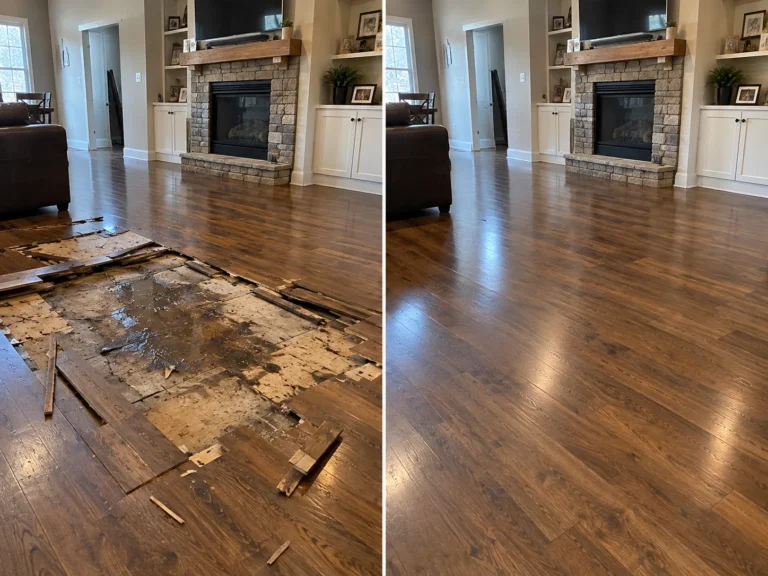
Repair Soft, Water-Damaged, Rotten & Damaged Bathroom Floors
Bathroom floors face repeated moisture exposure around toilets, tubs, showers, sinks, vanities, and plumbing penetrations. When a bathroom floor becomes soft, swollen, loose, cracked, sagging, or damaged, the visible flooring may be only part of the problem.
Floor Repair Pros provides residential bathroom floor repair in Cedar Rapids, Iowa City, and surrounding communities. We handle bathroom floors and bathroom subfloor damage.
Request a Free Bathroom Floor Repair Estimate
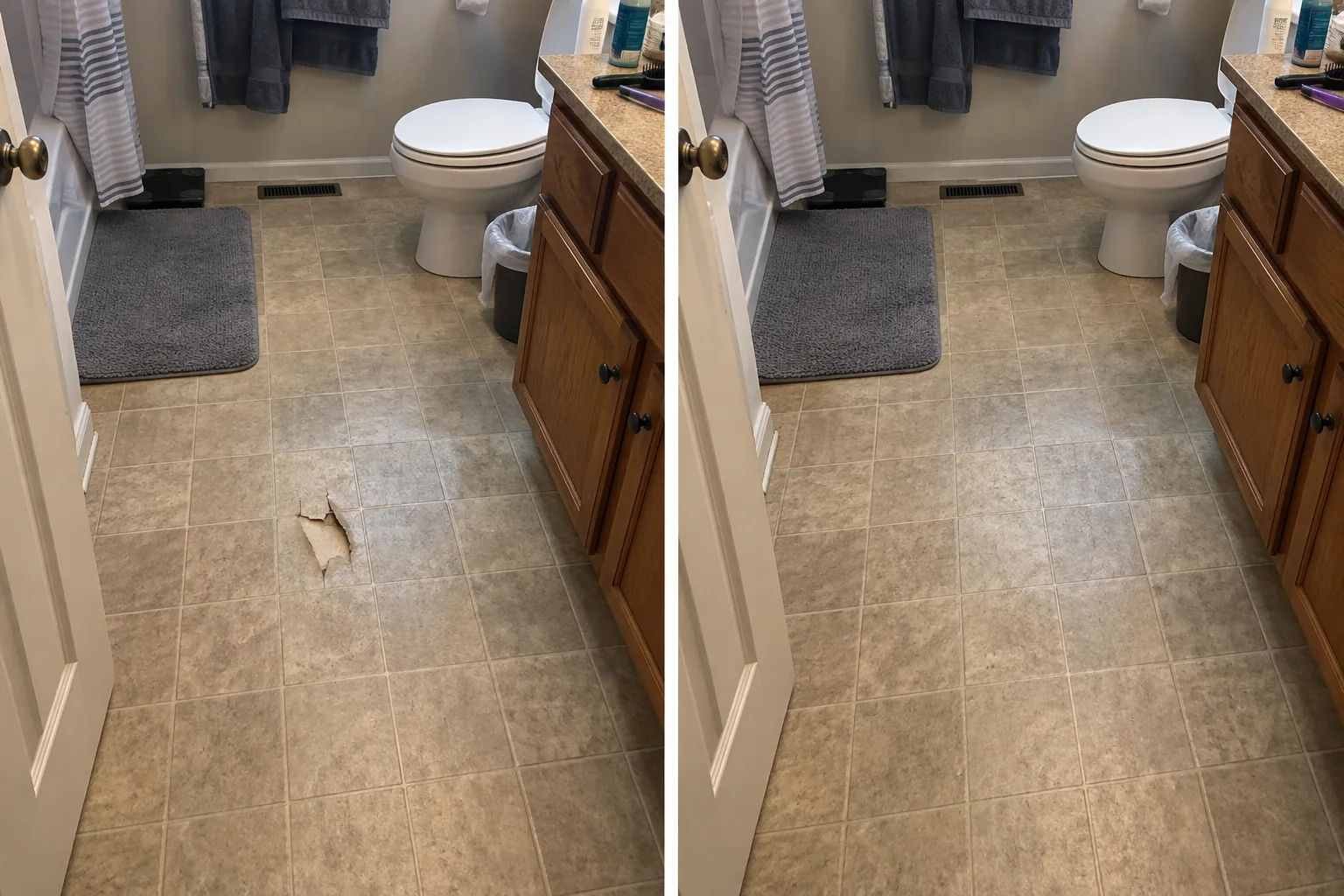
Bathroom Floor Problems We Repair
- Soft or spongy bathroom floors
- Rotten or deteriorated bathroom floor areas
- Localized water-damaged bathroom flooring
- Bathroom subfloor damage
- Damage around toilets, tubs, showers, sinks, and vanities
- Loose, swollen, cracked, or moving finished flooring
- Localized sagging or unevenness caused by bathroom-floor damage
- Small-area bathroom floor or subfloor replacement
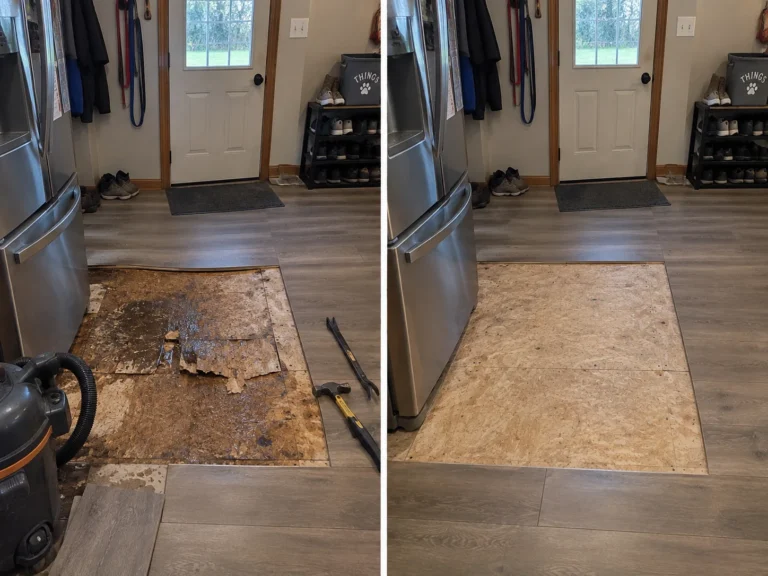
Why Bathroom Floor Problems Need More Than a Surface Check
Bathroom flooring can hide damage underneath. Water may travel below tile, vinyl, laminate, wood, or other finished flooring before the visible surface changes.
A strong repair plan checks both the finished flooring and the layers below it. The main question is whether the damage is limited to the surface or extends into underlayment, subflooring, or framing.
Soft Bathroom Floor Repair
A soft or spongy bathroom floor often points to deterioration below the visible surface. Possible causes include water-damaged subflooring, rot, weakened underlayment, long-term moisture exposure, or loss of support.
Softness near a toilet, tub, shower, sink, or vanity deserves particular attention because those areas contain common moisture sources.
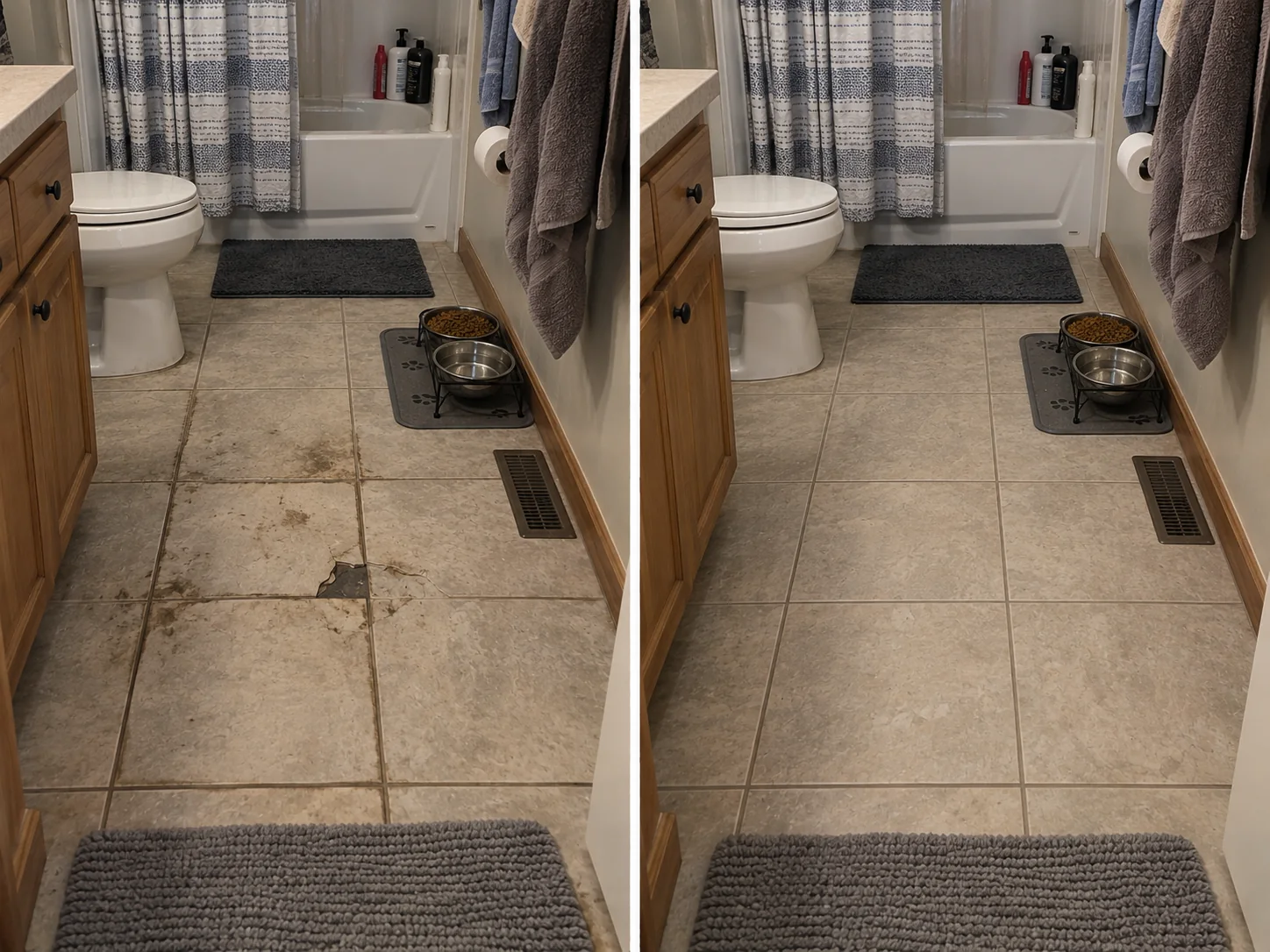
Bathroom Floor Rot Repair
Wood-based floor materials can deteriorate after persistent moisture exposure. In a bathroom, rot commonly develops near fixture penetrations, plumbing connections, tub or shower edges, toilets, vanities, and sinks.
The damaged area may involve only part of the subfloor, or it may extend into nearby framing. The repair scope should follow the actual deterioration rather than the size of the visible stain or soft spot.
Skip the Appointment When the Damage Is Clear
You do not always need to wait for someone to come out just to get a price. Upload clear photos and project details; many floor repairs can be quoted from the information you send.
Bathroom Subfloor Repair & Replacement
The subfloor supports the finished bathroom flooring. Damage can result from toilet leaks, plumbing leaks, tub or shower moisture, overflowing fixtures, or repeated dampness.
Localized subfloor repair may be practical when damage is limited and the surrounding material remains sound. Replacement becomes more likely when the material is severely soft, rotten, crumbling, or no longer providing reliable support.
Bathroom Floor Repair Around a Toilet
The area around a toilet is one of the most common places for a bathroom floor to become soft or damaged. Possible moisture sources include toilet seal failure, supply-line leaks, tank or bowl overflow, condensation, and repeated leakage around the fixture.
Warning signs can include softness, cracked tile or grout, swollen flooring, staining, odor, movement, or sagging. The moisture source should be corrected before permanent floor repair is completed.
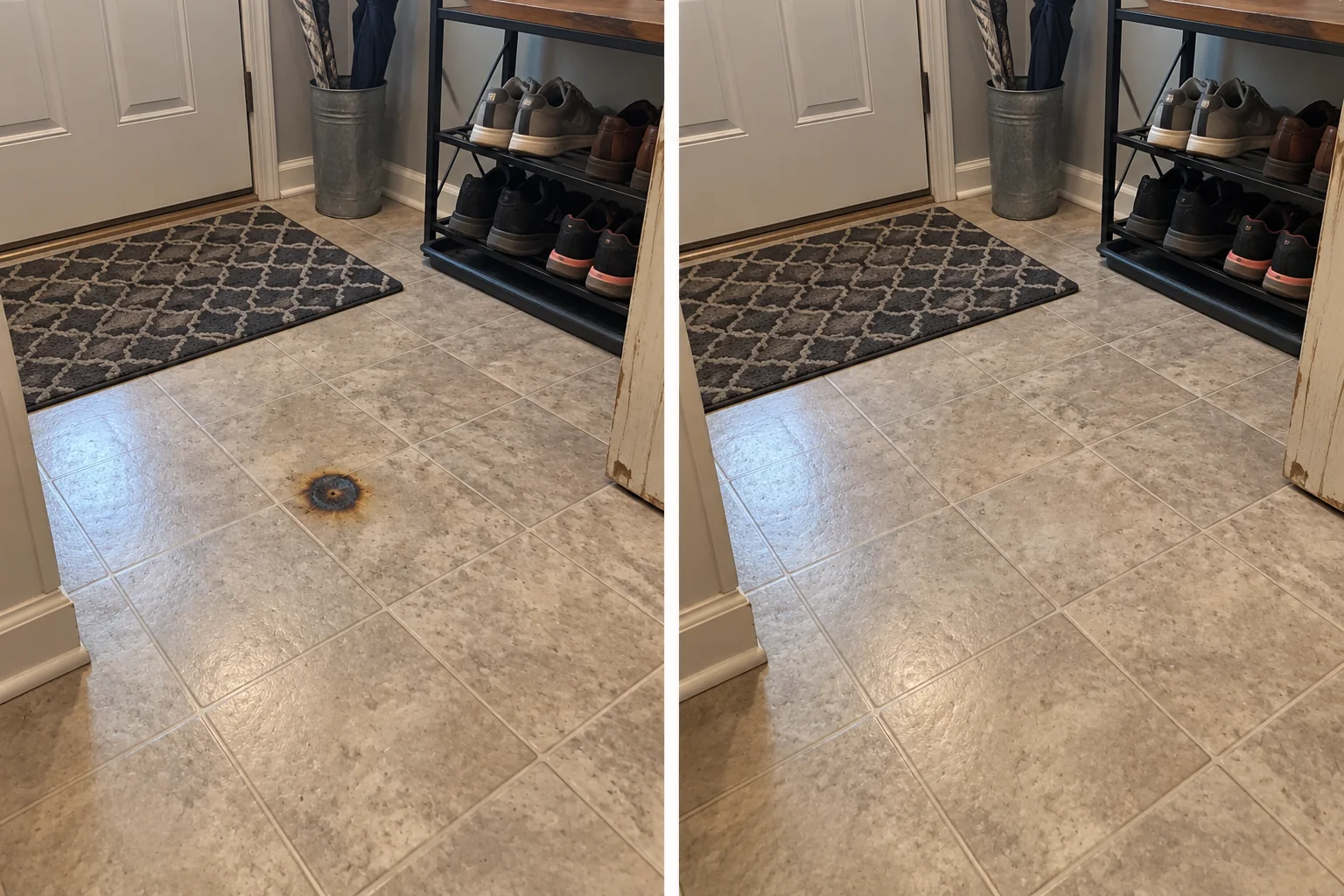
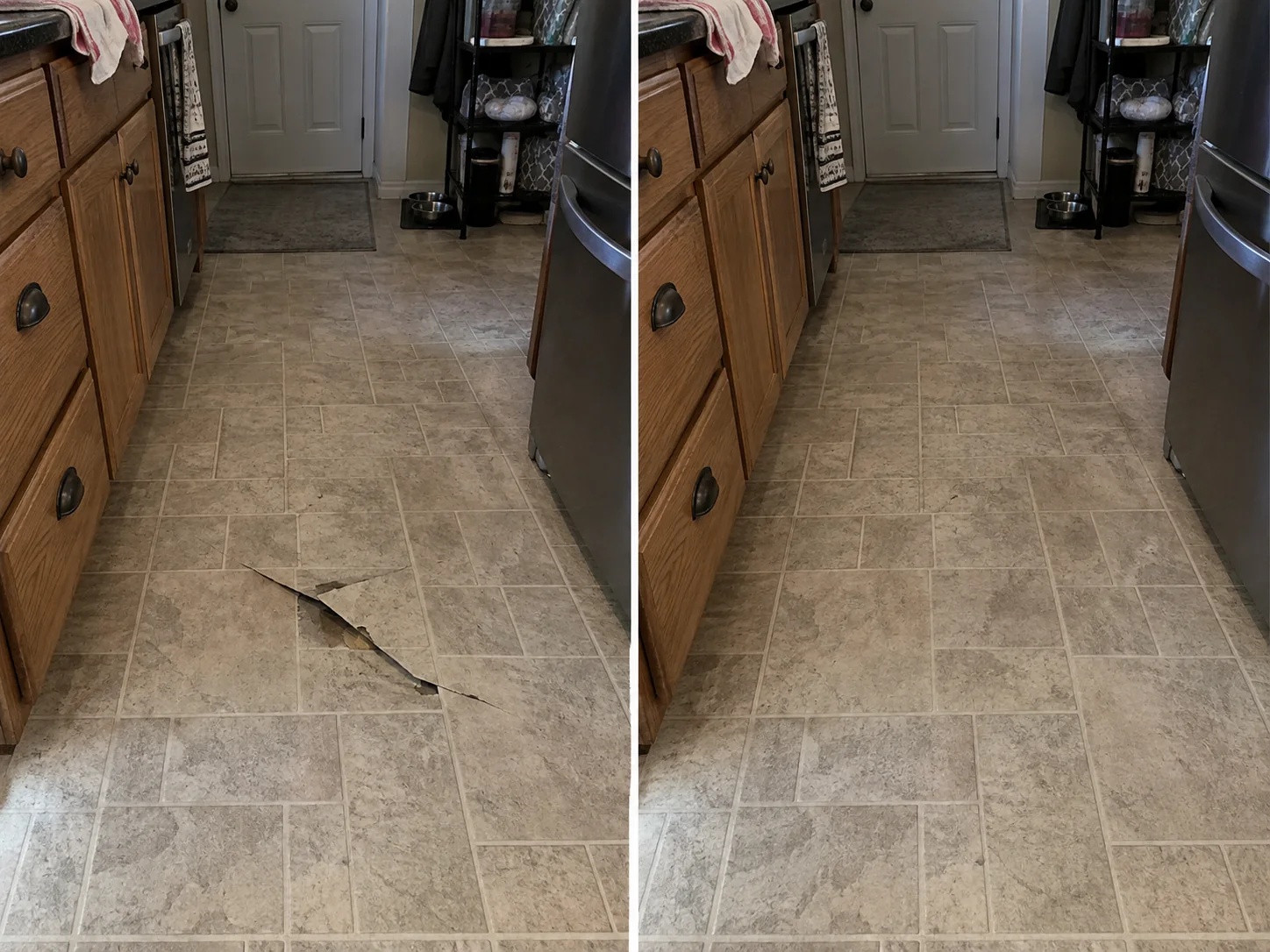
Bathroom Floor Repair Around a Bathtub or Shower
Tub and shower areas can expose nearby flooring to repeated moisture from splashing, failed seals, drain problems, plumbing leaks, or water escaping the wet area.
Possible signs include loose tile, cracked grout, swelling, staining, softness, sagging, or flooring movement. When damage extends into the subfloor, the repair area can be larger than the visible surface damage suggests.
Bathroom Floor Repair Near a Sink or Vanity
Vanities and sinks contain supply lines, drains, shutoff valves, and faucet connections that can leak slowly. Water may collect beneath or beside the cabinet before obvious surface damage appears.
Swollen flooring, soft spots, staining, loose tile, or damaged grout near a vanity can justify checking the floor system underneath.
Bathroom Floor Water Damage
Bathroom water damage can happen suddenly after an overflow or gradually from a slow leak. Finished flooring may remain in place while moisture spreads beneath it.
Skip the Appointment When the Damage Is Clear
You do not always need to wait for someone to come out just to get a price. Upload clear photos and project details; many floor repairs can be quoted from the information you send.
Sagging, Uneven or Sinking Bathroom Floors
A bathroom floor that sags, slopes, dips, or appears to sink can indicate subfloor deterioration, damaged framing, previous remodeling problems, or moisture-related loss of support.
For bathroom floors, we evaluate those symptoms in the context of the room, moisture sources, and the layers beneath the finished surface.
Bathroom Tile, Vinyl, Laminate & Wood Flooring
Bathroom floor repair can involve tile, vinyl or LVP, laminate, hardwood, engineered wood, natural stone, concrete, or another material. Each material has its own repair limits and matching considerations.
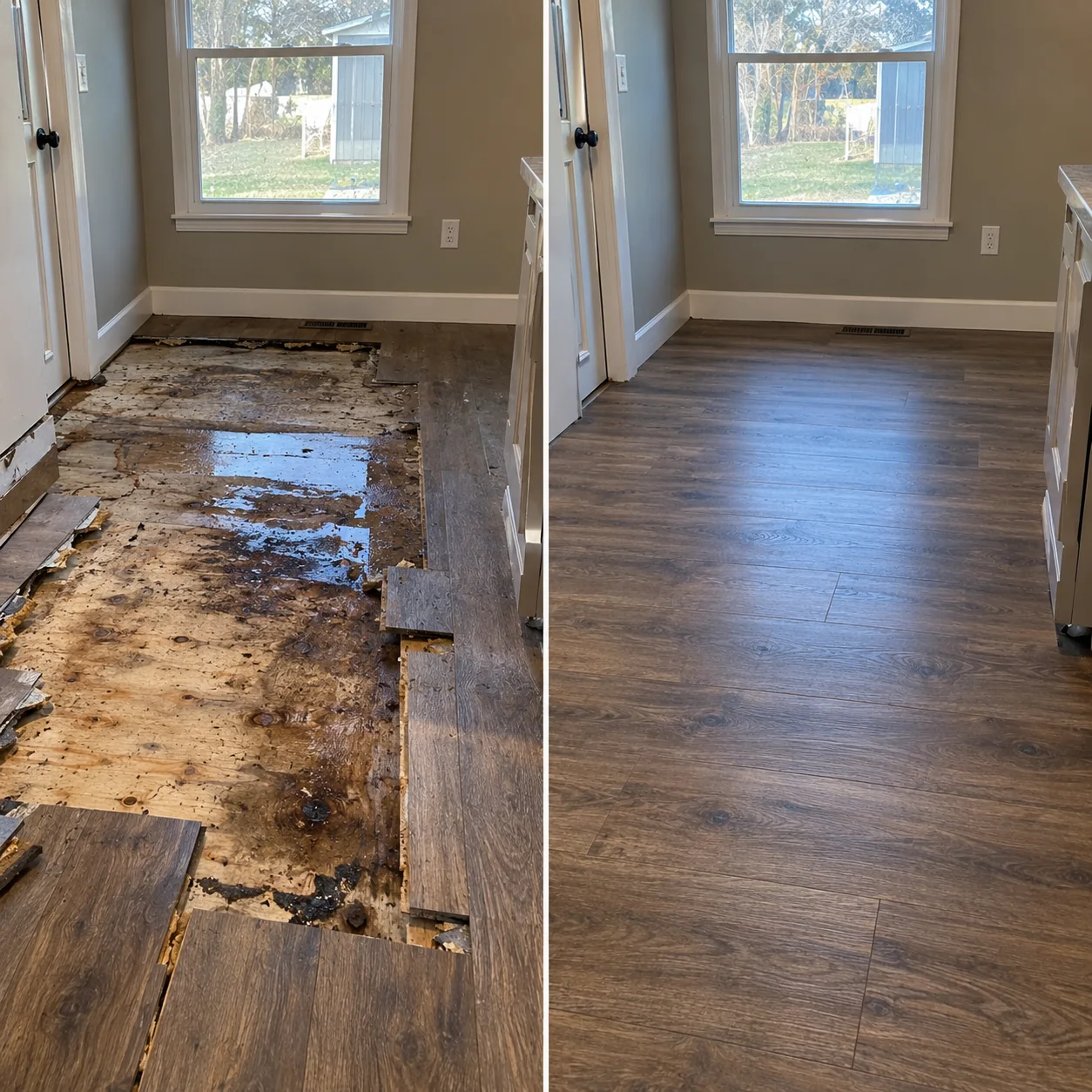
Can a Bathroom Floor Be Repaired Without Replacing the Whole Floor?
Often, yes. Localized repair may be practical when damage is confined to one area, most of the existing floor remains serviceable, the supporting structure is sound, and compatible replacement material is available.
Broader replacement may be more practical when moisture damage is widespread, the subfloor is extensively deteriorated, matching material is unavailable, or multiple areas of the floor have failed.
Bathroom Floor Repair FAQs
Why is my bathroom floor soft around the toilet?
Common possibilities include toilet-seal leakage, supply-line leakage, overflow history, condensation, or long-term moisture damage to the subfloor. The visible flooring should not be assumed to be the only affected layer.
Can only the damaged bathroom subfloor be replaced?
Sometimes. Localized replacement may be possible when surrounding subflooring and framing remain sound. The actual deterioration should determine the repair boundary.
Why is my bathroom tile cracking repeatedly?
Repeated cracking can point to movement or inadequate support below the tile, not just a damaged tile.
Can a bathroom floor be repaired after a leak without replacing everything?
Sometimes. The answer depends on how far moisture traveled, which floor layers were damaged, whether the source has been corrected, and whether unaffected flooring can remain in place.
Does a soft bathroom floor always mean the joists are bad?
No. Softness can come from underlayment or subfloor deterioration without major joist damage. The floor system needs to be evaluated layer by layer.
Bathroom Floor Repair in Cedar Rapids & Iowa City
Floor Repair Pros provides bathroom floor repair in Cedar Rapids, Iowa City, Marion, Hiawatha, Robins, Ely, Swisher, Coralville, North Liberty, Tiffin, Solon, and nearby communities. See our Floor Repair Service Areas for all communities we serve.
What to Include With Your Estimate Request
Tell us where the damage is located, whether the floor feels soft, sagging, uneven, cracked, swollen, or loose, whether a toilet, tub, shower, sink, or vanity has leaked, whether the plumbing problem has been corrected, and whether any damaged subfloor is already visible.
Helpful photos include the entire bathroom, the damaged area, fixture bases and edges, cracked tile or grout, soft or sagging areas, transitions, and any exposed subfloor already visible.
Repair the Bathroom Floor You Have When It Makes Sense
A damaged bathroom floor does not automatically require complete replacement. The best repair identifies the moisture source, determines which floor layers were actually damaged, and limits removal and replacement to the area that truly needs repair.