
Repair Floors Damaged by Pet Urine, Scratches, Gouges, Claws & Chewing
Pet damage can be cosmetic, localized, or deep enough to affect flooring layers below the visible surface. Repeated scratches may wear through a finish, claws can gouge boards or planks, and pet urine can penetrate seams into underlayment or subflooring.
Floor Repair Pros provides residential floor repair after pet and animal damage in Cedar Rapids, Iowa City, and surrounding communities.
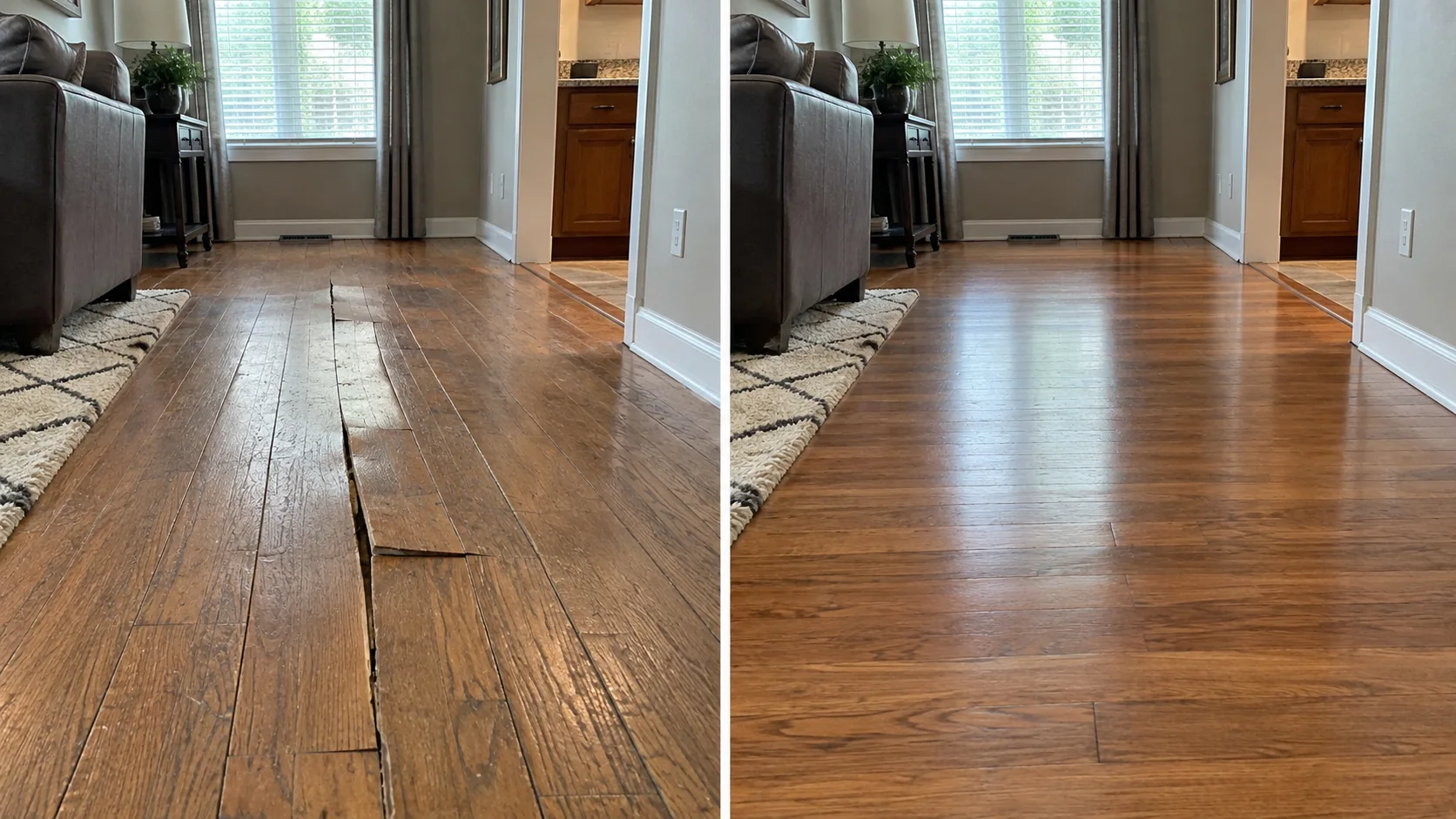
Pet & Animal Floor Damage We Repair
- Pet urine stains and moisture damage
- Persistent pet odor associated with damaged flooring
- Dog and cat scratches
- Deep claw marks and gouges
- Chewed flooring edges and transitions
- Damaged boards or planks
- Swollen or deteriorated flooring after repeated pet accidents
- Pet-damaged underlayment or subfloor
Pet Urine Floor Damage
Pet urine can affect more than the visible flooring. Liquid may enter seams, gaps, porous materials, underlayment, or subflooring, especially when accidents occur repeatedly in the same location.
The repair scope depends on how deeply the moisture and contamination traveled and whether the affected materials remain serviceable.
Pet Urine Stains & Discoloration
Urine can leave dark stains, blackened areas, finish damage, discoloration around seams, or visible changes in wood and other porous materials.
A surface stain can require a very different repair from moisture that has penetrated through the flooring and into the supporting layers.
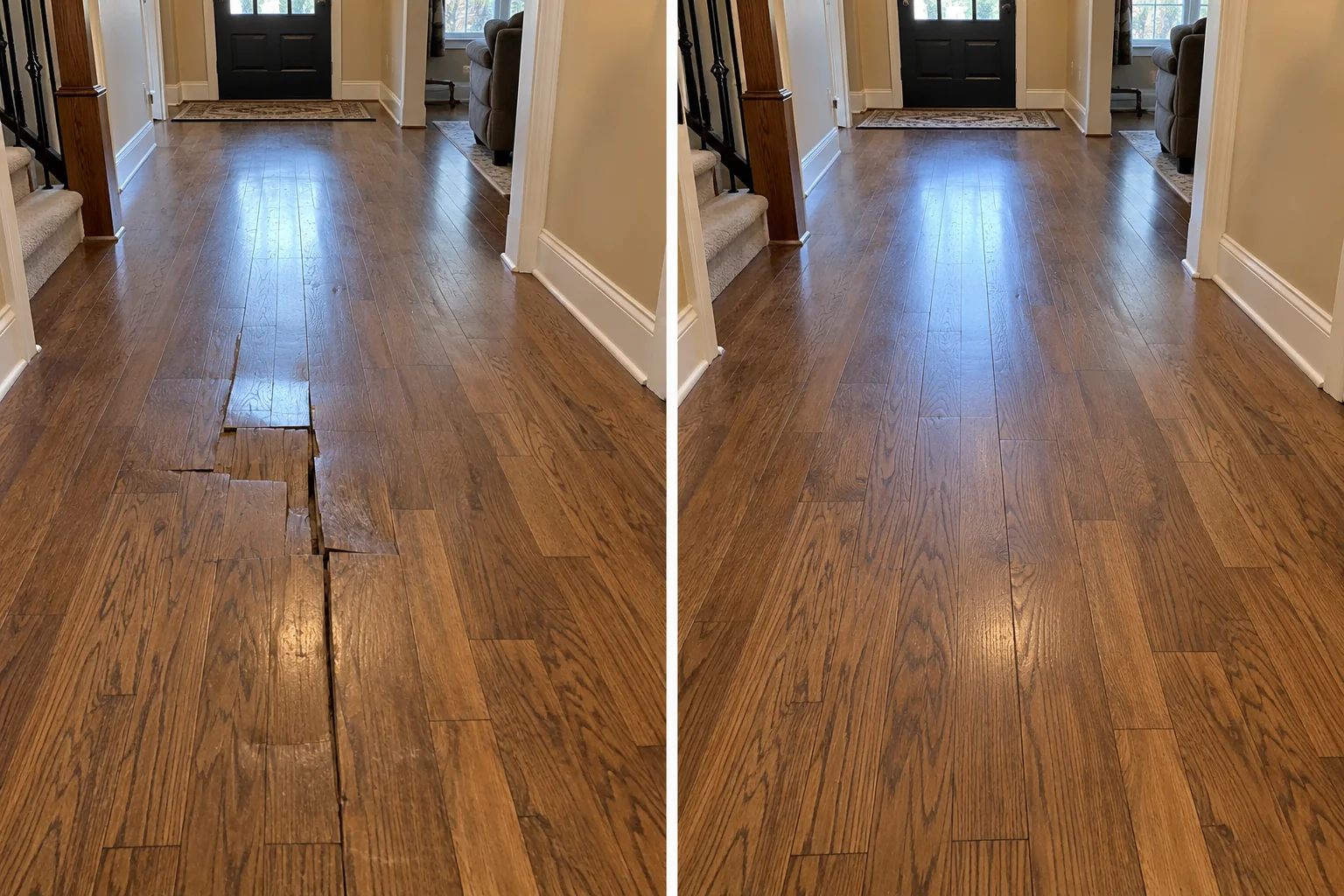
Pet Odor in Flooring
Persistent odor can indicate that urine or other pet-related moisture reached porous flooring, underlayment, subflooring, or nearby wood components.
Masking the odor does not address damaged flooring. When odor is tied to physically affected material, the repair may require selective removal of the contaminated or deteriorated area.
Skip the Appointment When the Damage Is Clear
You do not always need to wait for someone to come out just to get a price. Upload clear photos and project details; many floor repairs can be quoted from the information you send.
Pet-Damaged Subfloor
Repeated pet accidents can eventually affect the subfloor through seams, gaps, damaged flooring, or porous materials. Possible signs include odor, dark staining, swelling, softness, or deterioration.
Dog & Cat Scratch Repair
Pet scratches can range from light finish marks to deep gouges that extend into the flooring material. Repeated claw traffic near doors, hallways, feeding areas, or favorite paths can create concentrated damage.
The flooring material and scratch depth determine whether the affected surface can be repaired or whether selected boards or planks should be replaced.
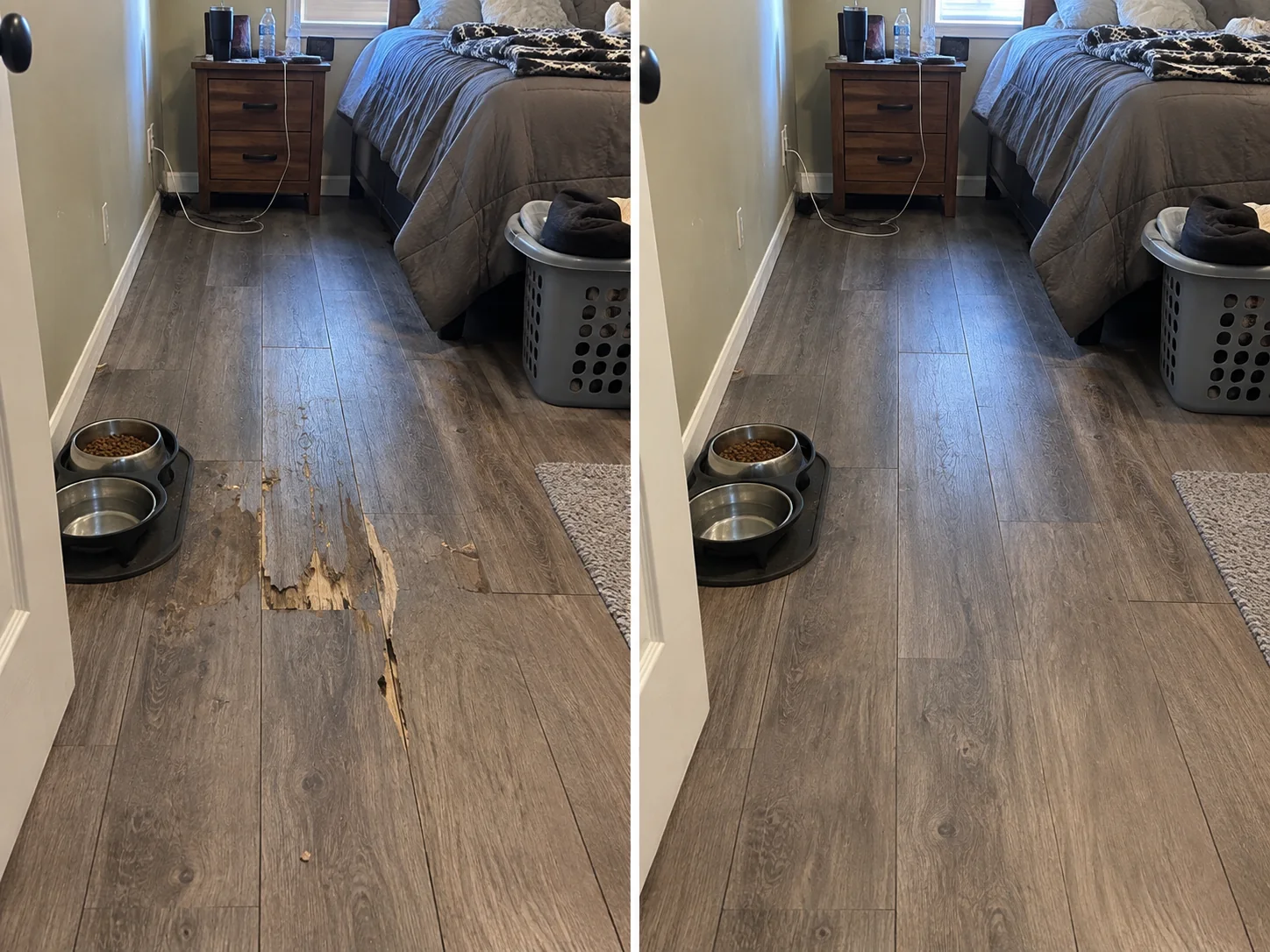
Deep Gouges & Claw Damage
Deep claw marks can remove finish and flooring material, leave rough edges, or create visible grooves. One localized gouge can be very different from widespread claw damage across a room.
Selective repair is often more practical when damage is concentrated and surrounding flooring remains in good condition.
Pet Chewing Damage
Dogs and other pets may chew flooring edges, exposed wood, transitions, corners, or already-damaged areas. Chewing can remove material, splinter edges, damage seams, or expose unfinished flooring.
The repair depends on whether the damage is confined to a replaceable piece or extends into adjacent flooring or supporting materials.
Water Bowl & Repeated Moisture Damage
Repeated spills around water bowls can create a smaller but persistent moisture problem. Over time, some flooring materials can swell, discolor, separate, or deteriorate around feeding areas.
Water-Damaged Floor Repair covers broader water-damage repairs.
Skip the Appointment When the Damage Is Clear
You do not always need to wait for someone to come out just to get a price. Upload clear photos and project details; many floor repairs can be quoted from the information you send.
Material-Specific Pet Damage
Hardwood, engineered wood, laminate, vinyl/LVP, tile, and other flooring materials respond differently to scratches, urine, stains, moisture, and chewing.
Can Pet-Damaged Flooring Be Repaired?
Often, yes. Localized repair may be practical when the damage is limited, the surrounding flooring is sound, the supporting floor remains serviceable, and compatible replacement material is available.
Widespread scratching, deep urine penetration, severe odor, extensive subfloor deterioration, or discontinued flooring can make broader replacement more practical.
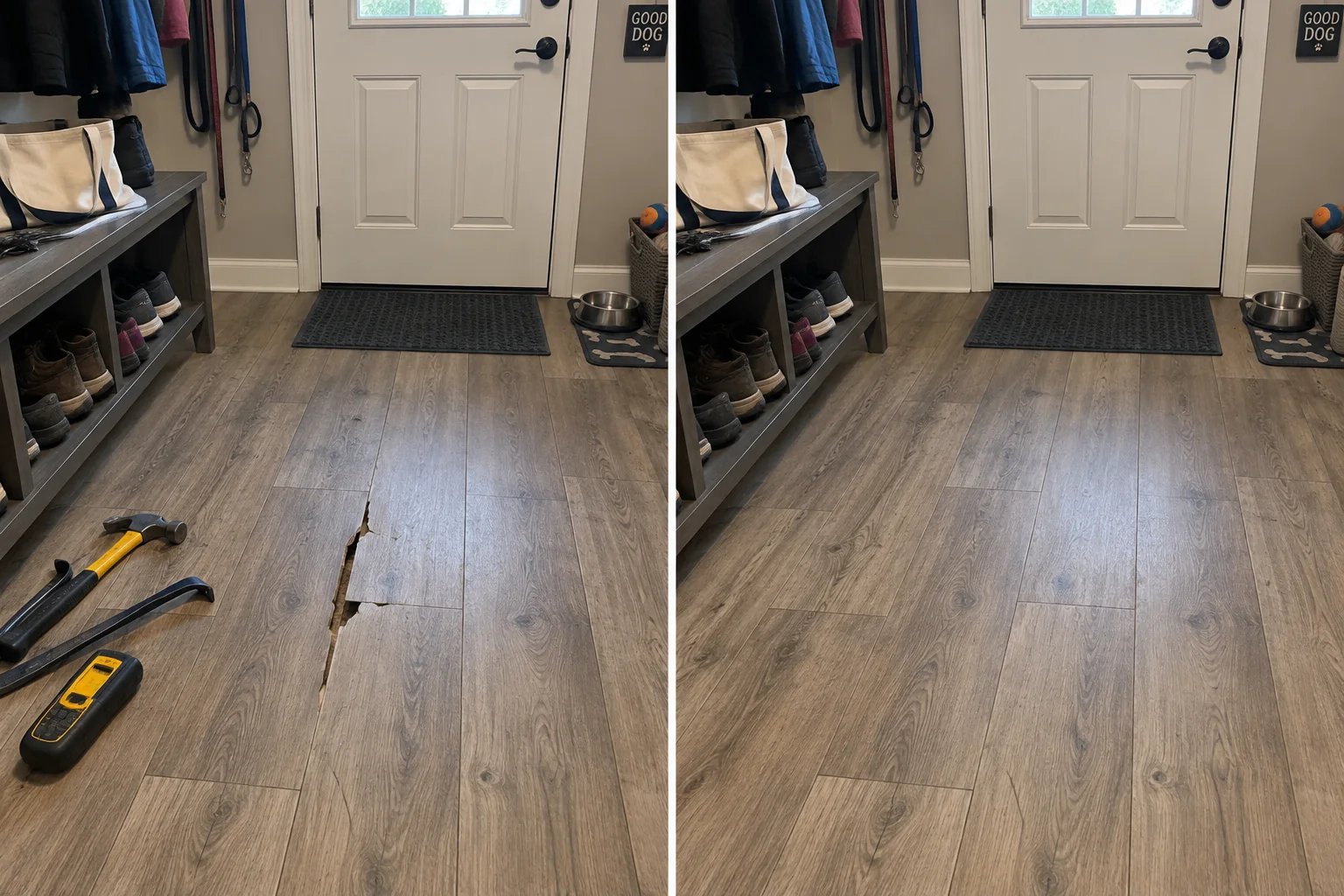
Can Pet Urine Damage Be Repaired Without Replacing the Whole Floor?
Sometimes. If the affected area is localized and the damage has not spread through a large portion of the floor system, selective repair may be possible.
The repair should follow the actual contamination and deterioration rather than automatically expanding to the entire room.
Pet & Animal Floor Repair FAQs
Can dog scratches in flooring be repaired?
Sometimes. Light surface scratches and deep gouges are different problems. The material, finish, depth, and number of damaged areas determine whether repair or selective replacement makes sense.
Can cat urine damage the subfloor?
Yes. Repeated urine exposure can penetrate seams or porous materials and reach the subfloor, where it may cause odor, staining, swelling, or deterioration.
Does pet odor mean the floor has to be replaced?
Not always. The answer depends on which materials absorbed the contamination and whether they can remain serviceable after appropriate cleaning or repair.
Can only a few pet-damaged boards or planks be replaced?
Often, yes, when damage is localized, the surrounding floor remains sound, and compatible replacement material is available.
Can pet water-bowl damage cause flooring to swell?
Yes. Repeated moisture exposure can affect some flooring materials around feeding areas, especially when water enters seams or remains trapped.
Pet-Damaged Floor Repair in Cedar Rapids & Iowa City
Floor Repair Pros provides pet- and animal-damaged floor repair in Cedar Rapids, Iowa City, Marion, Hiawatha, Robins, Ely, Swisher, Coralville, North Liberty, Tiffin, Solon, and nearby communities. See our Floor Repair Service Areas for all communities we serve.
What to Include With Your Estimate Request
Tell us what type of pet damage occurred, what flooring material is installed, whether urine or repeated moisture was involved, whether odor remains, whether the floor feels soft or swollen, how large the affected area is, and whether matching flooring is available.
Helpful photos include the full affected area, close-ups of scratches, gouges, stains, chewed edges, seams, transitions, feeding areas, and any exposed underlayment or subfloor.