
Repair Floors That Squeak, Creak, Pop or Make Noise When You Walk
A squeaky floor is usually a movement problem, but the sound alone does not identify which part of the floor is moving. The noise may come from finished flooring, the subfloor, fasteners, floor joists, framing connections, or more than one layer interacting under foot pressure.
Floor Repair Pros provides residential squeaky and creaking floor repair throughout Cedar Rapids, Iowa City, and surrounding communities. The goal is to locate the movement that creates the sound and determine whether the issue is isolated floor noise or part of a broader floor-system problem.
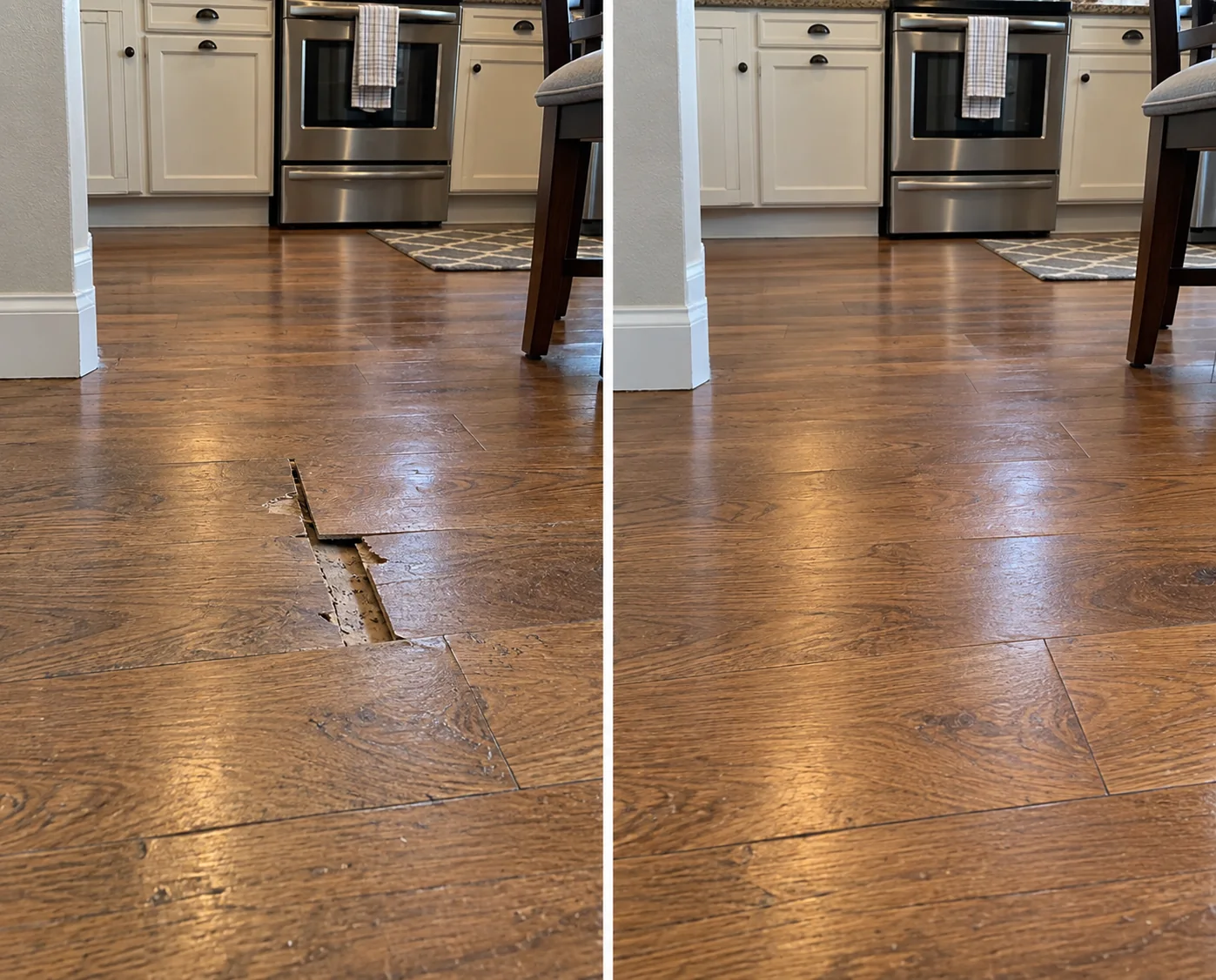
Why Do Floors Squeak?
Floors generally squeak because two components move, rub, flex, or shift against each other or against a fastener. Common sources can include:
- Floorboards moving against one another
- Finished flooring moving against the subfloor
- Subfloor panels moving against joists or fasteners
- Small gaps between floor components
- Loose or shifting fasteners
- Movement at joists or framing connections
- Localized looseness within the floor assembly
The same sound can come from different causes, so the repair should follow the actual movement rather than the noise alone.
One Squeaky Spot vs. Noise Across a Room
A squeak in one small location may involve a loose board, one fastener, a localized subfloor connection, or movement over a single joist. That does not automatically mean the entire room needs repair.
Noise across a larger area can indicate repeated movement at several locations, broader subfloor movement, multiple loose boards, older fastening conditions, or more than one source of friction. The pattern of the noise helps define how large the repair area may need to be.
Squeaky Hardwood Floors
Hardwood can squeak when boards rub together, move vertically, shift against fasteners, or move against the subfloor. The hardwood itself may still be serviceable even when the floor is noisy.
If the dominant problem is physical hardwood damage such as cracked, loose, warped, buckled, or water-damaged boards, see Hardwood Floor Repair.
Squeaky Subfloors & Movement Over Joists
Subfloor panels can make noise when they move relative to joists, fasteners, or adjacent panels. A squeak does not automatically mean the subfloor is rotten, and it does not prove the joists are damaged.
When squeaking is combined with softness, sponginess, visible deterioration, water damage, sagging, or significant movement, the floor may have a broader issue. In those cases, the repair may involve the subfloor, floor joists, or support conditions associated with a sagging or uneven floor.
Can Squeaky Floors Be Repaired From Below?
Sometimes. A basement or crawl space can provide access to the underside of the floor system, which may make it possible to locate and address movement without opening the finished floor.
Whether repair from below is practical depends on the source of the noise and conditions such as finished ceilings, crawl-space clearance, plumbing, wiring, ductwork, insulation, joist layout, and subfloor condition. If the movement originates within the finished flooring, access from above may still be necessary.
Can a Squeaky Floor Be Repaired Without Removing Flooring?
Sometimes. If the movement can be reached from below or corrected without disturbing the finished floor, flooring removal may not be required. Other situations require access from above. The repair method should follow where the movement actually occurs.
Why Does My Floor Pop, Snap or Creak When I Walk?
Popping, snapping, and creaking can also result from sudden movement or friction between floor components. Possible sources include plank movement, flooring joints, fasteners, subfloor movement, transitions, or material tension.
If a new sound is accompanied by visible cracking, sagging, weakness, significant movement, or water damage, the floor should be evaluated for more than ordinary noise.
Show Us Where the Floor Makes Noise
Tell us where the sound occurs and upload photos of the room, floor surface and any accessible area below. That gives us a faster starting point for identifying the likely movement and repair approach.
Why Do Floors Squeak More in Certain Seasons?
Wood changes dimension as indoor humidity and seasonal conditions change. Small changes in gaps between boards, subfloor panels, and framing can make existing friction or movement more noticeable at certain times of year. Seasonal noise alone does not automatically mean the floor is structurally damaged.
Squeaky Floors in Older Homes
Older homes can develop floor noise as materials dry, move, settle, wear, or interact with older fastening methods and previous remodeling. Age alone does not determine whether structural repair is needed. The source of the movement should determine the repair.
Does a Squeaky Floor Need to Be Replaced?
Usually not. Floor noise by itself does not mean an entire floor needs replacement. Localized repair may be practical when the floor remains serviceable and the movement source can be identified.
Broader repair or replacement may become part of the project when noise is accompanied by extensive water damage, rot, failed subflooring, compromised framing, or finished flooring that cannot practically remain. Those conditions should drive the scope—not the squeak alone.
What Affects a Squeaky Floor Repair?
The scope of a squeaky-floor repair depends on what is moving and how that area can be reached. Factors can include:
- One noisy location versus several
- Finished-floor material
- Access from a basement or crawl space
- Finished ceilings below
- Subfloor condition
- Joist or framing involvement
- Water or moisture history
- Need to remove any finished flooring
- Plumbing, wiring, ductwork, or insulation in the repair area
Squeaky Floor Repair in Cedar Rapids & Iowa City
Floor Repair Pros provides squeaky and creaking floor repair for homeowners in Cedar Rapids, Iowa City, Marion, Hiawatha, Robins, Ely, Swisher, Coralville, North Liberty, Tiffin, Solon, and nearby communities. See our Floor Repair Service Areas for all communities we serve.
Squeaky Floor Repair FAQs
Does a squeaky floor mean the joists are bad?
No. Noise alone does not prove joist damage. The sound may come from finished flooring, subfloor movement, fasteners, or connections around otherwise serviceable joists.
Does a squeaky floor mean the subfloor is bad?
Not necessarily. A subfloor can move and make noise without being rotten or structurally failed. Softness, water damage, deterioration, or sagging are more important signs that a broader subfloor problem may be present.
Can one squeaky spot be repaired?
Often, yes. A localized squeak may have a localized source, although the noisy area should be confirmed before assuming the repair is limited to one point.
Can squeaky hardwood be repaired without refinishing the whole floor?
Sometimes. If the issue is movement rather than widespread finish wear, complete refinishing may not be part of the repair. It depends on whether the finished flooring needs to be removed or altered to reach the source.
What should I include with a squeaky floor estimate request?
Tell us which room is affected, whether there is one noisy spot or several, whether the floor moves when it makes noise, whether it feels soft or uneven, whether water damage occurred, what flooring material is installed, and whether the floor is accessible from a basement or crawl space. Photos of the flooring and any accessible framing can also help.
Fix the Movement That Causes the Squeak
A squeaky floor is usually telling you that something is moving. The useful question is what. The repair should target the component creating the movement rather than simply trying to silence the sound without understanding its source.
If your floor squeaks, creaks, pops, or makes noise when walked on, tell us where it happens and what else you notice.
Ready for a Repair Estimate?
Send the property address, a short description and up to six clear photos. We can often price visible, localized floor repairs from the information you send and will tell you if an in-person evaluation is actually needed.