
How to Tell if Floor Damage Is Surface-Level or Structural
Scratches, chips and isolated plank damage can be obvious surface problems. Sagging, bounce, softness, recurring cracks and movement can point deeper. Homeowners do not need to diagnose the structure themselves, but recognizing the difference between a finish-floor symptom and a support-system symptom helps you describe the problem accurately and avoid covering a condition that should be investigated.
Most visible, localized floor repairs can be quoted from clear photos — no site visit required in many cases.
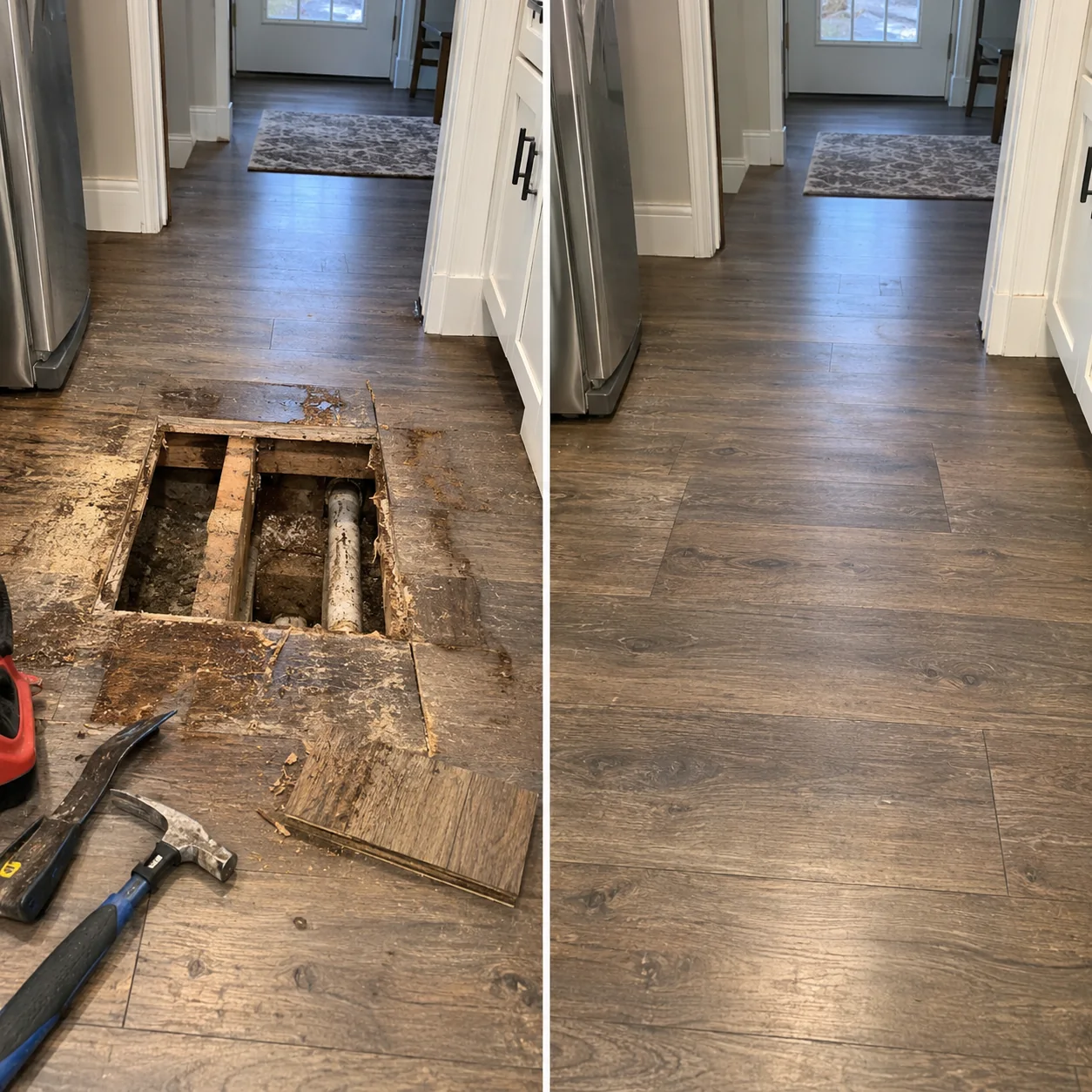
What Counts as Surface-Level Floor Damage?
Surface-level damage is primarily confined to the visible flooring material. Examples include a gouged hardwood board, chipped tile, a torn vinyl area, a damaged LVP plank or localized wear that does not coincide with softness, movement or changes in floor elevation.
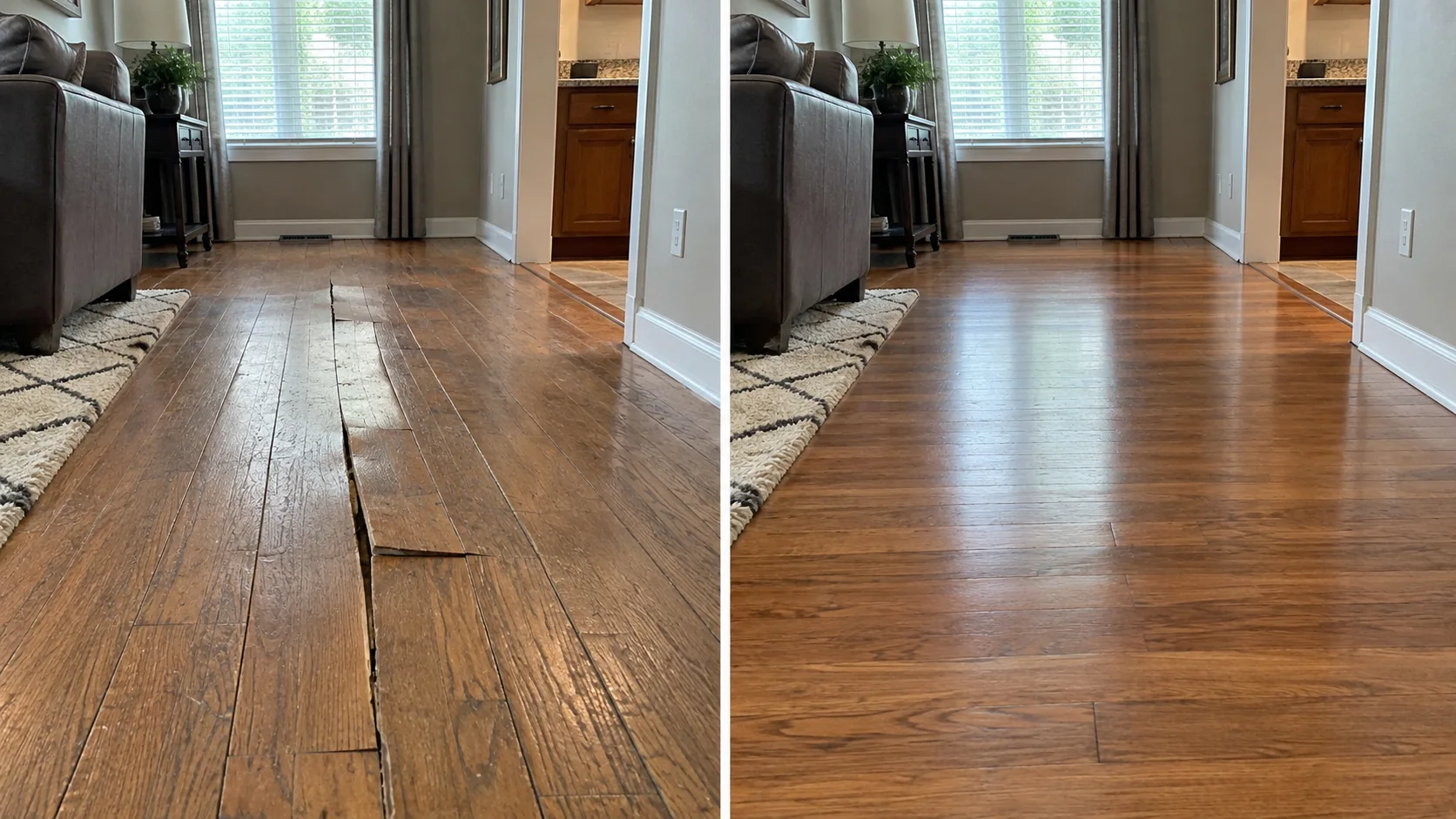
Clues the Problem May Extend Below the Surface
- The floor feels soft, spongy or weak
- The area bounces or flexes noticeably under normal walking
- A dip or sag appears to be increasing
- Cracks or gaps repeatedly return after cosmetic repair
- Tile becomes loose across an area rather than at one isolated impact point
- The problem followed prolonged water exposure
- The floor changes height near a wall, beam, doorway or other support location
The Subfloor Is the Bridge Between Finish and Structure
Plywood or OSB subfloor supports many finished flooring systems and transfers loads to the framing below. Moisture, deterioration, inadequate fastening, damage around plumbing penetrations or previous alterations can affect how the floor feels even when the finished surface is still present.

Floor Joists and Support Symptoms
Joists can be affected by cracking, rot, notching, holes, alterations or other conditions. This guide is meant to help homeowners recognize when movement or sagging deserves a deeper look rather than a surface-only fix.
Send Pictures Before Scheduling Anything
A few useful photos can often replace the first appointment. Show the damaged area, nearby flooring and any exposed material underneath, and we can usually tell you whether a remote quote is practical.
Send Photos for a Free EstimateWhy a New Floor Can Hide the Wrong Problem
Installing new flooring can improve appearance, but it does not correct a weak subfloor, damaged joist or unresolved moisture source. If the existing floor feels unstable or structurally different, evaluate the support system before using new material to conceal it.
What to Photograph
Take wide photos showing the room and nearby walls or transitions, close-ups of cracks or damage, and side-angle photos that make changes in elevation easier to see. In the description, note whether the area moves, squeaks, feels soft, changed after a leak, or has become more noticeable over time.
Frequently Asked Questions
Does a squeaky floor mean structural damage?
Not necessarily. Squeaks can come from friction or movement between flooring, subfloor, fasteners and framing. New movement combined with sagging, softness or weakness deserves closer evaluation.
Is a soft floor a surface problem?
A soft or spongy feel can involve material below the finish floor, including underlayment or subfloor, so it should not be assumed to be cosmetic.
Can uneven flooring be structural?
Yes, but not every uneven floor is structural. Some problems are flatness issues such as humps, dips or transitions, while others involve loss of support or sagging.