
Correct Low Spots, High Spots, Humps, Dips & Uneven Floor Surfaces
A floor can be structurally supported and still be too uneven or too far out of flat for comfortable use, clean transitions, or proper installation of new flooring. Low spots, high spots, humps, dips, waves, and abrupt elevation changes all require understanding what is creating the irregular surface before correcting it.
Floor Repair Pros provides residential floor leveling and uneven floor repair in Cedar Rapids, Iowa City, and surrounding communities.
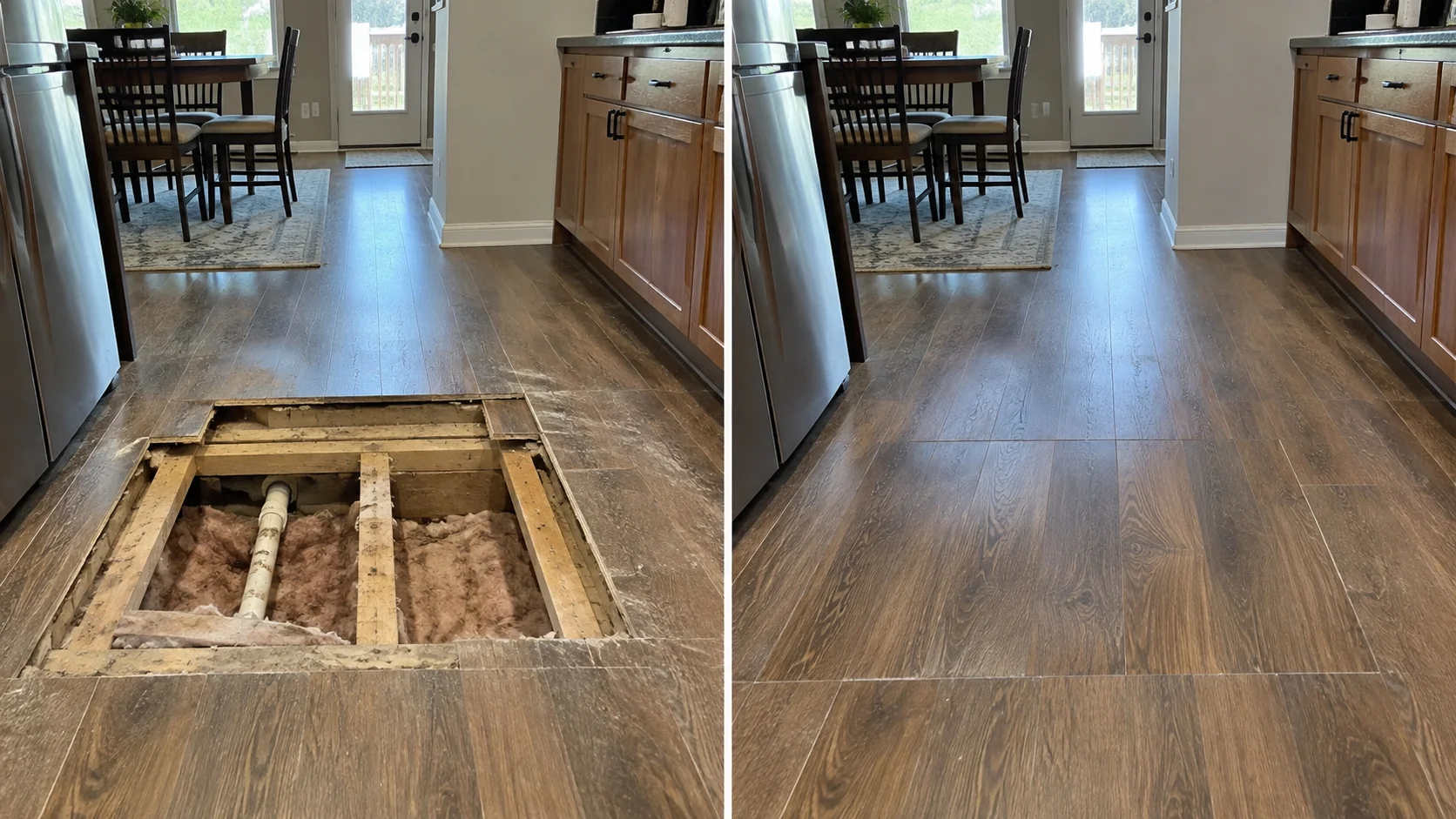
Floor Leveling Problems We Repair
- Localized low spots
- Localized high spots
- Humps and bumps
- Dips and shallow depressions
- Wavy or irregular floor surfaces
- Uneven transitions between rooms
- Floor surfaces that are not flat enough for new flooring
- Localized elevation differences caused by subfloor or previous repair conditions
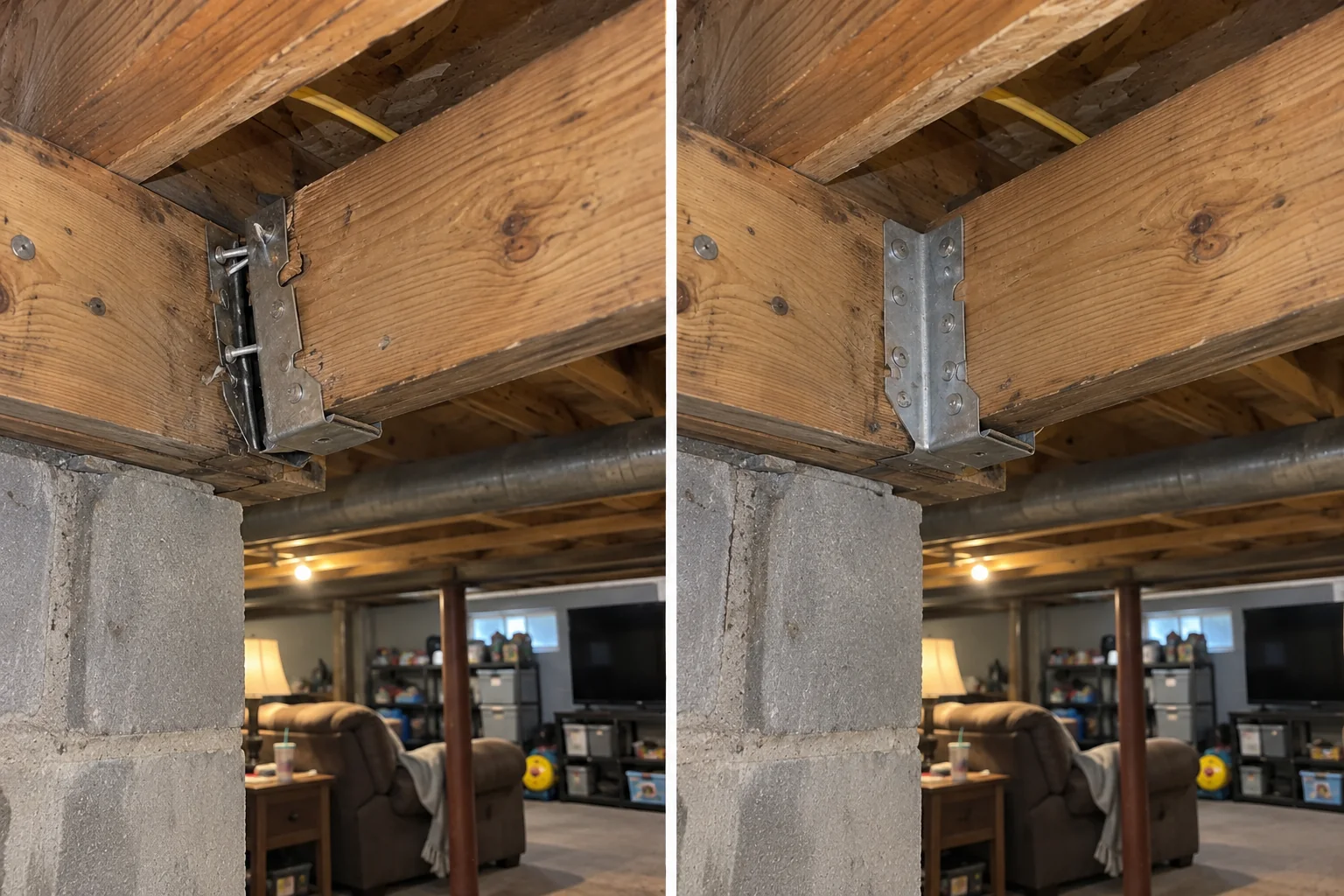
Floor Level vs. Floor Flatness
Level and flat are not the same thing. A floor can have a gradual overall slope yet remain relatively flat, while another floor can be generally level but contain humps, dips, or waves.
This service focuses on flatness correction and localized elevation differences.
Low Spot Floor Repair
A low spot is a localized area that sits below the surrounding floor. It may result from subfloor conditions, previous repairs, material deterioration, framing variation, settlement, or construction conditions.
The correction depends on the size, depth, location, flooring system, and whether the low area is stable.
High Spot & Floor Hump Repair
A high spot or hump interrupts an otherwise flatter surface. Possible contributors include subfloor movement, material buildup, previous construction, framing variation, expansion, or earlier repairs.
The raised area should be evaluated before grinding, cutting, fastening, or covering it because the visible high point may not identify the actual cause.
Your Phone Can Be the First Step
Take a few clear pictures of the floor, the surrounding area and any visible damage underneath. Many straightforward repairs can move directly to a quote from those images.
Floor Dips & Uneven Sections
A localized dip can make furniture rock, create an awkward transition, telegraph through finished flooring, or interfere with a new floor installation.
A shallow stable dip and a worsening depression caused by loss of support are different problems. When the floor is actively sinking or sagging, Sagging & Uneven Floor RepairFor related repair information, see the service linked in this section.
Uneven Floor Transitions
Elevation differences between rooms can develop from different flooring thicknesses, remodeling, subfloor changes, previous repairs, or multiple flooring layers.
A transition repair should consider both finished floor height and the supporting surfaces so the correction does not simply move the problem to another edge.
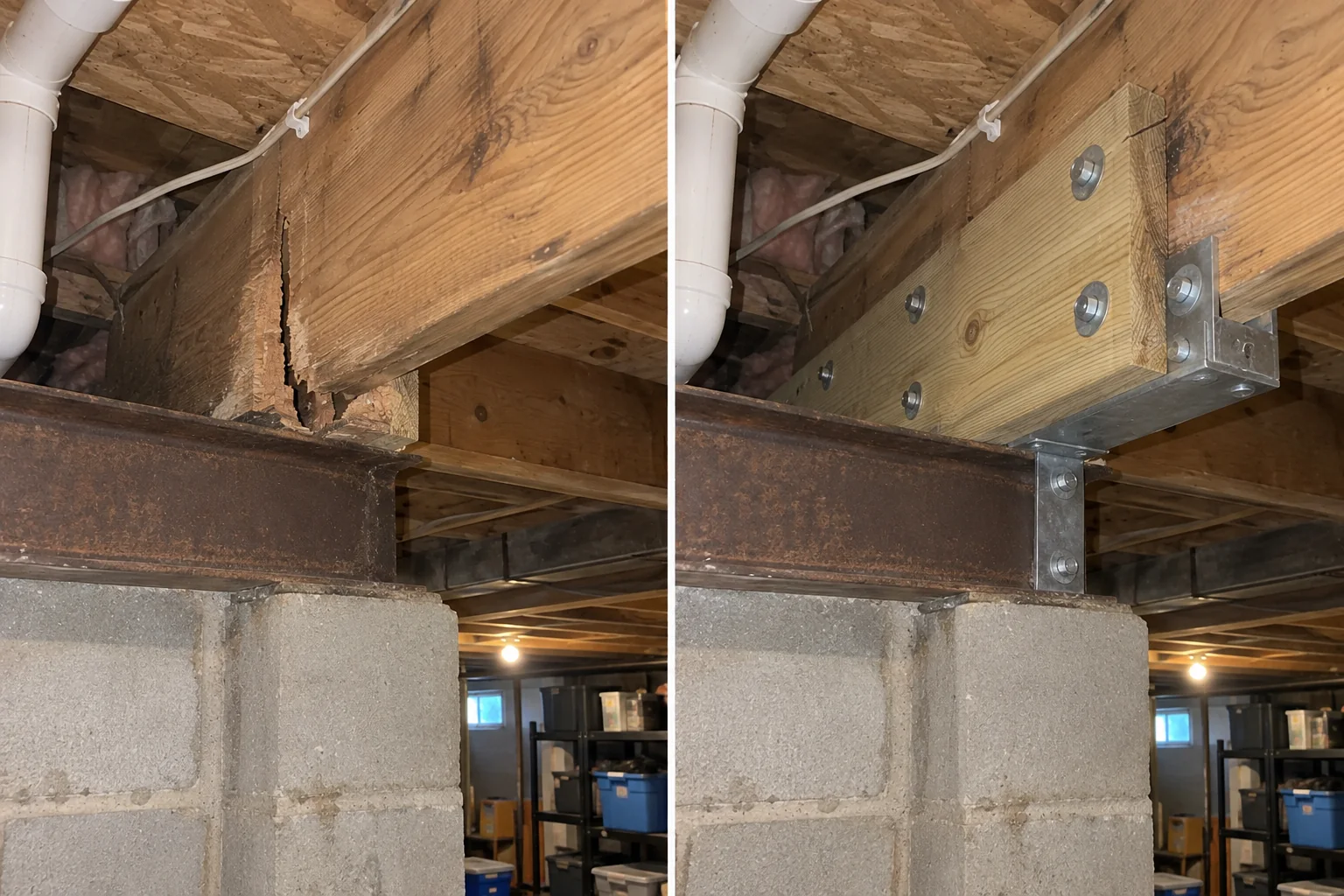
Floor Leveling Before New Flooring
New hardwood, engineered wood, laminate, LVP, tile, and other flooring generally require a supporting surface that meets the product’s flatness and installation requirements.
Installing new flooring over significant humps, dips, or irregularities can contribute to movement, joint stress, visible imperfections, poor transitions, or premature failure.
The goal is not to make every house mathematically level. It is to create an appropriate, stable supporting surface for the intended flooring system.
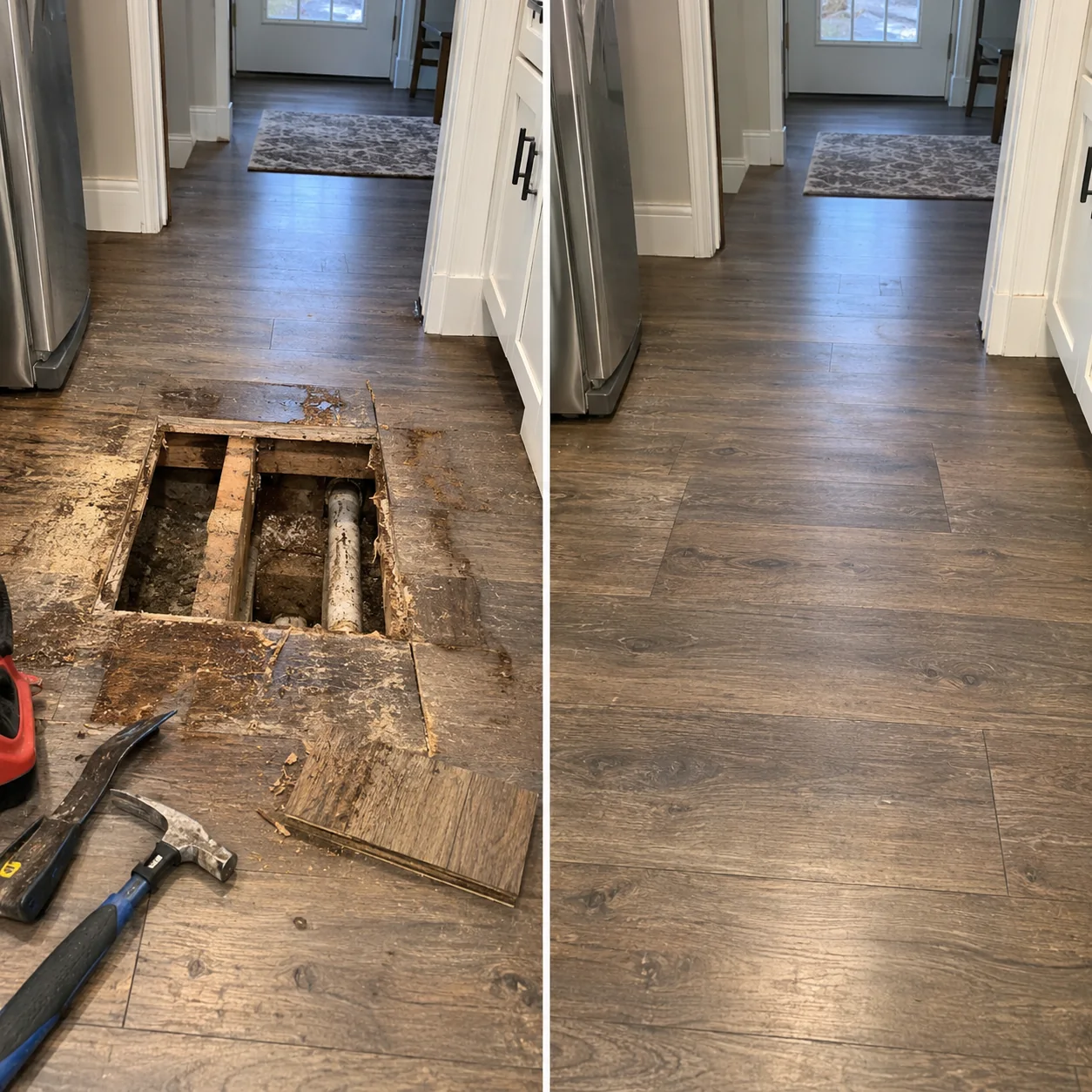
Uneven Subfloor & Surface Preparation
An uneven finished floor can originate in the subfloor or another layer below it. Localized correction may involve repairing damaged areas, addressing high or low sections, or rebuilding part of the supporting surface.
Old House Uneven Floors
Older homes often have floors that are not perfectly level because of original construction, long-term settlement, remodeling, framing variation, or previous repairs.
Age alone does not determine whether correction is needed. The important questions are whether the condition is stable, whether it interferes with use or new flooring, and whether there are signs of active support or foundation movement.
Your Phone Can Be the First Step
Take a few clear pictures of the floor, the surrounding area and any visible damage underneath. Many straightforward repairs can move directly to a quote from those images.
When Uneven Floors May Need a Different Repair
A floor that is soft, rotten, actively sagging, bouncy, cracked from movement, or associated with foundation changes may require a different primary repair path.
For softness and deterioration, see Rotten & Soft Floor Repair. For loss of support, see Sagging & Uneven Floor Repair. Foundation-Related Floor Problems Repair covers foundation-specific movement.
Can One Uneven Area Be Corrected?
Often, yes. Localized correction may be practical when the high or low area is limited, the surrounding floor remains stable, and the cause does not require broader structural repair.
The repair boundary should follow the actual elevation problem rather than automatically expanding to an entire room.
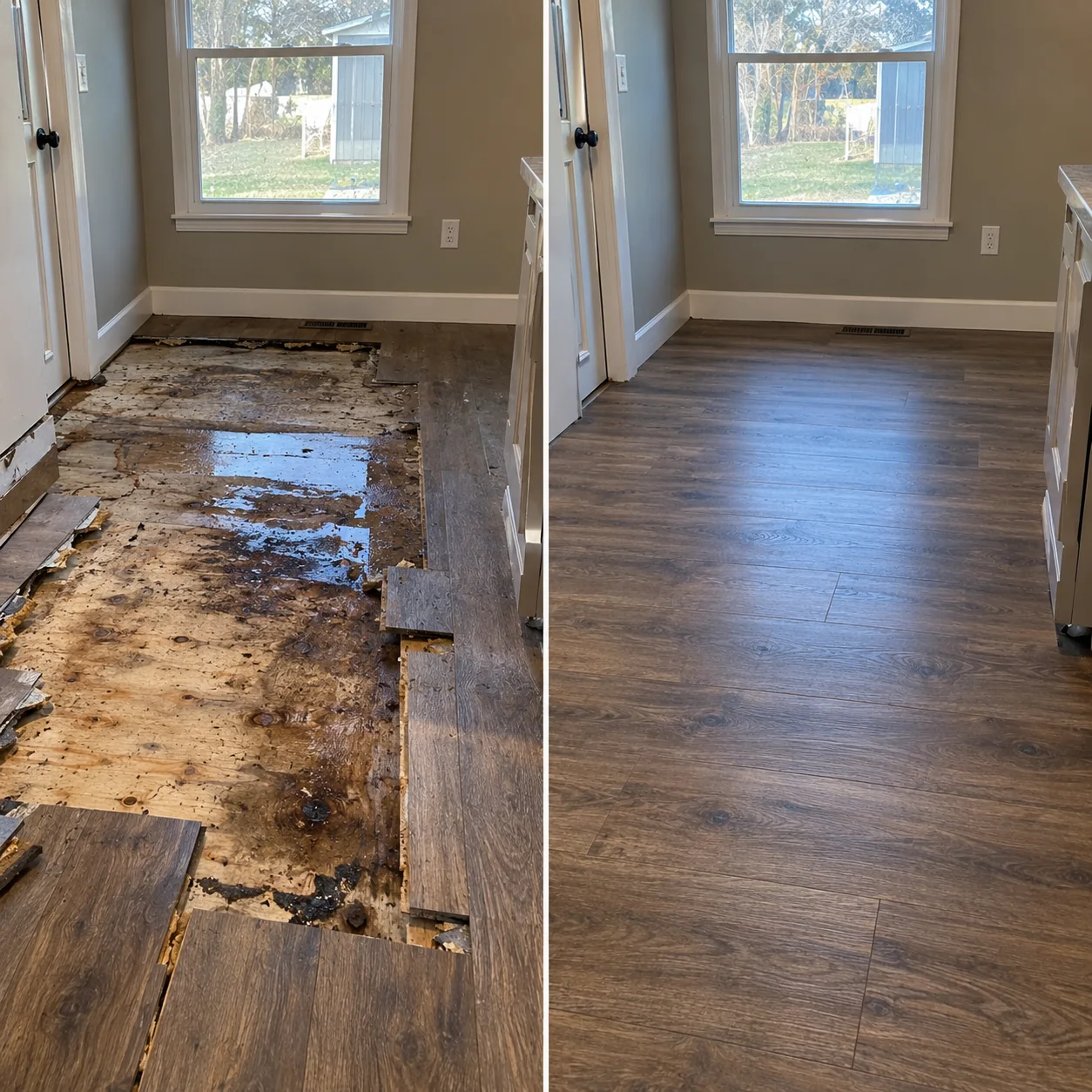
Does an Uneven Floor Always Mean Foundation Trouble?
No. Unevenness can result from subfloor conditions, framing variation, remodeling, material buildup, previous repairs, installation conditions, or localized deterioration.
Foundation movement is one possible cause, but it should not be assumed from unevenness alone.
Floor Leveling & Uneven Floor FAQs
What is the difference between an unlevel floor and an unflat floor?
An unlevel floor changes elevation across a distance. An unflat floor has localized humps, dips, waves, or irregularities. A floor can be sloped but flat, or level overall but not flat.
Should I level a floor before installing LVP or laminate?
The supporting surface should meet the flooring manufacturer’s flatness and installation requirements. Significant high or low spots should be evaluated before new flooring is installed.
Can a low spot be repaired without rebuilding the whole room?
Often, yes, when the condition is localized and the surrounding floor is stable.
Can a floor hump simply be ground down?
Not always. The material and cause of the hump should be identified first. Cutting or grinding without understanding what is underneath can create a new problem.
Is floor leveling the same as fixing a sagging floor?
No. Leveling or flatness correction addresses surface elevation and irregularity. A sagging floor can involve loss of support or structural movement and may require a different repair approach.
Floor Leveling in Cedar Rapids & Iowa City
Floor Repair Pros provides residential floor leveling and uneven floor repair in Cedar Rapids, Iowa City, Marion, Hiawatha, Robins, Ely, Swisher, Coralville, North Liberty, Tiffin, Solon, and nearby communities. See our Floor Repair Service Areas for all communities we serve.
What to Include With Your Estimate Request
Tell us where the uneven area is located, whether it is a high spot, low spot, hump, dip, wave, slope, or transition, whether the condition is changing, what flooring is installed now, whether new flooring is planned, and whether previous repairs or water damage occurred.
Helpful photos include a wider room view, the uneven area from several angles, transitions, doorways, nearby walls, and any exposed subfloor or supporting structure.