
How Floor Repair Pros Moves From a Symptom to a Defined Repair
A floor problem usually begins with something you can see, hear, or feel: a squeak, a soft spot, a damaged board, a sagging area, movement underfoot, or a change after a leak. The symptom is the starting point—not the diagnosis.
Our repair-first process is designed to answer three questions: what is damaged, what caused it, and what actually needs to be repaired. We use the same process for homeowners throughout Cedar Rapids, Iowa City, and surrounding communities, while the condition of each individual floor determines the repair scope.
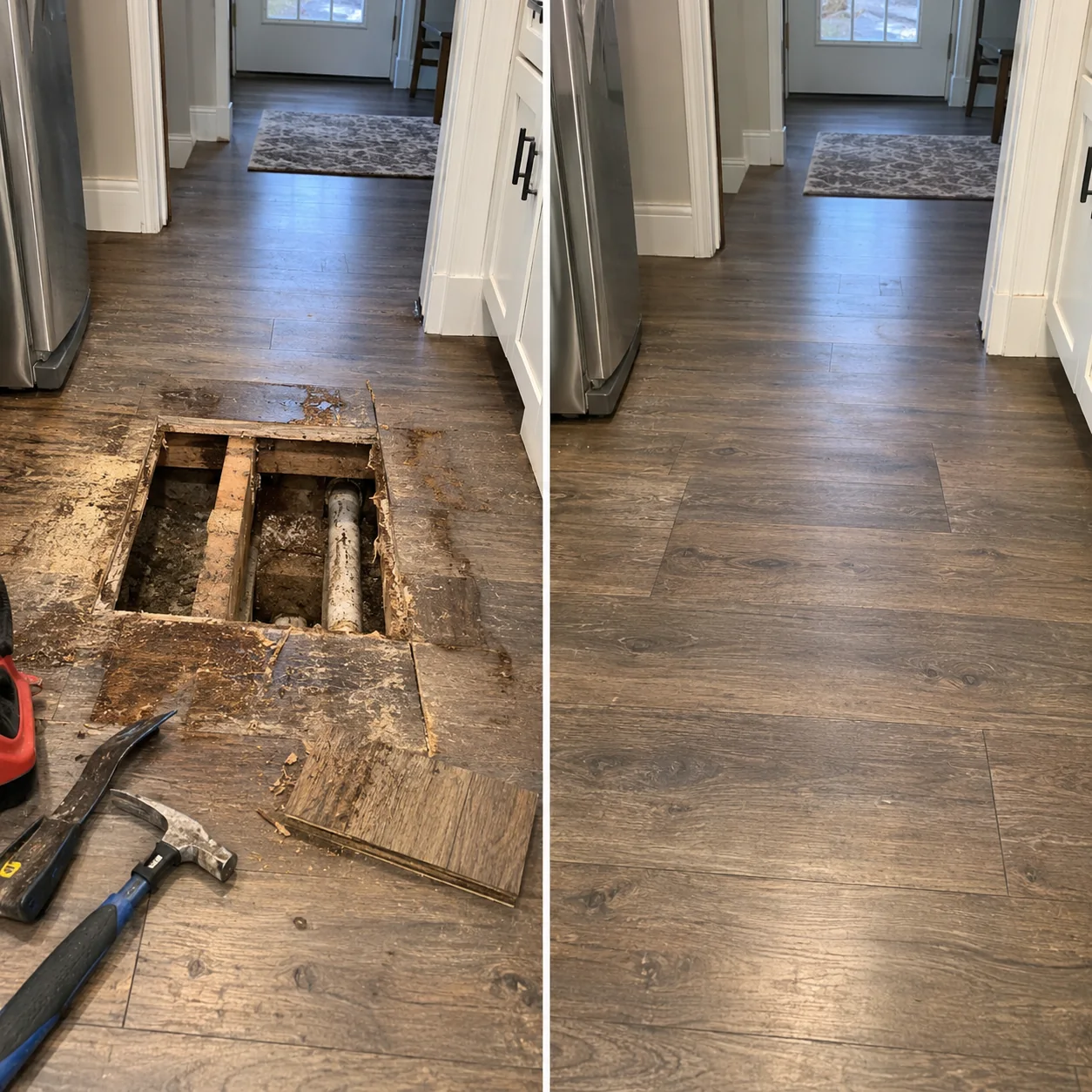
Step 1: Tell Us What Is Happening
You do not need to diagnose the problem before contacting us. Start with what you know about the affected area.
- Where the problem is located and what room it is in
- What type of flooring is installed, if known
- What the floor looks, sounds, or feels like
- When you first noticed the problem and whether it is changing
- Whether there has been a plumbing leak, appliance leak, water event, impact, or previous repair
- Any photos that show visible damage or the surrounding area
Clear observations are more useful than guessing that the problem is a bad joist, rotten subfloor, or another specific diagnosis.
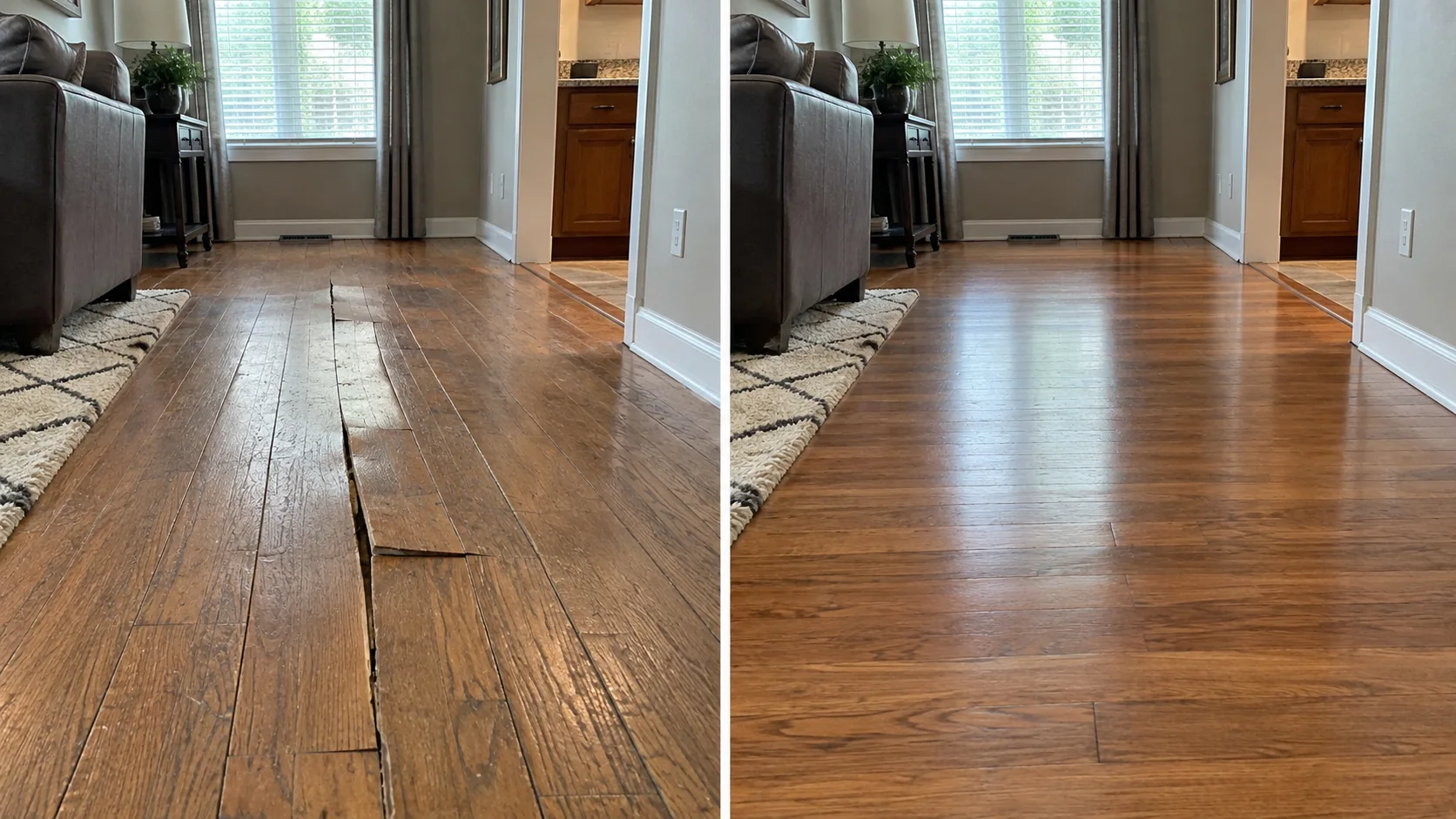
Step 2: Identify the Main Symptom
Different symptoms point toward different parts of the floor system, but the symptom alone does not determine the repair. Common starting points include squeaking or creaking, softness or sponginess, sagging or uneven areas, bouncing or movement, buckling or swelling, visible cracks or breaks, and water-related damage.
The goal at this stage is simply to define what changed and where it is happening.
Step 3: Consider the History of the Problem
What happened before the damage appeared can provide important clues. A known leak, appliance failure, recent flooring installation, previous repair, sudden impact, or gradual change may help distinguish a surface-level issue from damage that extends underneath the finished flooring.
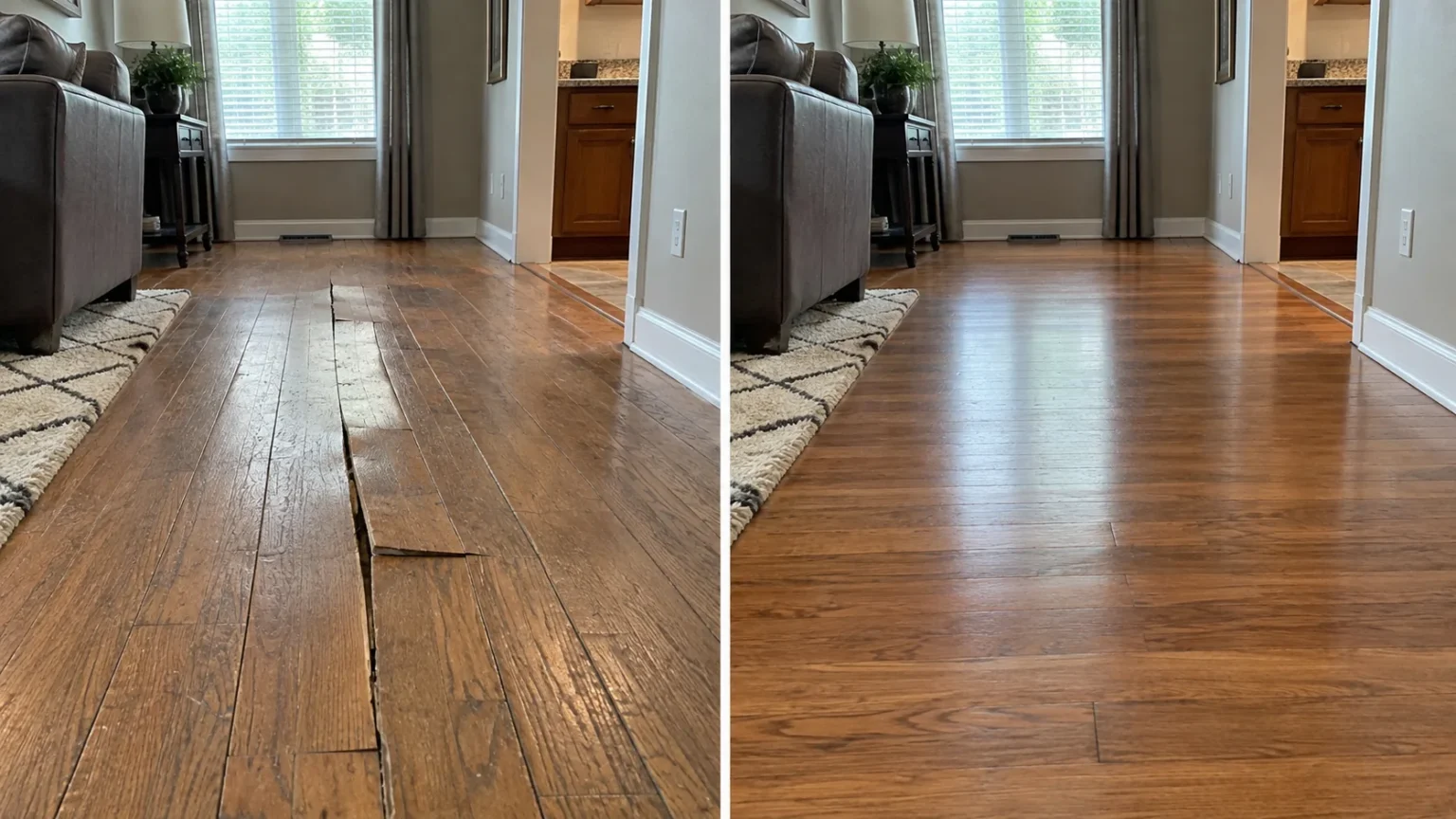
Step 4: Determine Which Part of the Floor Is Affected
A residential floor may include finished flooring, underlayment, subfloor, floor joists and framing, and supporting structure. One layer may be damaged while the others remain serviceable, or several layers may be involved.
The objective is to identify the affected component before defining the repair. That helps prevent a cosmetic repair from covering an unresolved problem below the surface.
Skip the Appointment When the Damage Is Clear
You do not always need to wait for someone to come out just to get a price. Upload clear photos and project details; many floor repairs can be quoted from the information you send.
Step 5: Identify the Likely Cause
Repairing damage without addressing an active cause can allow the problem to return. Possible causes include plumbing or appliance leaks, long-term moisture, impact, deterioration, movement between floor components, damaged framing, flooring expansion, previous repairs, localized wear, or pet damage.
The cause matters because the same visible symptom can require a very different repair depending on why it happened.
Step 6: Determine How Far the Damage Extends
The visible problem does not always define the complete repair area. Water can travel beneath flooring, deterioration can extend beyond a soft spot, and structural movement can affect a broader section than the surface initially suggests.
At the same time, dramatic-looking surface damage does not automatically mean an entire floor needs replacement. The repair area should be based on the actual affected material.
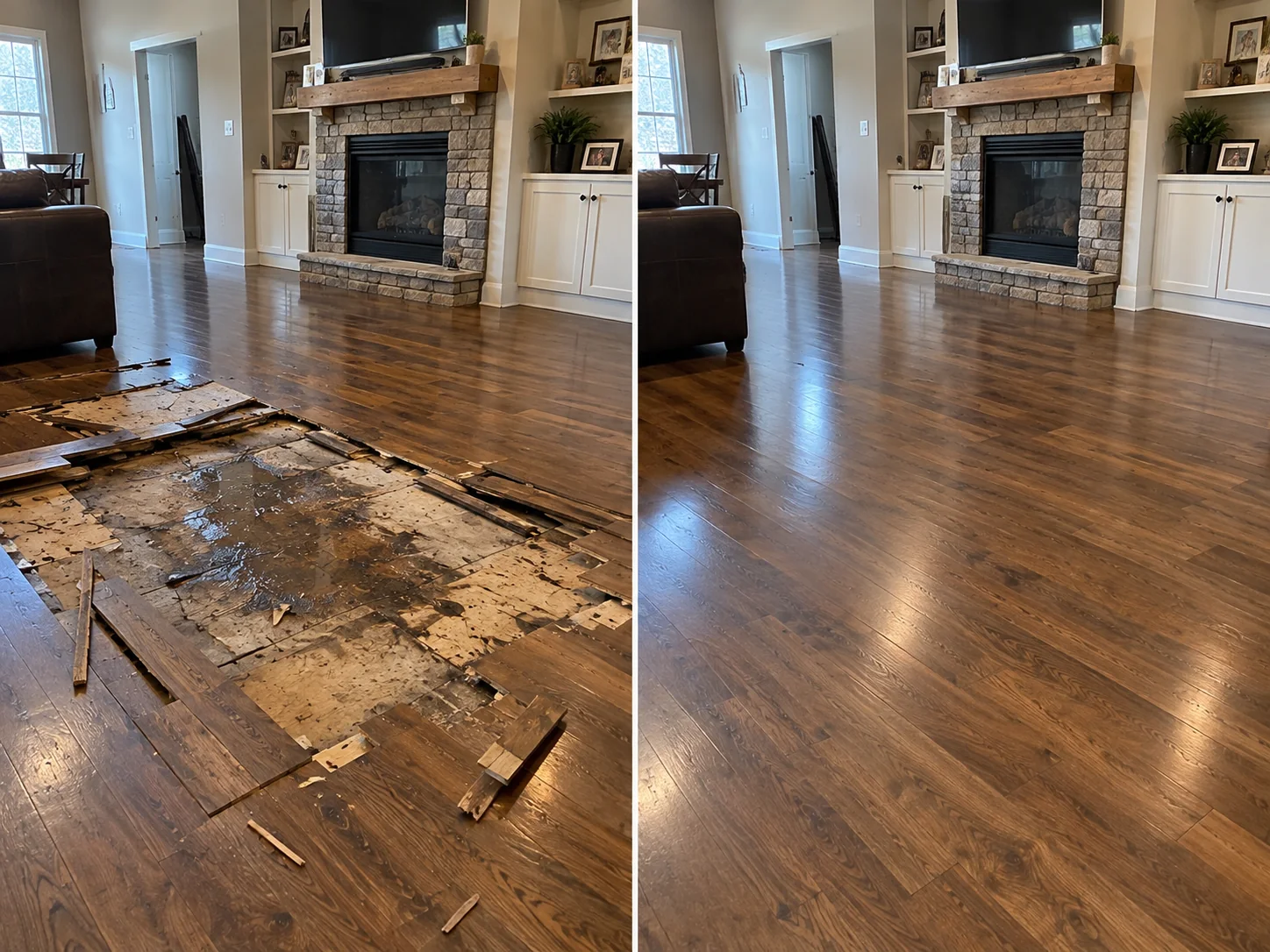
Step 7: Decide Whether a Localized Repair Is Practical
A targeted repair may be practical when the damage is concentrated, surrounding materials remain serviceable, the affected area can be accessed, the underlying cause can be addressed, and compatible replacement material is available when needed.
Broader replacement may make more sense when deterioration is widespread, matching material is unavailable, large areas have failed, or a localized repair would not provide a practical result. The condition of the floor—not a preset rule—drives the decision.
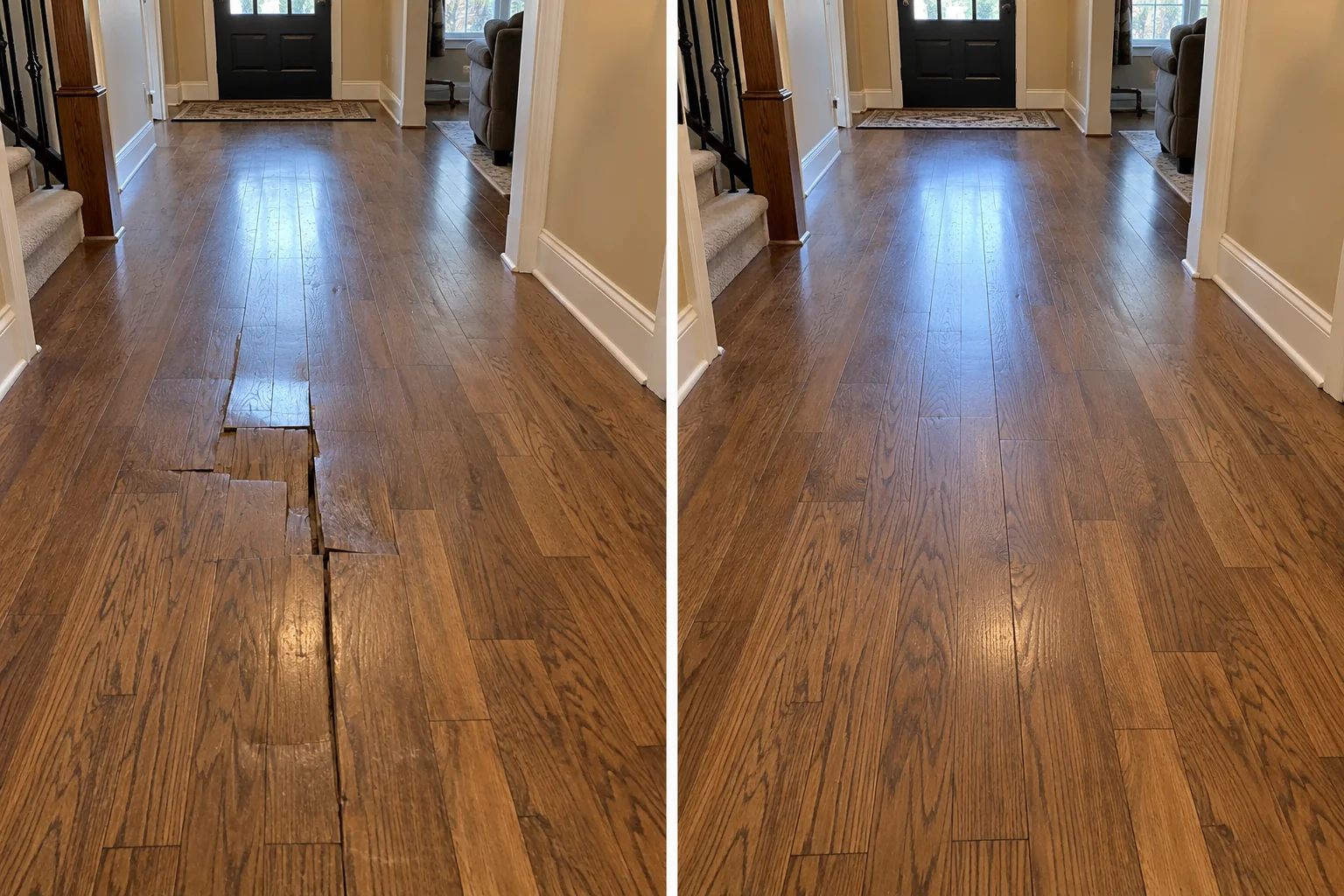
Step 8: Define the Repair Scope
Once the affected materials, likely cause, and extent of damage are understood, the repair scope can be established. Depending on the project, that may involve removing damaged finished flooring, accessing material underneath, repairing or replacing a section of subfloor, addressing joists or framing, and restoring the finished surface in the repair area.
The scope should be specific enough to address the known problem without removing serviceable material unnecessarily.
Step 9: Complete the Agreed Repair
The work then follows the agreed scope and the conditions found. Surface-level repairs may be relatively contained. Repairs involving water-damaged subflooring, joists, or several floor layers require a different sequence.
The repair should follow the actual floor—not a one-size-fits-all procedure.
Skip the Appointment When the Damage Is Clear
You do not always need to wait for someone to come out just to get a price. Upload clear photos and project details; many floor repairs can be quoted from the information you send.
Step 10: Rebuild the Floor System in the Correct Order
When several layers are involved, deeper components are addressed before the finished surface is restored. Conceptually, the floor is rebuilt from the supporting components outward: supporting structure, joists and framing, subfloor, underlayment where applicable, and finished flooring.
Only the layers involved in the repair need attention, but the order matters when deeper damage is present.
What Happens If Hidden Damage Is Found?
Some floor conditions cannot be fully seen until damaged material is opened or removed. Water damage, soft floors, suspected rot, previous repairs, and structural movement are common situations where concealed conditions may appear during the work.
If the actual conditions differ materially from what could reasonably be determined beforehand, the repair scope may need to be adjusted based on what is found. The goal is to respond to the real condition of the floor rather than pretend hidden materials were visible from the beginning.
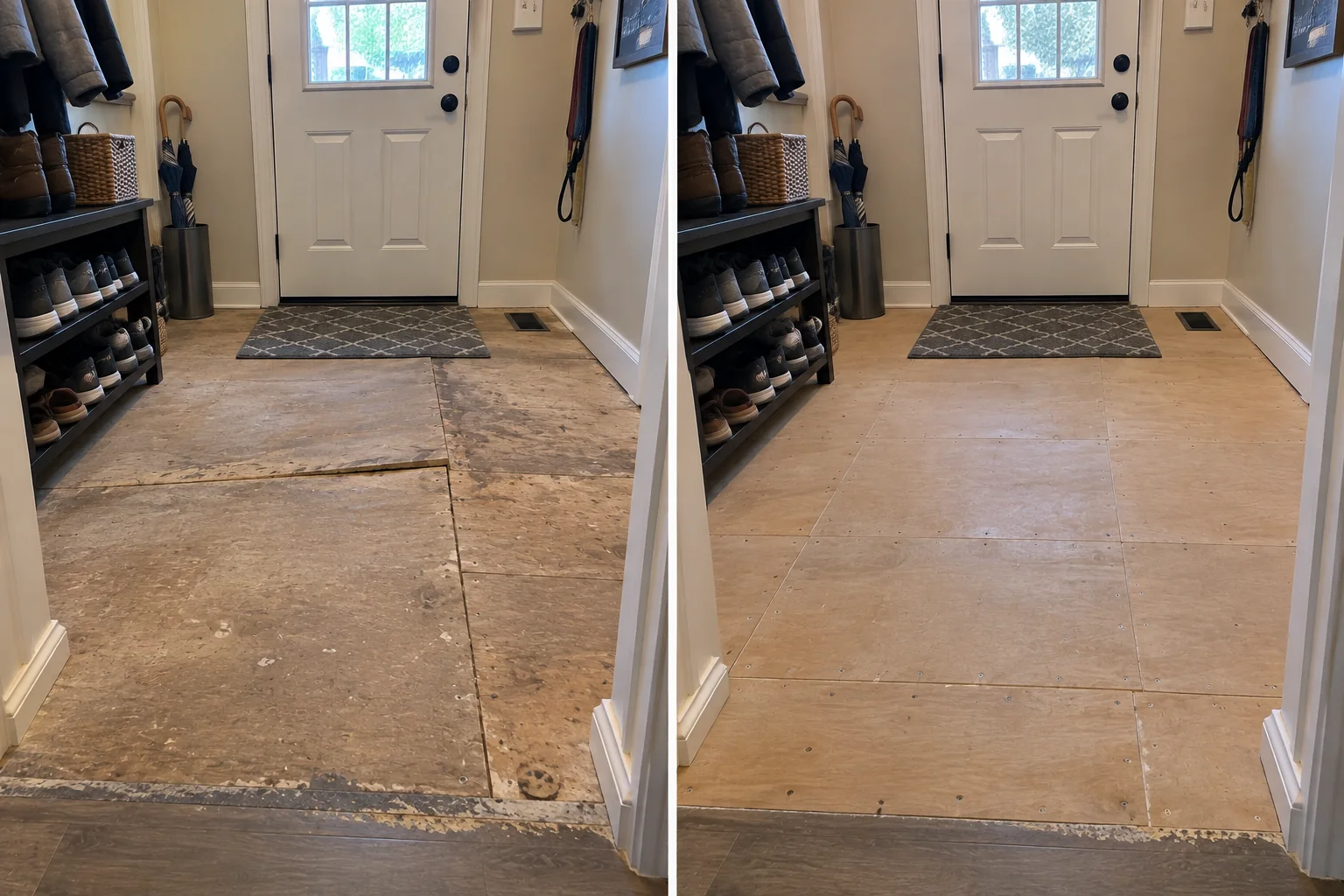
What You Can Do Before Requesting an Estimate
- Note the exact location and room
- Describe the symptom in plain language
- Think about when the change began and whether it is getting worse
- Mention any known water exposure, plumbing issue, appliance leak, impact, or previous repair
- Take close and wider photos of visible damage when possible
You do not need to determine which floor component has failed. Start with what you observe and let the repair scope follow the evidence.
A Repair Process Built Around the Actual Problem
Whether the issue is one damaged board, a soft bathroom floor, a squeak, a sagging section, water damage, or a deeper structural concern, the process follows the same logic: identify the symptom, locate the affected material, determine the cause, establish the extent of damage, and define the appropriate repair.
For details about a specific flooring material, symptom, or cause of damage, review the matching repair service. See our Floor Repair Service Areas to view the communities we serve.
Floor Repair Pros provides residential floor repair services throughout Cedar Rapids, Iowa City, and surrounding communities.
Send a few clear photos and a short description of the problem.