
Hardwood Floor Repair
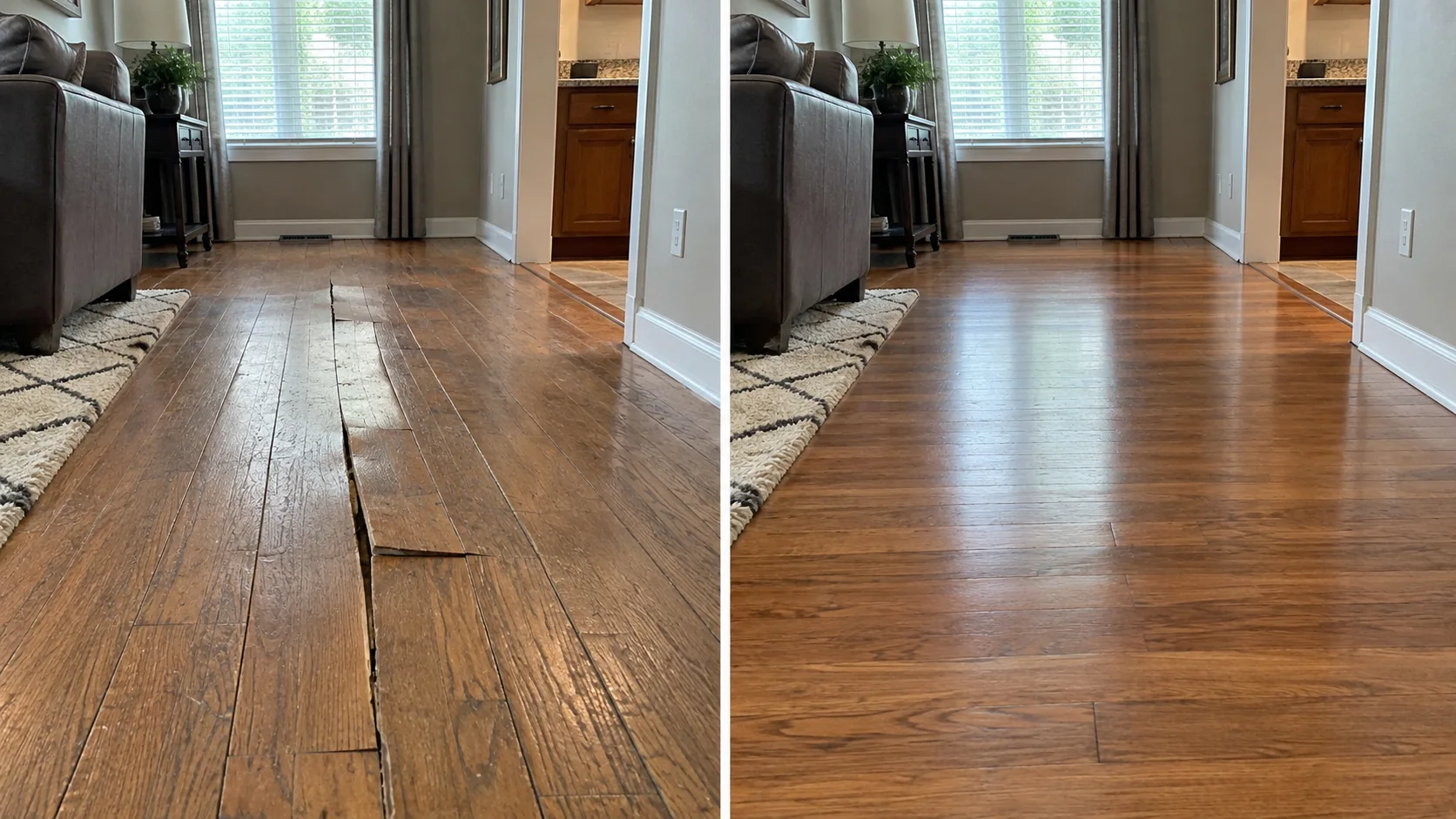
Localized hardwood damage can include scratches, gouges, cracked or loose boards, stains, gaps, cupping, warping, buckling, and moisture-related damage.
Floor damage can involve the material you walk on, the subfloor underneath it, the joists and framing that support it, or more than one layer at the same time. Floor Repair Pros provides residential floor repair services for homeowners dealing with visible damage, soft spots, squeaks, movement, sagging, water damage, deterioration, and localized structural concerns.
You do not need to know which component is damaged before requesting an estimate. Start with what you can see, hear, or feel, and choose the repair service that best matches the problem.
Floor repair needs vary by the material that is damaged, the symptom you are experiencing, and the event that caused the problem. Use the sections below to choose the repair service that best matches what you see, hear, or feel in the floor.
Localized hardwood damage can include scratches, gouges, cracked or loose boards, stains, gaps, cupping, warping, buckling, and moisture-related damage.
Engineered wood can develop damaged wear layers, separated or loose planks, moisture damage, movement, swelling, or localized surface defects.
Vinyl and luxury vinyl plank floors may be repairable when damage is concentrated in a limited area and compatible material is available.
Laminate repair can address chipped, scratched, cracked, loose, swollen, warped, or moisture-damaged planks depending on the product and installation system.
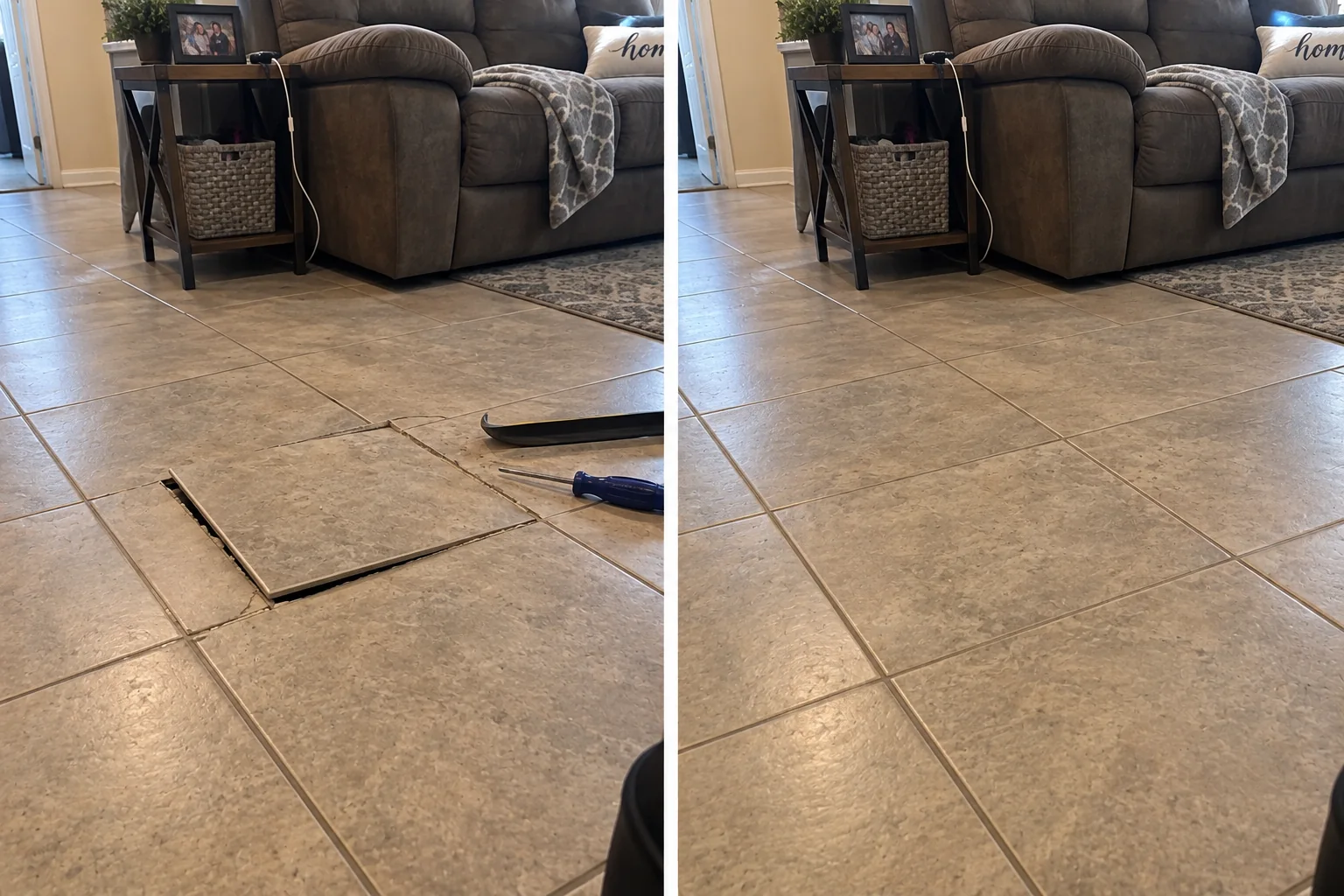
Cracked, chipped, loose, hollow, or individually damaged tiles can sometimes be repaired without replacing the entire floor, provided the underlying cause is addressed.
Natural stone flooring may develop cracks, chips, loose pieces, movement, staining, or localized damage that requires material-specific repair.
Interior concrete floors can develop cracks, spalls, surface damage, movement, or localized deterioration that may require repair before a finish or coating is restored.
Soft, weak, deteriorated, water-damaged, or uneven subflooring can affect the finished floor above it. Repair may involve localized replacement, reinforcement, or correction of the damaged section.
Damaged, cracked, weakened, or deteriorated joists can contribute to movement, bounce, sagging, or uneven areas in the floor above.
Floors that dip, slope, sag, sink, or feel uneven may involve subflooring, joists, framing, moisture damage, or support conditions.
Some floor problems are primarily about elevation changes, transitions, or localized low and high areas. The cause needs to be identified before leveling work is planned.
Squeaks usually come from movement between flooring, subflooring, fasteners, joists, or nearby components. The repair should target the source of that movement.
A soft or spongy floor can indicate deterioration below an otherwise intact surface, especially near plumbing fixtures, bathrooms, kitchens, laundry areas, and past leaks.
Sloping, movement, gaps, or recurring floor changes can sometimes be related to conditions below the floor system. The floor components and the broader cause should be distinguished before repair decisions are made.
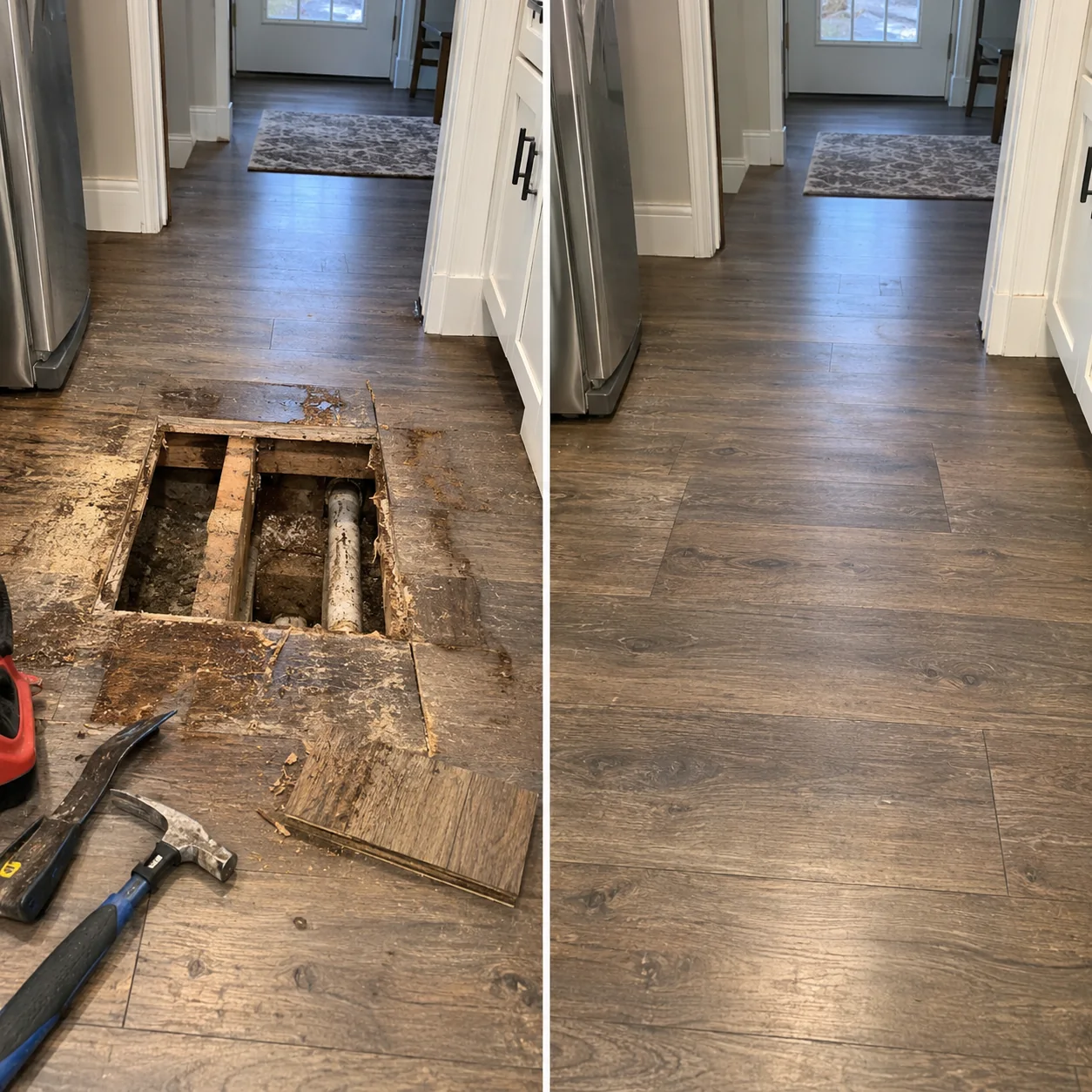
Water can affect finished flooring, underlayment, subflooring, joists, framing, or several layers at once. The repair scope depends on the source, duration, material, and extent of exposure.
Once a plumbing leak is corrected, the affected floor system can be evaluated for damage that may extend beyond the visibly wet area.
Dishwashers, refrigerators, washing machines, and appliance supply or drain connections can cause localized flooring and subfloor damage.
Bathroom floors frequently develop problems around toilets, tubs, showers, vanities, plumbing penetrations, and long-term moisture exposure.
Kitchen floor problems can involve wear, impact, movement, appliance leaks, sink plumbing, or damage that reaches the subfloor.
Heat, fire response, water used during suppression, and damaged materials can affect flooring and the supporting floor system in different ways.
Learn more about Floor Repair After Fire, Smoke & Heat Damage.
Scratches, gouges, stains, localized wear, moisture, and other animal-related damage may be repairable depending on the flooring material and depth of damage.
Show us the damaged area first. Good photos often give us enough information to prepare a repair quote remotely, saving you from an unnecessary appointment.
Some homeowners do not know what material underneath the floor is damaged. That is normal. These symptom-based services are designed for problems you can identify without diagnosing the floor system yourself.
For flooring that has lifted, cupped, warped, swollen, separated, or changed shape after moisture, expansion, movement, or other conditions.
For visible cracks, splits, breaks, or localized material failure in flooring or floor components where the cause and affected layer still need to be determined.
A residential floor is a system. Depending on the home and flooring type, it may include finished flooring, underlayment, subflooring, joists or framing, and the structure supporting those components. A visible surface problem can be limited to the flooring itself, while softness, movement, sagging, or recurring damage may involve deeper layers.
That is why identifying both the material and the symptoms helps narrow the right repair. The goal is to identify the affected layer before deciding how much material should be removed, repaired, reinforced, or replaced.
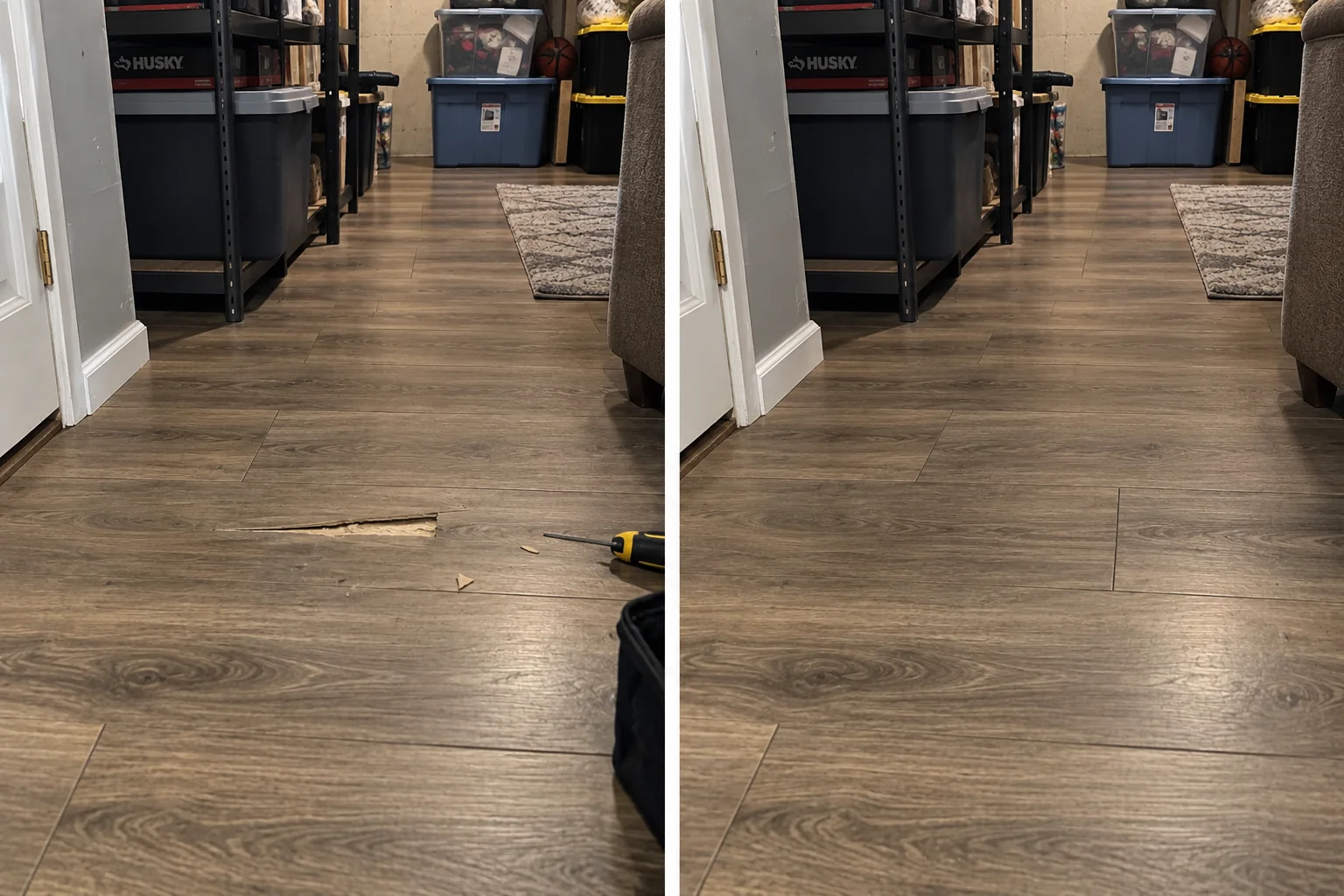
Localized damage does not automatically require full-floor replacement. A repair-first approach can make sense when the damaged area is limited, surrounding material remains serviceable, compatible materials are available, the underlying cause can be corrected, and the affected section can be accessed reliably.
Broader replacement may make more sense when damage is widespread, deterioration extends across large areas, matching material is unavailable, or localized work would not produce a dependable result. The correct answer depends on the floor, the cause, and the condition of the materials around the damaged area.
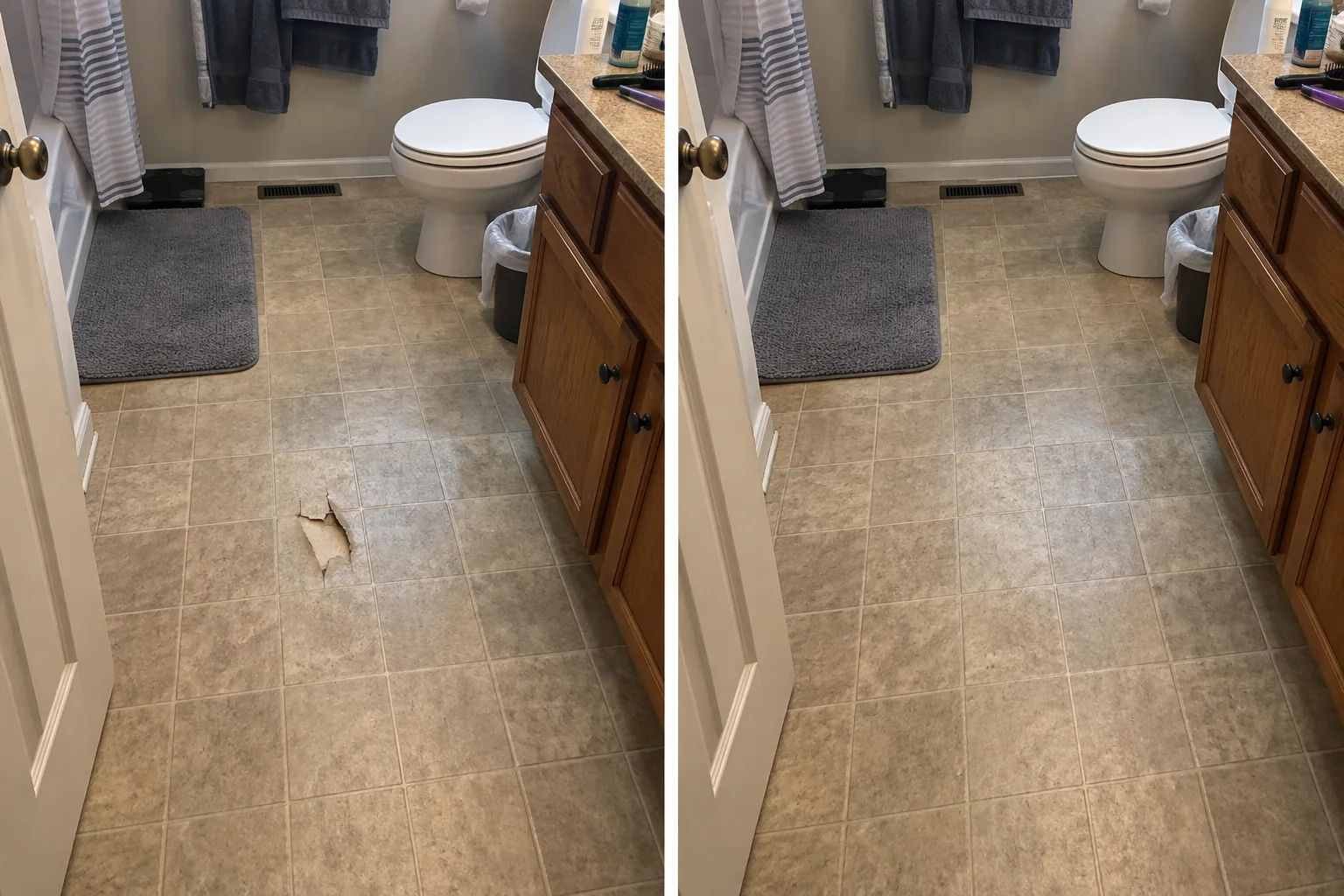
You do not need to identify the exact repair before contacting us. A few details usually provide a useful starting point:
From there, we can help identify the floor repair service that best matches the problem without requiring you to diagnose subfloor, joist, framing, or material damage on your own.
Floor Repair Pros provides residential floor repair services in Cedar Rapids, Iowa City, and surrounding communities. Homeowners can check our service areas for local coverage and review repair information for the specific floor problem or flooring material involved.
Show us the damaged area first. Good photos often give us enough information to prepare a repair quote remotely, saving you from an unnecessary appointment.
Our service categories cover finished flooring, subflooring, joists and framing, soft or rotten areas, squeaks, sagging and uneven floors, water and leak damage, room-specific repairs, material-specific repairs, and other localized floor problems.
A soft or spongy area may involve the finished flooring, underlayment, subfloor, joists, or moisture damage. The correct repair depends on which layer has weakened and why.
Often, yes. Localized repair may be possible when the damage is limited and the surrounding flooring remains serviceable. Material availability and the condition underneath the floor also matter.
You do not need to diagnose that yourself. Describe the symptom, location, flooring type, and any known leak or event. Those details help narrow down which part of the floor system should be evaluated.
For additional questions about floor damage, repair options, estimates, and what to expect, visit our Floor Repair FAQs.
If your floor is damaged, soft, squeaky, uneven, sagging, water-damaged, cracked, warped, or otherwise changing, send us the location of the problem, what you are noticing, and photos if available. We will use that information as the starting point for identifying the appropriate floor repair service.